
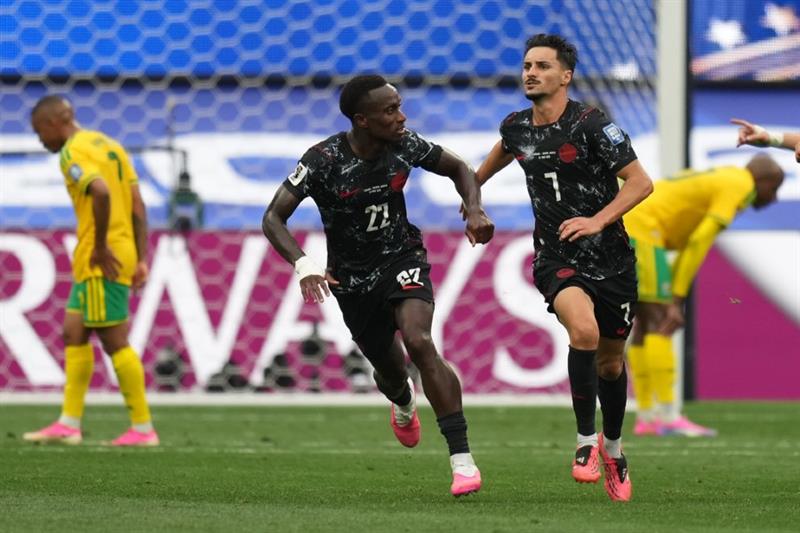
An extreme example of "hate-watching". The image circulated across WhatsApp groups and news feeds from Lagos to Nairobi: the final whistle sealing South Africa’s (1-0) defeat against Canada. But instead of the usual pan-African solidarity, a very different scene played out. Mockery, satirical memes, and open celebrations flooded the African internet.
This situation is reminiscent of the opening match of this 2026 World Cup, lost by the South Africans to Mexico. To understand why much of the continent delights in the Bafana Bafana’s setback, one has to leave the sports bubble. This emotional boycott is a direct reflection of major geopolitical tensions, exacerbated by a violent xenophobic crisis currently shaking the country.
A climate of xenophobia at breaking point
The main explanation for this disaffection isn’t found on the pitch, but in the streets of Johannesburg, Durban, and Pretoria. South Africa is currently experiencing a wave of xenophobic violence rarely seen, widely documented by international organizations.
Since April and May 2026, a radical citizens’ movement called "March and March", led by media figure Jacinta Ngobese-Zuma, has conducted aggressive raids and demonstrations against African and Asian nationals. As reported by Human Rights Watch in an alert bulletin, these vigilante groups are exploiting the country’s record unemployment rate to scapegoat immigrants.
The tension reached its peak in recent days. Anti-immigration groups set a deadline of June 30, 2026—tomorrow—demanding the mass departure of undocumented migrants under threat of blocking the country entirely. The violence is real: on June 19, a Malawian national was stoned to death in Pietermaritzburg. In Durban, thousands of displaced people are camping in squalor, waiting for buses sent by their governments to evacuate them.
In the face of this humanitarian crisis, diplomatic responses were swift. Ghana officially issued a travel warning on June 1, 2026, advising against all non-essential travel to South Africa. For many Nigerian, Cameroonian, and Zimbabwean internet users, supporting the South African national team had become morally impossible.
"How can you expect us to support a nation whose citizens chase our brothers down the streets of Durban with sticks?", summarized a Nigerian influencer on the social network X, capturing a widely shared sentiment.
The Chidimma Adetshina case: the "karma" of a beauty queen
For African supporters—and especially Nigerians—the elimination against Canada also feels like a mystical comeuppance after the never-ending Chidimma Adetshina saga.
This law student, born in South Africa to a Nigerian father, was forced to drop out of the Miss South Africa contest following a campaign of online xenophobic harassment, before making a stunning comeback as Miss Universe Nigeria and first runner-up at Miss Universe.
The story took a critical turn as recently as yesterday, June 28, 2026. The media outlet Sunday World revealed that the young woman is now facing official deportation proceedings from the South African authorities, who accuse her of irregularities in her residency status while she was staying in Cape Town. The coincidence between these repeated administrative harassments and the Bafana Bafana’s elimination was immediately dubbed "Chidimma’s justice" by internet users.
Permanent cyberwar and Uber pranks
On a lighter but equally telling note, African social networks have become the scene of a fierce cultural rivalry. The South African web community, known for its harshness, has locked horns in constant conflict with the rest of the continent, embodied by the clash of titans between Nigerian Afrobeats and South African Amapiano.
This virtual animosity had already manifested in absurd yet destructive actions, such as the "VTC war," where Nigerian and South African internet users amused themselves by ordering fake Uber or Bolt rides in the rival country to sabotage local drivers’ earnings. By losing to Canada, South Africa exposed itself to the mockery of a continent that was just waiting for a pretext to take digital revenge.
The boomerang of sporting triumphalism
Finally, the strictly footballing aspect played its part. Energized by their excellent bronze medal at AFCON 2023 and a strong qualifying campaign, some South African supporters approached this 2026 World Cup with a hint of arrogance, loudly proclaiming their technical superiority on the continent due to their team’s style of play.
Seeing the Bafana Bafana stumble out of the tournament in the Round of 16 on a late goal by Stephen Eustáquio in the 92nd minute was the perfect ending for those who enjoy banter. Canada, seen as a minor footballing nation despite its co-host status, by default became, for one night, the darling team of millions of Africans thrilled to watch the southern giant bite the dust.
Join our sports community!
Follow us on social media to never miss real-time sports news.
À propos de l'auteur

Malick BAMBA
Rédacteur sportif
Le sport africain au quotidien, ces belles histoires et polémiques en tous genres.