
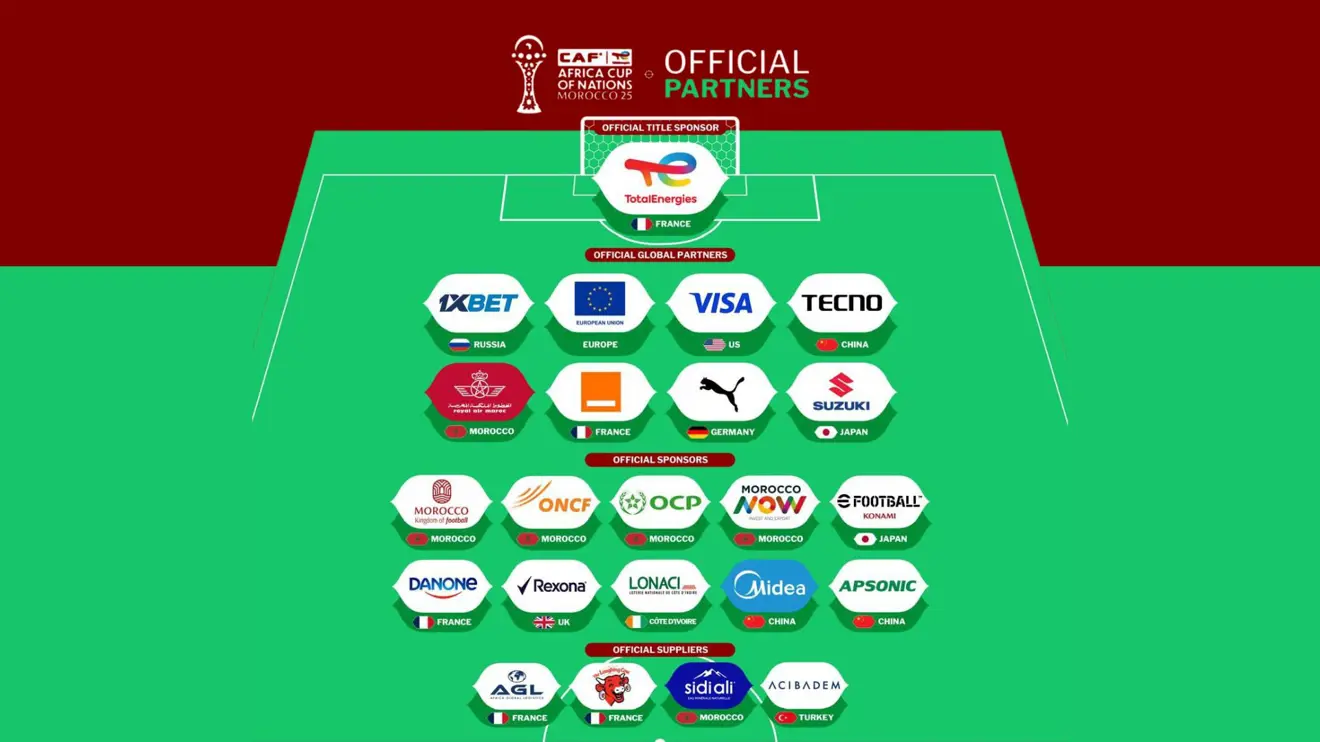
The Confederation of African Football (CAF) takes a decisive step with the 2025 edition of the Africa Cup of Nations, which officially establishes itself as the greatest commercial success in its history. Driven by an aggressive modernization strategy, the competition has generated a spectacular increase of more than 90% in revenue, according to a statement from the governing body. This economic leap is explained by an unprecedented expansion of the partner portfolio and optimized distribution of media rights internationally.
A booming commercial attractiveness
This positive dynamic translates into a constant growth in the number of advertisers. In just four years, the number of sponsors increased from 9 during the 2021 edition in Cameroon to 17 in Côte d'Ivoire in 2023, and today reached the record figure of 23 partners for Morocco 2025. This expansion illustrates the renewed confidence of historical partners such as TotalEnergies, Orange or Puma, but also the massive arrival of new players from countries like Turkey, the United States or even direct support from the European Union.
A global strategy driven by data
To transform the AFCON into a global sports property, the CAF relied on an in-depth analysis of audience data at the end of the Ivorian tournament. This approach revealed untapped potential in several strategic markets. As a result, the Confederation has intensified its presence in the Far East, particularly targeting China and Japan, while strengthening its influence in Brazil and the main European markets. This precise targeting has made it possible to diversify the sources of revenue and consolidate the reputation of the tournament well beyond the continent’s borders.
Digital innovation as a new lever
The other pillar of this success lies in the diversification of commercial products, notably through the launch of the eAFCON. By partnering with the Japanese publisher Konami and its eFootball game, CAF is making a remarkable entry into the gaming and eSport universe. These new digital assets are now fully integrated into the competition’s commercial inventory, offering brands new opportunities to engage with a younger and connected audience.