
AFCON 2025: Brahim Diaz's future after his exceptional penalty miss
Announced as one of the heroes of the AFCON 2025, Brahim Díaz became the most popular player of the competition not just for scoring 5 goals but also for the wrong reasons. His missed penalty in the final against Senegal changed the fate of Morocco. Between isolation, virulent criticism and institutional support, the question now arises, what is Diaz's fate with the Atlas Lions?
Philemon MBALE · Author profile ·
Listen to this story
Audio version in preparation · read aloud by your browser meanwhile
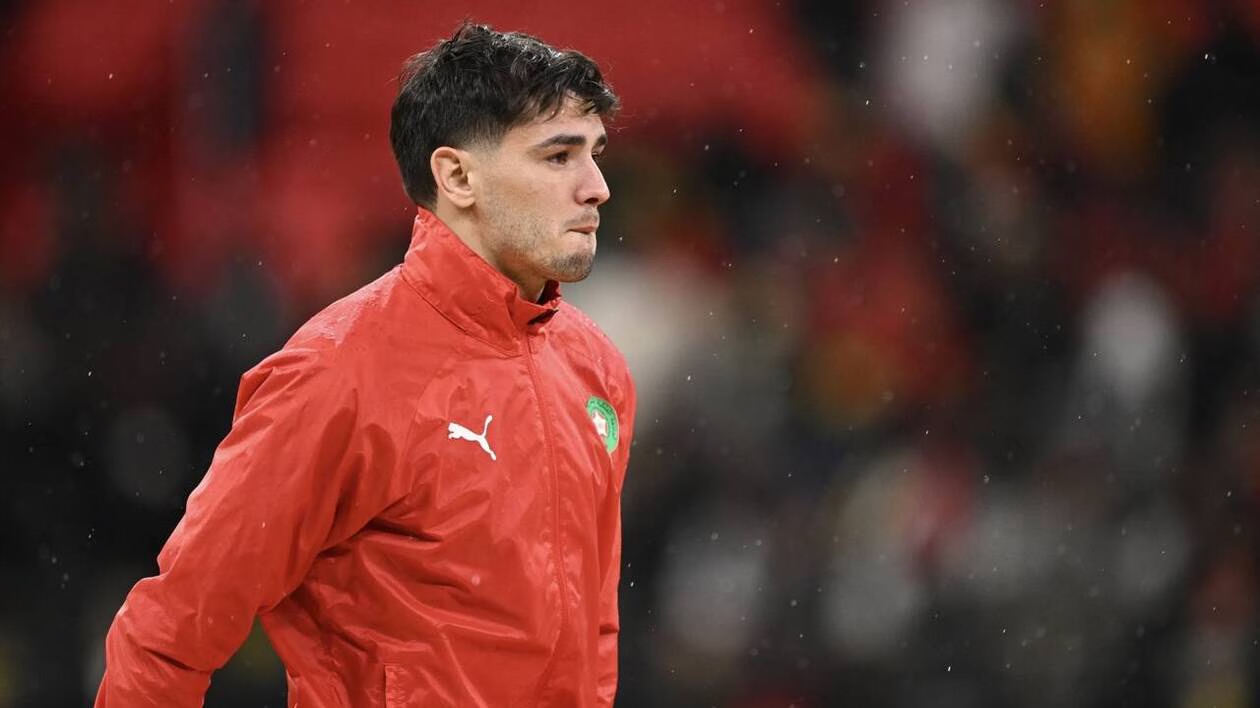
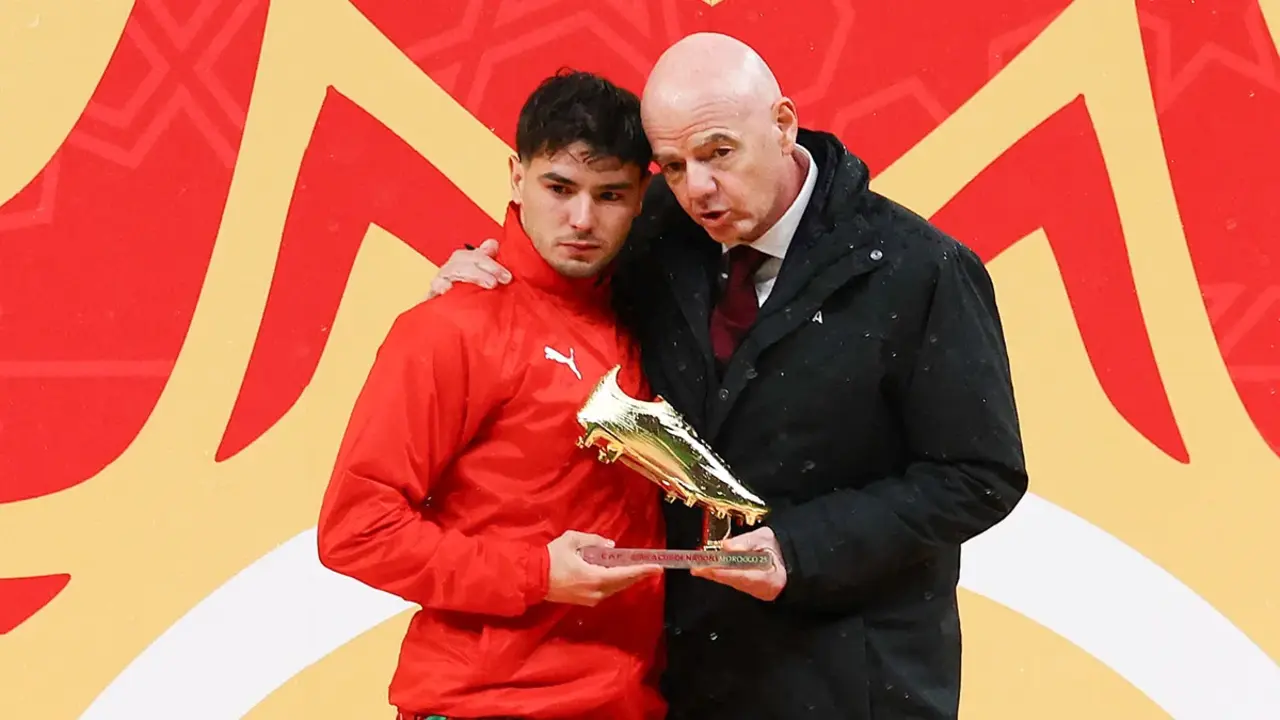
It took more than an honorary trophy for top scorer (5 goals) to hide the distress. Sunday evening, in Rabat, Brahim Díaz wore on his face the weight of a country deprived of a title in fifty years. After an endless final of the 2025 African Cup of Nations, marked by a 17-minute interruption and extreme tension, the Real Madrid playmaker attempted a panenka that never deceived Édouard Mendy. This gesture, assumed as voluntary, immediately tipped the narrative. More than a missed penalty, it is a symbol that has established itself in the collective Moroccan imagination, that of a title gone, within seconds.
A public mea culpa, but an icy locker room
Aware of the gravity of the moment, Brahim Díaz quickly spoke on social media. In a long and emotionally charged message, he acknowledged his full responsibility, evoking a wound "that does not heal easily", while promising to get back up to "become again a source of pride for the Moroccan people."
But in the intimacy of the locker room, the scene was quite different. According to several corroborating sources, the player’s apologies, formulated in tears, would have encountered a marked coldness. The initial sidération would have given way to a silent anger, notably among some executives, unable to accept what they perceive as unnecessary risk-taking at a historical moment.
The strongest image will perhaps remain that of Brahim Díaz, alone on the bench, consoled by Gianni Infantino more than by his teammates. A symbolic isolation, reinforced by the almost total absence of public support messages from the group, with the exception of Yassine Bounou.
A media shock wave and unfiltered criticism
Since the final, words have been freed up, often without nuance. Hervé Renard, former coach of the Lions of the Atlas, evoked "a lack of respect for an entire people", while Jérôme Rothen described the gesture as "scandalous", estimating that a panenka, in this context, amounted to a desire for humiliation.
Former African internationals also pointed to the lasting psychological impact of such a failure. Hassan Kachloul, John Obi Mikel or even Efan Ekoku have evoked deep mental scars, reminding us that certain moments never completely leave a player, even at the peak of their career. These positions have nourished a heavy climate around the Moroccan number 10, now placed at the heart of a national debate on individual responsibility in moments of history.
Political support, rare but decisive
In this deleterious context, however, a voice was heard. Moroccan Prime Minister Aziz Akhannouch publicly praised the fighting spirit of the Atlas Lions and reminded that football is made of victories as well as defeats. An exit that, without clearing the player’s mind, made it possible to put the failure into a collective perspective. This institutional support, rare at this level, could weigh in the future management of the Brahim Díaz case within the selection.
What future in the national team for Brahim Díaz?
The question is no longer just sporting. On the field, the talent of the native of Malaga is unquestionable. At 26 years old, he remains one of the most creative players of his generation. But the equation is now mental, emotional and relational.
The fracture with part of the locker room, the defiance of a fringe of the audience and the symbolic weight of this missed penalty are all obstacles to overcome. The history of African football is full of examples of heroes who became scapegoats, sometimes permanently. Brahim Díaz will have to respond over time, first in the club, then in the national team, if he still has the opportunity. The upcoming World Cup could offer a scene of redemption. But there is no guarantee that forgiveness will come quickly, or even just at all.
Rabat’s missed penalty doesn’t define a whole career, but it marks a break. For Brahim Díaz, the future of the Moroccan national team will depend as much on his ability to perform as on that of the collective to heal. Time will tell if this moment will remain an indelible wound or the starting point of a rebirth.