
CAF CL Finals: Jean-Jacques Ndala, the controversy too much at the heart of an institutional shipwreck
By appointing Jean-Jacques Ndala to officiate at the CAF Champions League final between Mamelodi Sundowns and AS FAR on 17 May, the CAF referees' commission did not just choose a man: it lit a fuse on a powder keg. Between internal disavowal, club revolt and international snubbing, this decision illustrates the deep leadership crisis that is shaking the apex body of African football.
Philemon MBALE · Author profile ·
Listen to this story
Audio version in preparation · read aloud by your browser meanwhile
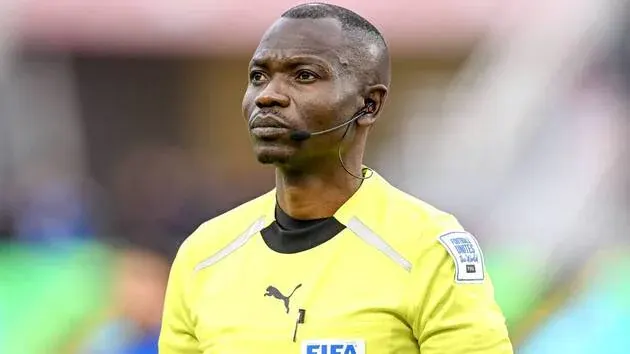
African football is about to experience one of its most prestigious events at the end of the season, with the first leg of the Champions League between Mamelodi Sundowns and AS FAR, but the show is already taking place behind the scenes, in a noxious atmosphere. By appointing Jean-Jacques Ndala to lead this crucial meeting on 17 May in Pretoria, the Commission of Referees of the Confederation of African Football did not only make a questionable technical choice; she threw a stone in the garden already very crowded with governance adrift. This decision, which superbly ignores the recent history of the Congolese officer, acts as a powerful indicator of the institutional autism that seems to have taken hold in Cairo.
Not selected by FIFA, "rewarded" by CAF
The Ndala paradox is bordering on the absurd. How can a referee, whose performance in the 2025 AFCON final was experienced as a trauma by an entire continent, be entrusted with the keys to a new continental summit just months after his mistakes? Even more striking is the scathing disavowal of FIFA, which has chosen to exclude the Congolese from the list of referees selected for the 2026 World Cup.
While the governing body of world football considers his level insufficient for the international competition, CAF persists in presenting him as the elite of the continent. This gap in perception highlights a worrying fracture between the standards of excellence required on a global scale and the domestic arrangements of a confederation that seems to live in isolation.
Disavow and governance crisis
Indignation is no longer limited to fan circles or social networks. It has penetrated the holy of holies: the CAF Executive Committee. The internal dispute spreading there is evidence of an unprecedented administrative earthquake. Seeing members of the Comex publicly disavow a technical commission is a clear sign of a loss of central authority. This institutional disorder suggests that the Commission of Arbitrators now operates as a free electron, beyond any political or ethical control by the presidency.
The absence of a firm reaction from Patrice Motsepe reinforces this image of a ship without a true captain at the helm, where each department seems to lead its own boat, often in defiance of the coherence and brand image of the organization.
Another blow to CAF
The joint reaction of Mamelodi Sundowns and AS FAR is, in this respect, historic. Seeing two opponents unite in a joint slingshot even before the kick-off is an unambiguous blow to the CAF leadership. By officially contesting this appointment, the two clubs are not only defending their sporting interests; they denounce the opacity of a system that prefers to recycle its mistakes rather than value a new guard of competent referees and less marked by controversy. Because the pool exists, but it seems to collide with a glass ceiling made of cronyism and networks of influence that strangle meritocracy.
This "Ndala case" is ultimately only the symptom of a deeper evil: that of an authority that navigates by sight, unable to anticipate crises and locked into a harmful denial. By insisting on maintaining a designation rejected by all the players in the field, CAF runs the risk of sabotaging its own final. If on 17 May, the game is again overshadowed by the whistle, the responsibility can no longer be attributed solely to Jean-Jacques Ndala. It will be the direct responsibility of a governance that, through its inertia and lack of vision, continues to undermine the credibility of African football on the international stage.