
Morocco - Senegal at CAS: Fouzi Lekjaa defends the coronation of Morocco
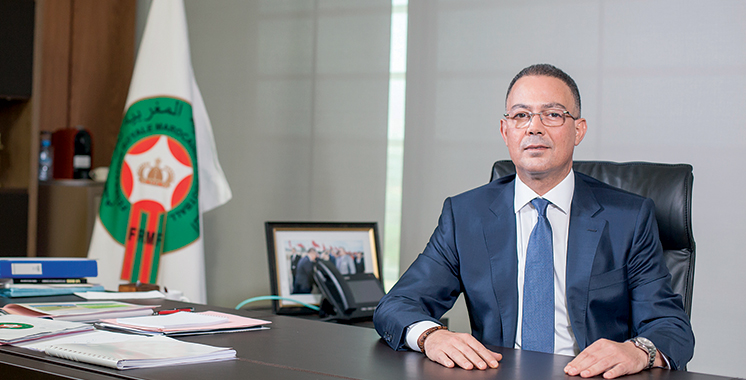
In a long-term interview granted to the magazine Onze Mondial, Fouzi Lekjaa, president of the Royal Moroccan Football Federation comes back without detours on the dispute between Morocco and Senegal for the title of the AFCON 2025. Beyond the legal battle before the CAS, the leader decrypts the overall strategy of the Kingdom, determined to impose itself as the sporting and economic locomotive of the continent.
Philemon MBALE · Author profile ·
Listen to this story
Audio version in preparation · read aloud by your browser meanwhile
The AFCON 2025 title at CAS
The final of the 2025 African Cup of Nations will continue to be the focus of much attention in the coming months. While Senegal initially won the field, the trophy was later awarded to Morocco on a green carpet by the Confederation of African Football. An administrative decision that the Senegalese Football Federation (FSF) refuses to accept as it stands. On March 25, 2026, the Court of Arbitration for Sport (CAS) officially recorded Senegal’s appeal against CAF and the FRMF. The complete files have been submitted by the parties and the final award, which will definitively designate the winner of the competition, is expected by the end of 2026.
It is in this climate of sharp tension that Fouzi Lekjaa chose to speak in the columns of Onze Mondial. Aware of the legitimate malaise that can be aroused by a continental title awarded outside the green rectangles, the boss of Moroccan football refuses however to see the legitimacy of this contested victory. He fully assumes the approach of his federation:
«On our part, what we deeply regret is that we would have liked a more successful end of the competition, a real end of celebration. Until the 95th minute, all the ingredients of a great event were present. In general, I prefer to limit myself to recalling that the institutions of the Kingdom of Morocco have complied with legality throughout the process. Moreover, despite our disagreement with the first instance decision, we chose not to express any public dissatisfaction. We remained faithful to the values of an ancient nation, with more than 14 centuries of history, and we continued the process in accordance with established rules. We asked for the application of Articles 82 and 84, which are clear and precise. Reading them does not require complex interpretation. At the end of the procedure, we won our case. In any case, there are rumors and comments, and there is reality and truth. Reality always comes home to everyone.”
Moroccan influence at the heart of the debates
This series of continental scope crystallizes the emerging rivalries around the rise of the FRMF. The Morocco-Senegal affair stands out as a perfect illustration of a duel at the top between two strongholds of African football, led by ambitious federations and divergent visions of sports legitimacy. The more Rabat’s influence grows, the more it generates tensions among its neighbors.
In the face of recurring criticism surrounding Morocco’s supposed weight in African football decision-making bodies, Fouzi Lekjaa opposes a historical perspective and an assumed desire for leadership:
'' Morocco, for decades, has been outside the governance of the Confederation of African Football. CAF has been led by different structures and dynamics over time, and Morocco has regained an active role there only more recently, in line with its positioning and contribution to African football. One cannot blame Morocco for trying to push up African football.”
For the president of the FRMF, this increased presence is not due to chance but to a methodical roadmap. The Cherifian project is primarily based on a profound restructuring of training and its economic model. The Kingdom’s stated objective is clear: to build a real industrial sector capable of valuing local talent, in order to transform training into a dual advantage, both athletic and economic.
In this long-term strategy, the organization of CAN 2025 was just a milestone. For Fouzi Lekjaa, the tournament was a key step in a much larger calendar whose climax has already been set: the 2030 World Cup, co-organized with Spain and Portugal.
Therefore, the modernization of stadiums, the development of advanced training centers, the upgrading of lawns, as well as the optimization of reception facilities, hospitality and visa facilitation are no longer isolated projects. They become the interconnected cogs of a great state project aimed at making football a powerful vector of image, influence and credibility on the international scene.
Through this vision, Morocco intends to assert itself definitively as the locomotive of the African continent. An ambition that is deployed on the football field initially, before being projected, more generally, on the ground of economic emergence. And this, despite the criticism.