
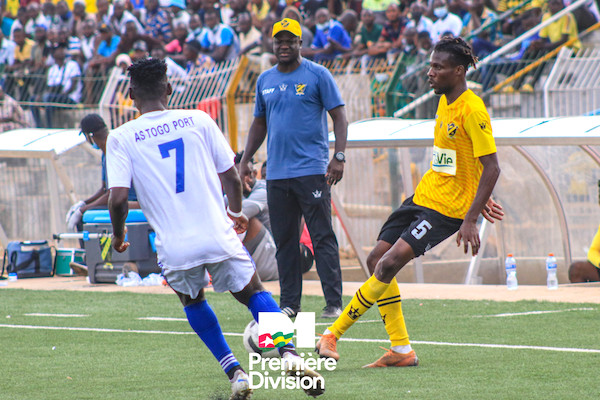
The first projects were launched in 2022. Four years later, what has actually been done? This is the question that has been plaguing minds since the official announcement of the creation of the Togo Professional Football League.
Big announcements without big actions
Professionalizing football in a country is not done by decree. Professionalization is the culmination of a real work that is done upstream. Among others, the construction of sports infrastructures, the adoption of FIFA standards for the management of leagues, the definition of a legal, financial and sporting framework, the training of coaches, requirements for clubs (youth teams, women’s teams, football academies)... This list is not exhaustive. Unfortunately, none of this is visible 9 months before the start of this professional championship despite the big announcements.
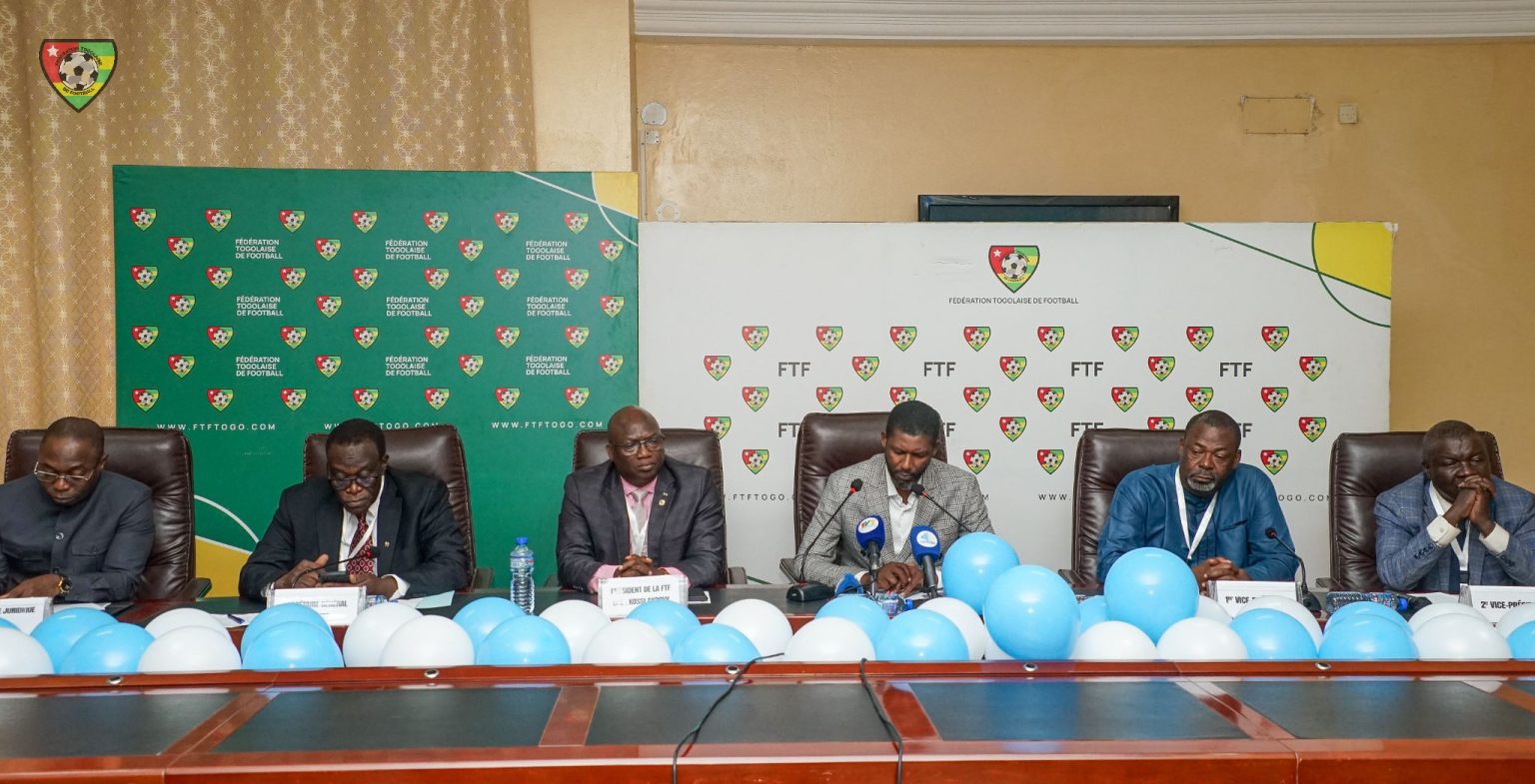
At the creation of the Professional League, Guy Akpovi, the president of the FTF, as usual, made great announcements again for what seems to be a real leap into the unknown.
“The process that brings us together today is the culmination of hard work that began several years ago. Since the first reflections on professionalization in 2022, the Ministry in charge of Sports and Leisure and the FTF Executive Committee, supported by experts, have worked tirelessly to redefine a legal, technical, and economically viable framework. The Professional Football League of Togo will not be the business of a single man or an office. It will be what we do collectively,"
he said.
The big challenge remains infrastructure. Togo has few stadiums for the 14 clubs currently playing in the first division. In the capital, the municipal stadium of Lomé is overexploited. This is an example among many others. A very important aspect in the professionalization process that is currently failing. The current lack of infrastructure prompts the Togolese journalist David Assimadi to express reservations about the professionalization project.
'The professionalization towards which Togolese football tends today is a priori a good thing. However, I have doubts related to the prerequisites to be completed before joining the professionalization phase. The first prerequisite is related to the construction of infrastructure. Today, we have very little infrastructure to host a professional football competition, including the elite championship while in a few months, this professionalization is supposed to enter into a practical phase. This poses a problem because within 6, 7 or 8 months, a certain number of infrastructures must be assembled to given standards. It’s feasible but in practice, I still have doubts. Unless there are large works quickly,"
he said.
70 million CFA francs from the State is far from being sustainable
The facts are sacred. In the current championship, the State has its share of subsidy which is 10 million CFA francs per club. The Togolese State clearly has difficulty meeting its commitments to the clubs of the first division. Regarding the professional championship, it is announced a support from the State to the tune of 70 million CFA francs per club. Is this promise tenable? That’s the big question.
"Maybe Togo has come across deposits that could notably boost the issue of financing."
David Assimadi also expresses reservations about the ability of the Togolese State to honor these commitments this time while giving it the benefit of the doubt.
"The second criterion is related to the funding, for a start, of the clubs by the State. It is a funding that goes in the order of 70 million and more. In the recent past, clubs had difficulty collecting even 10% of this amount. I wonder if there is a financial windfall somewhere or if Togo has fallen on deposits that could notably boost the issue of financing. I remain hopeful that the State, being the State in its sovereign role, will put words into practice so that we have a fairly successful professionalization,"
he said.
Dela Ayité, a Togolese journalist, remains doubtful about the success of this professionalization project at this pace. Better, he advises a semi-professionalization in order to evaluate the different contours, drawing a parallel with the bitter failure of Gabon a few years ago by adopting the same method. He advocates a progressive method.
Join our sports community!
Follow us on social media to never miss real-time sports news.
À propos de l'auteur

Philemon MBALE
Rédacteur sportif
Passionné de sport depuis toujours, partage avec vous les dernières actualités et analyses du monde sportif.