
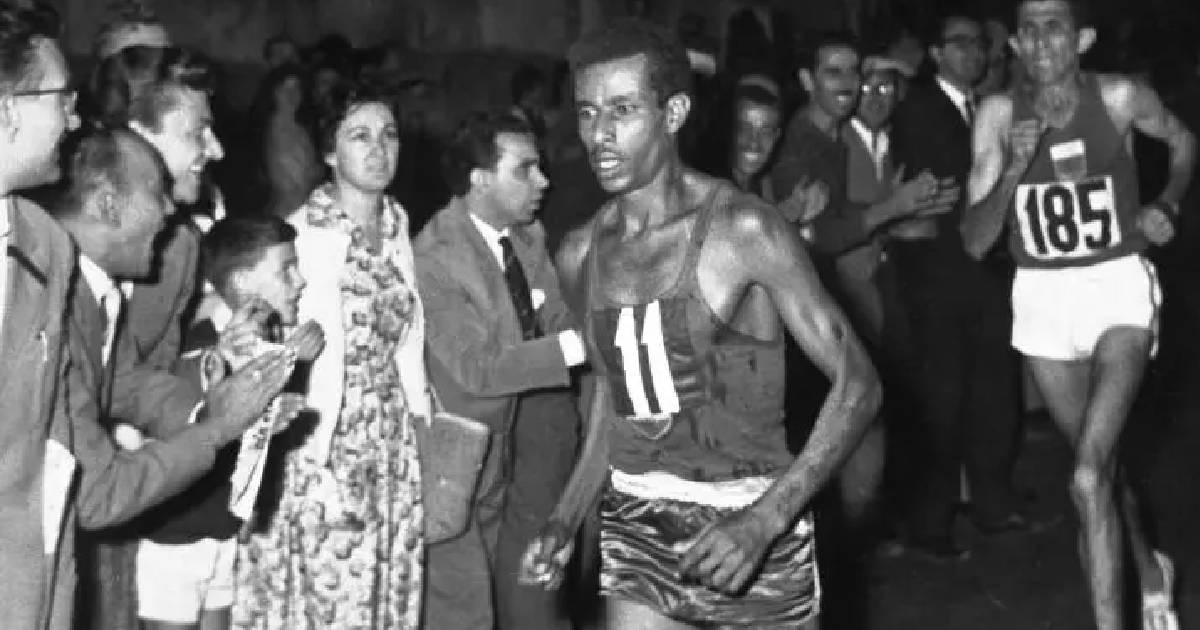
Abebe Bikila was born in 1932, 130 km away, in a village north of the capital, Addis Ababa, to parents who were pastoralists. Due to the Italian invasion of Ethiopia between 1935 and 1936, Bikila’s family had to flee. He joined the army and the imperial guard of Emperor Haile Selassie. It is in this profession that he began his career as a sportsman, since the Emperor wanted to make Ethiopia shine on the international stage through sport. So, he invested a lot in sports infrastructure. Well-executed training sessions that allowed Bikila to make history later at the Rome Olympics with her gold medal in the Marathon.
Optimal preparation for the 1960 Olympics
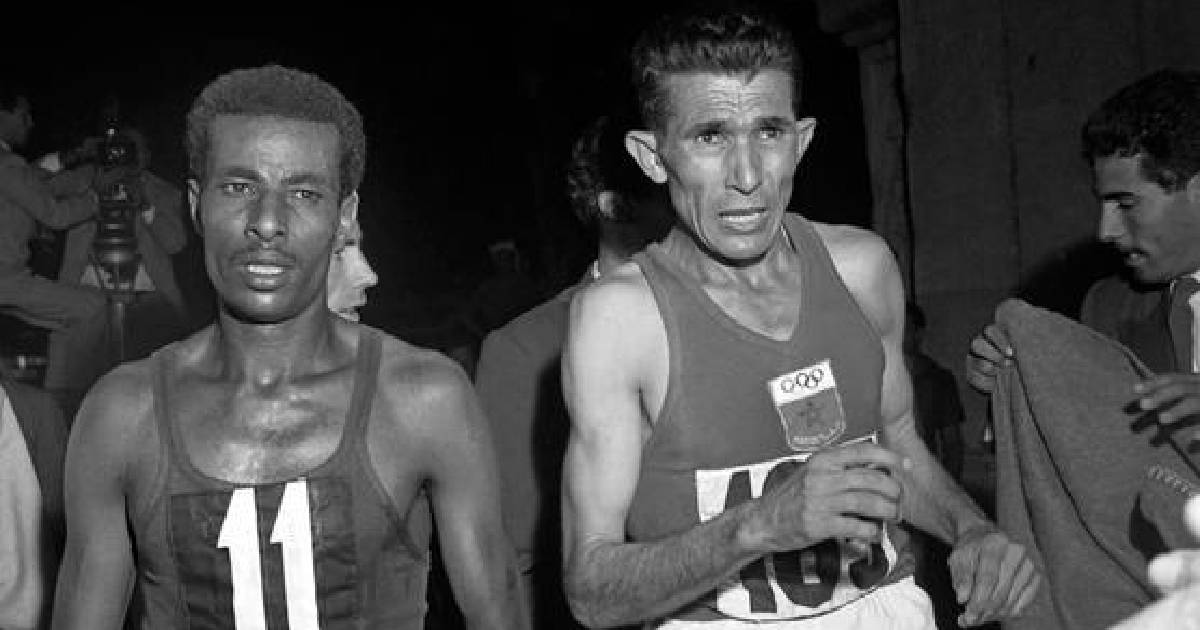
For these Olympic Games in the Italian capital, Ethiopia has put great effort into it. The Ethiopian Olympic Committee put the athletes in excellent conditions to perform during the competition. Scandinavian coaches were recruited to bring the athletes up to speed.
Abebe Bikila was not part of the initial team for the Olympic Games. But, he was finally able to fit into the group because of an injury from his teammate Wami Biratu.
Led by Swedish coach Onni Niskanen, the Ethiopian delegation arrived in Rome a month before the start of the Olympics. Tests on the Roman and ancient cobblestones of the Via Appia Antica were carried out. It was from there that the collective strategy was adopted with a barefoot race. Since foot grip remains better when running without shoes.
Abebe Bikila killed all the suspense at the Marathon, a lightning victory
The Ethiopian team chose a barefoot race, and it was a real help for Abebe Bikila during the official competition. He ran faster than his competitors. The latter showed signs of fatigue after the first 6 kilometers.
At the contact with Bikila, the pursuers give up their grip as the miles go by. At the exit of the Via Appia Antica he placed his decisive acceleration and won the marathon. The shepherd’s son, 28 years old at the time, swallowed the mythical 42.195 km in 2h15'16 and became the first athlete from sub-Saharan Africa to be awarded a gold medal at the Olympic Games.
A historic victory for Bikila that has real symbolism in Ethiopia. Since the marathon route passed by monuments in Rome that speak to Ethiopians. The arrival of the marathon took place under the Arch of Constantine, from where in 1935 the Italian troops left for Ethiopia. At 500 meters from the Arch of Constantine; the Aksum obelisk stolen by the Italians in 1935 in the province of Tigray (Ethiopia).
"It is an immense pride to have won this victory. We see it on the return of the Ethiopian delegation where there are a hundred thousand people at the airport in the Ethiopian capital. It is also a victory that is very important throughout black Africa. There is a prestige of Ethiopia, which at that time was the only independent country in Black Africa and it was a country that made a demand to free the continent from colonial rule. The victory of Abebe Bikila had a worldwide impact. This victory marks the entry into the Olympic movement but more broadly on the world political scene of all colonized countries.”
said Fabien Archambault, historian, specialist of contemporary Italy and the history of sport, during an interview granted to TV5 Monde in 2024.
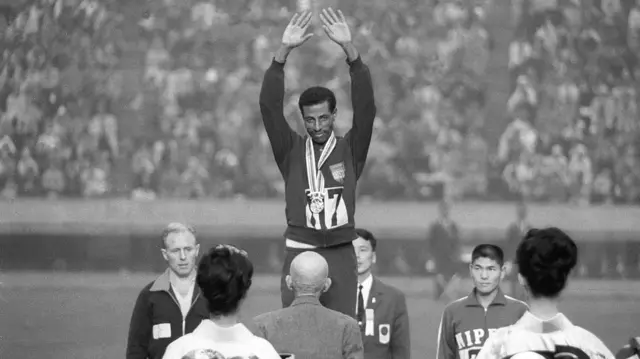
After his victory in Rome in 1960, Abebe Bikila repeats it four years later in Tokyo, Japan. Despite his appendicitis surgery, the Ethiopian retains his gold medal at the 1964 Olympics, this time in his shoes. He outclassed his opponents with a new world record in 2:12'11, the second one arriving four minutes later.
Abebe Bikila died on 25 October 1973 in Addis Ababa at the age of 41 following a serious car accident.
Join our sports community!
Follow us on social media to never miss real-time sports news.
À propos de l'auteur

Philemon MBALE
Rédacteur sportif
Passionné de sport depuis toujours, partage avec vous les dernières actualités et analyses du monde sportif.