
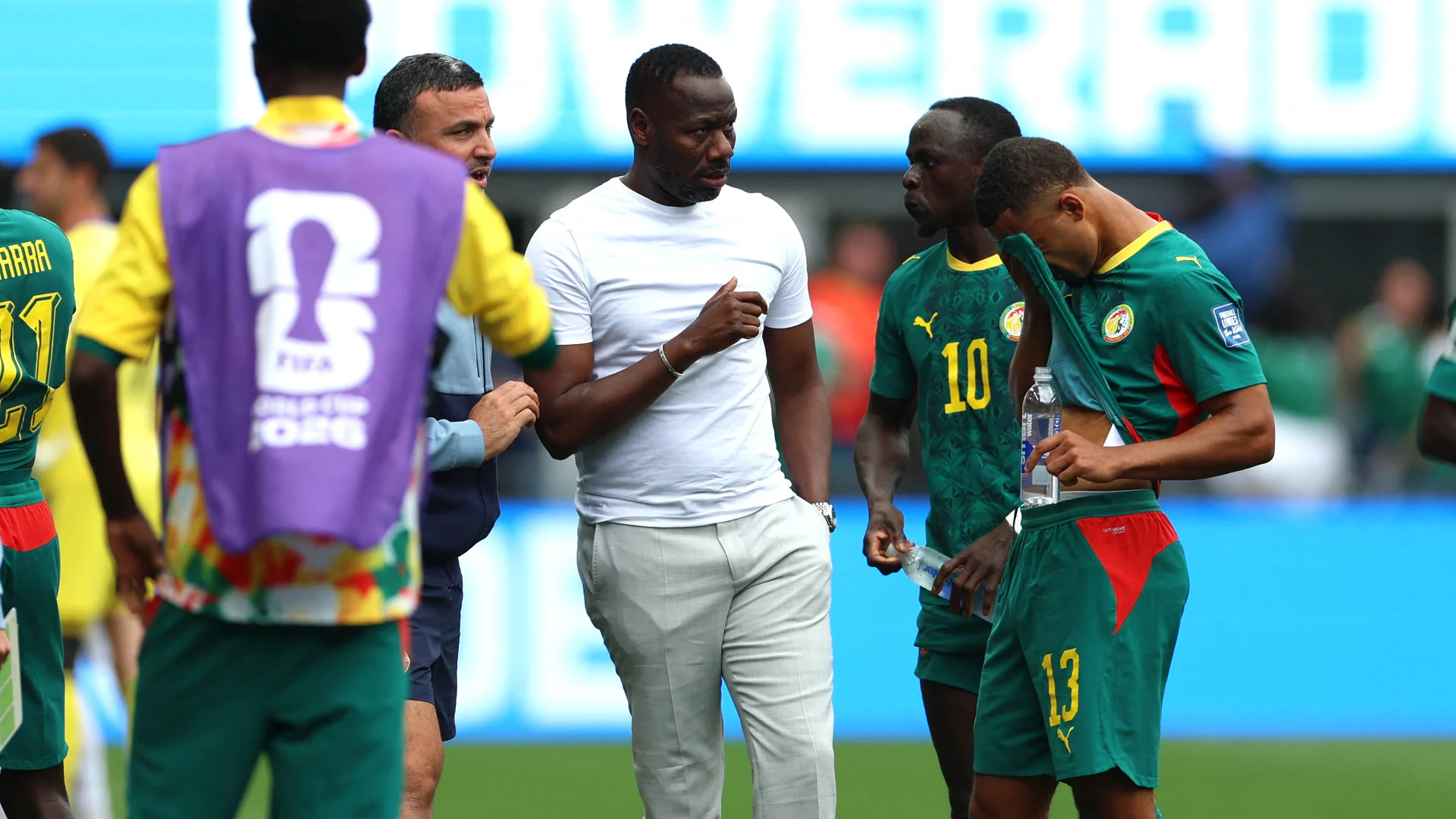
When he announced his squad, Pape Thiaw surprised everyone by announcing not 26 but 28 players. The coach explained at his press conference that he had included two reserves in his group and had already informed them of their roles. While many hypotheses circulated about the true identity of these two reserves from the official announcement of the list until the elimination of the Lions, an official document consulted by Sport News Africa regarding the players selected for the World Cup confirms that Ilay Camara and Bara Sapoko Ndiaye were the two reserves added to the group.
Malang Sarr as a reserve
Altogether, the overall list included 26 players and 9 reserves, who were: Pape Mamadou Sy (Metz), Ilay Camara (Anderlecht), Lamine Sy (Auxerre), Malang Sarr (Lens), Bara Sapoko Ndiaye (Bayern Munich), Mamadou Diakhon (Club Brugge), Cheikh Tidiane Sabaly (Vancouver), Habib Diallo (Metz), and Boulaye Dia (Lazio).
This confirms that Malang Sarr was indeed on the radar of Pape Thiaw's staff. After a successful season in Ligue 1 with Lens, a first call-up had been widely expected. But as revealed several weeks ago by Dsports, there was interference from team veterans to block his arrival for sporting reasons but also due to his previous statements in the media.
The match against the USA: fatal for Moustapha Mbow
Informed about their role, Ilay Camara and Bara Sapoko were supposed to support the team during preparation and gain experience with the veterans. But things changed after the first training sessions and especially the first warm-up match against the United States. On the field Senegal lost 3-2, but beyond the score, it was the overall performance that worried the staff, particularly some individual failings that highlighted players lacking match fitness or completely out of confidence.
Among them, the most glaring was that of Moustapha Mbow. Coming off a successful season with Paris FC, the defender failed in his appearance: he was at fault for the second American goal, nearly cost the third before it was finally disallowed for offside, and generally showed nervousness with ball losses that raised concerns.
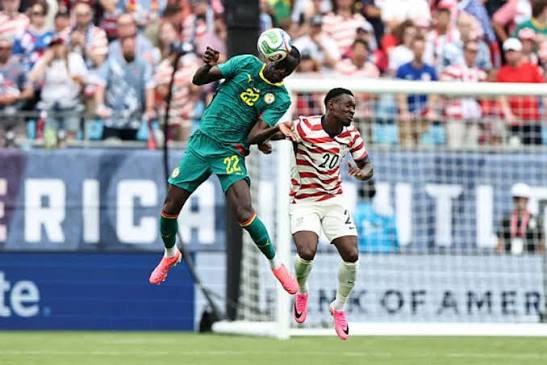
Following this match, the technical staff began to have doubts regarding "Mbow's mental collapse", his management of emotions, and his ability to handle them in knockout games, whereas the young Bayern midfielder won points and showed character.
A discussion took place with Pape Thiaw, who informed him that he would not be taking part in the World Cup. The next day, the final list was sent to FIFA with Bara Sapoko Ndiaye taking his place. A strong decision by the coach, but one not necessarily well received by everyone; some players close to Mbow saw him give up on his World Cup dream even though he was initially among the 26. "With players, it can quickly get complicated when you go back on your word," confides someone close to the group.
The Chérif Ndiaye case
Another reserve left out, Ilay Camara also could have had the chance to be included in the group of 26, at the expense of Chérif Ndiaye. On this point, there is a gray area and two conflicting versions.
The first surfaced before the end of the group stage, indicating that after the friendly against the USA, Pape Thiaw chose to replace Samsunspor player and Mbow with Bara Sapoko Ndiaye and Ilay Camara, who satisfied in training. Upon hearing the news, the striker caused an uproar, triggering an emergency meeting with team leaders and the coach. After the meeting, he was said to have been reinstated.
The second version categorically denies this theory, indicating that the only change that occurred was that of Mbow, and the Chérif case was a destabilization attempt against the group. "There never was a meeting with team leaders to reinstate Chérif, because taking Ilay Camara in his place was never an option," a staff member indicates. In the end, Chérif Ndiaye did not play a single minute in this campaign.
Players between injuries, poor form, lack of match fitness and confidence
In any case, this preparation period, which was supposed to allow the Lions to build up and gain confidence, ultimately did not have the desired effect. Quite the opposite. This was notably due to very uneven levels of match fitness within the squad, with many players far from their level at the time of AFCON 2025. This was quickly observed by Pape Thiaw and his staff. This created the impression that some players were not really aware of their actual physical condition or else did everything they could to be part of the World Cup even though they knew they were not at their best.
After the defeat against France, captain Kalidou Koulibaly publicly admitted that several players, including himself, Idrissa Gana Gueye, and Pape Gueye, were suffering from a lack of match fitness and accumulated fatigue over the season. A highly significant admission.
"Many came thinking they could play a role at this World Cup, but preparation showed that their physical level did not meet their expectations," continues an internal source.
Several players also had difficulty understanding the coach's decision to persist with Kalidou Koulibaly despite his obvious limitations in training, being caught out for pace several times or dropping too deep to avoid being caught out behind.
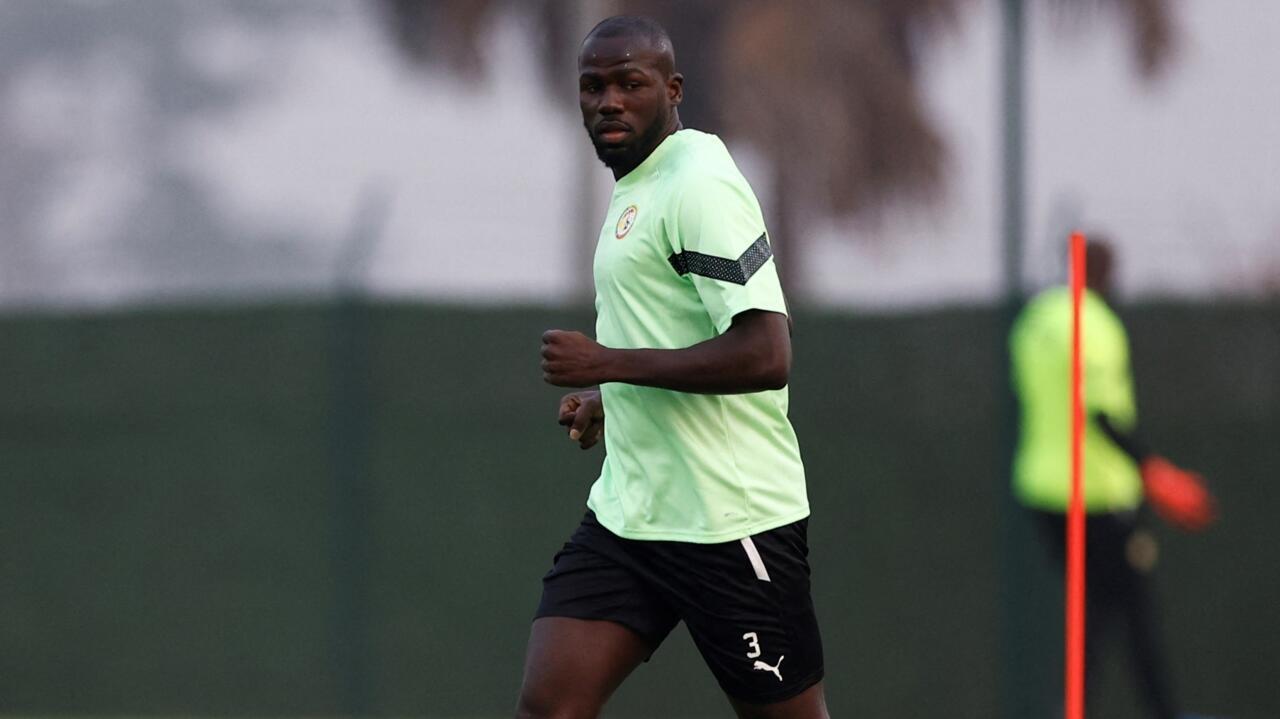
While the injuries of the defender and Idrissa Gana Gueye were known to all, others did not meet expectations even though they could have played a major part. Foremost among them Assane Diao. Although back in action with his club Como, the winger lost both his explosiveness and acceleration that were his strengths in training.
Supposed to be able to replace Koulibaly as he did in the semi-final and the final of the AFCON, Mamadou Sarr paid the price for his poor form and a loss of confidence since his return to Chelsea during the second half of the season. However, it is said that he always maintained an impeccable attitude within the group. Suffering from a shoulder injury for some time, Pape Matar went through this World Cup like a ghost, very far from the player who carried the team in Kinshasa by scoring the 3-2 goal to put Senegal back atop its qualifying group.
So many young players who could have replaced the veterans but ultimately had to sit on the bench. Added to that were some whose behavior was described as lackadaisical at times, others with a closed-off demeanor when learning they were not starting, notably Nicolas Jackson, whose frustration was not well understood by his teammates, given his performances.
Logistical failures regarding food
As revealed by Sport News Africa the day after the opening defeat against France (3-1), numerous issues affected the team on US soil, starting with food problems. Evacuated in a hurry after an accusation of sexual assault against a kitchen assistant (which he denies, editor's note), the chef who accompanied the Lions spoke out about the organization.
"Nothing was ready despite two months of preparation. All products were supposed to be available for Senegal. Unfortunately, there was nothing (...) I told Maya Fall (appointed by FIFA to coordinate the logistical aspects of catering for the Senegalese delegation): "You sabotaged the catering in San Antonio, but I will not tolerate this here"" he stated in the columns of L'Observateur.
The tensions reportedly continued during the delegation’s trip to New Jersey. According to the chef, the repeated absence of requested foods forced him to call on Senegalese Football Federation officials to resolve the situation and to buy the necessary products for his cooking, especially halal.
Ismaïla Sarr and Pathé Ciss forced to handle their visa applications
And while there were failings with food (the hotel offered very fatty and oily food unsuitable for top-level athletes), even the players' arrival did not go smoothly. While the delegation flew from Dakar to the USA at the end of May, several players were missing. Chief among them: Ismaïla Sarr and Pathé Ciss.
Competing in the final of the Europa Conference League on May 27 with their respective clubs Crystal Palace and Rayo Vallecano, both players did not join the national squad until June 6. That was after the arrivals of Ibrahim Mbaye, who saw PSG play in the Champions League final a few days later, as well as Yehvan Diouf and Antoine Mendy, who were playing a playoff to stay in Ligue 1 with Nice...
According to information from Sport News Africa, Sarr and Ciss were delayed by visa issues, as their applications had not been submitted by the relevant staff. After arriving in Dakar, they had to personally apply for visas for the United States and Canada. But since the process was taking too long, a solution was eventually found via the Senegalese consulate in Paris. They then went to France to apply and receive the required visa, so they could then join the team preparing for its second friendly against Saudi Arabia.
Pape Gueye puts pressure on the FSF... the clash happens
A visa problem also occurred for the video analyst called in to help before the match against Norway. Upon arrival, he was unable to accompany the team to Canada for the final group match against Iraq. However, according to information gathered by Sport News Africa, he had all his documents in order and was only missing the necessary visa request from the Senegalese Football Federation... which was not made. "He arrived and was left to fend for himself even though he could have been in Toronto," said a member of the delegation. "But since he is diligent, he did his job remotely."
So many shortcomings, failures, or lapses in organization that impacted the work of Pape Thiaw's staff, but more importantly, the daily life of the players who accumulated much frustration, while at the same time seeing some officials enjoying the trip before their eyes.
Faced with this situation, Pape Gueye continually confronted the federation leaders, holding them accountable for organizational failings and preparation conditions. This ultimately led to two altercations with FSF officials. One with Bamba Ba, FSF’s head of organization, who nevertheless denied this incident. The other with Secretary General Abdoulaye Sow. This second altercation was more heated, with a fierce exchange of insults—unrepeatable due to their content. It almost degenerated into a physical fight before the two men were separated. The Villarreal midfielder then said: "You have destroyed the team, you are not up to the task!"
A poisonous atmosphere, with senior players silently supporting their young teammate instead of taking the fight with him—which was not to the liking of the younger ones, who grew more frustrated as the tournament progressed. This previously close-knit group, which would book a table for thirty after the match at the Stade de France against Peru just a few months ago, gradually fell apart into smaller cliques not in conflict, but barely speaking to each other. A buildup of small details, from the supposed power of veterans over Pape Thiaw to the federation’s chaotic organization, ultimately pushed the Lions far from a World Cup to forget.
Romain MOLINA and Mansour LOUM
Join our sports community!
Follow us on social media to never miss real-time sports news.
Tags
À propos de l'auteur

Romain MOLINA
Rédacteur sportif
Journaliste et écrivain, auteur de nombreuses enquêtes dans le milieu du sport.