
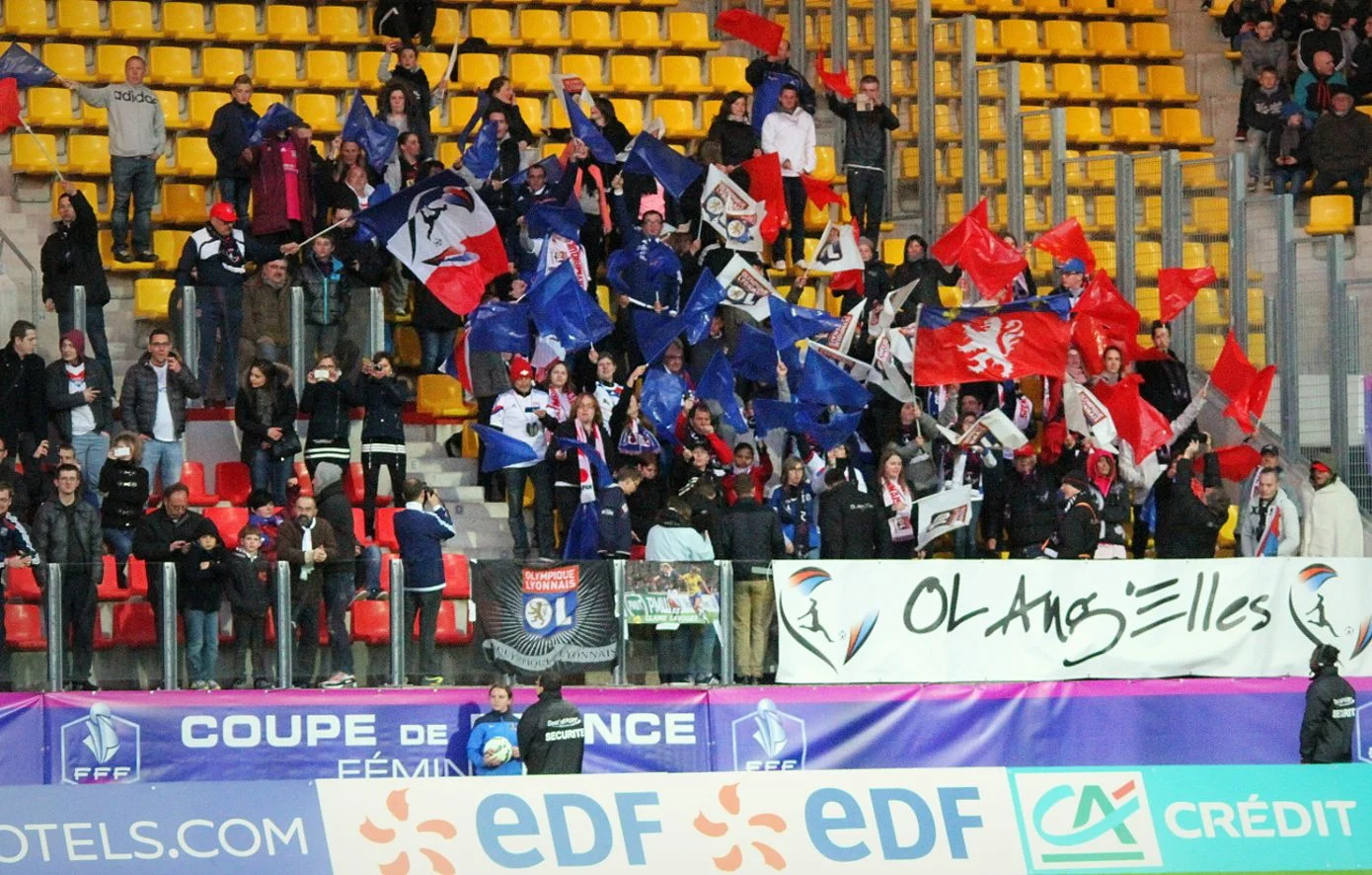
It’s the last straw. The announcement came as a chopper for the faithful of the Fenottes: the final of the brand new Coupe de la Ligue, which will oppose OL Lyonnes to Paris Saint-Germain on March 14, will take place at the Félix-Houphouët-Boigny stadium in Abidjan, Côte d'Ivoire.
While the French Football Federation is focusing on the international influence of French football in West Africa, historical supporters on the Lyon side see this choice as a provocation. This Monday, the fan group OL Ang'Elles issued a clear statement announcing its boycott of the event.
A 'STOP' in the face of commercial drifts
"Even if our choice is 'Everywhere', when certain imposed practices go too far: one must know how to say STOP," the association claims. Through this communiqué, fans denounce a decision guided by commercial imperatives, the relocation being supported by a sponsor, to the detriment of local anchorage and accessibility for French supporters.
We understand that some teams in our championship want to play more matches and that organizing this new competition requires financial resources. This must not, however, be at the expense of the finalist teams, who are supporting a French football that has just embarked on a professionalization phase, even as competition from other European championships is increasing," adds the group.
The announcement of the relocation of the final of the Coupe de la Ligue to Abidjan is part of a "soft power" strategy already tried by the French authorities, although still contested by the fan bases. If women’s football is taking a new step here, men’s football has served as a laboratory for these national trophy exports for more than a decade.
The Champions' Trophy: pioneer of export
The most emblematic case remains that of the Trophée des Champions, which opposes the French champion to the winner of the Coupe de France. As early as 2009, the Professional Football League broke the codes by organizing the meeting in Montreal, Canada. This international shift was intended to increase the visibility of Ligue 1 abroad. Since then, the event has traveled to almost every continent:
Africa: Tangier (Morocco), Libreville (Gabon) and Tunis (Tunisia).
Asia: Beijing and Shenzhen (China).
America: Harrison (USA).
Middle East: Tel Aviv (Israel).
An economic model in the face of local fervor
The example of the Spanish Super Cup, massively relocated to Saudi Arabia in a 'Final Four' format, had already caused a similar outcry in Europe. The authorities often justify these choices by financial benefits essential to the development of clubs, but supporters, like OL Ang’Elles today, see it as a break in social ties. For Olympique Lyonnais who are used to these international games, the stakes are high: how to shine on the other side of the world without sacrificing the soul of its stands?
African precedents: a mixed popular success
If the editions organized in Morocco (Tangier 2011 and 2017) had been popular successes thanks to geographical and cultural proximity, other experiences like that of Libreville in 2013 had left a taste of unfinished in terms of real attendance and atmosphere in the gallery. By choosing the Ivory Coast, a football country par excellence and memorable host of the AFCON 2023, the sports authorities bet on local fervor to hide the probable absence of French fan groups, hindered by travel costs.
Rejoignez notre communauté sportive !
Suivez-nous sur les réseaux sociaux pour ne rien manquer de l'actualité sportive en temps réel.
À propos de l'auteur

Philemon MBALE
Rédacteur sportif
Passionné de sport depuis toujours, partage avec vous les dernières actualités et analyses du monde sportif.
