
1983: Zaire's Leopards End Senegal's Dominance at the Women's Afrobasket
1983, Zaire's revenge on Senegal. Sort News Africa looks back at the Congolese women's triumph over the Senegalese.
Sport News Africa · Author profile ·
Listen to this story
Audio version in preparation · read aloud by your browser meanwhile
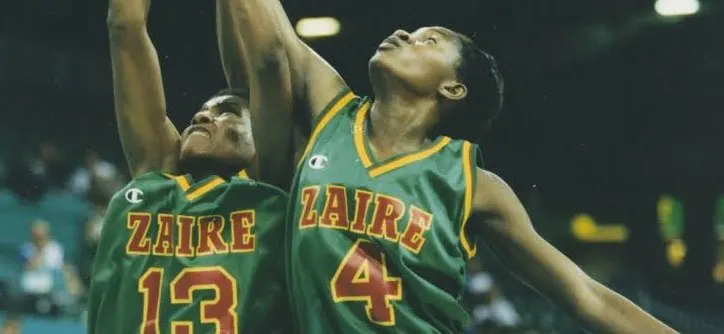
It has been just over two decades since Congolese women's basketball lost its standing on the continental stage, having long been among the benchmarks in Africa in 1981 and 2000. It was in 1983 that the DRC, formerly Zaire, won its first African championship title at the Afrobasket held in Angola. The Leopards won all five of their matches in this competition, which was played as a round-robin after some of the teams expected in Luanda withdrew. With this title coming two years after their second-place finish in Dakar, the Zairian women of the era confirmed their place at the top level of the continent, ending the dominance of Senegal, which had won four titles in a row.
A forward for the Leopards at this 1983 Afrobasket, Gertrude Ndombe Kiangebeni recalls this title, which remains one of the highlights of her career. "In 1981 we were African runners-up in our first participation at the Afrobasket. Watching the others play, we told ourselves that we were their equals. When we returned to Kinshasa, President Mobutu received us and asked us to bring back the Cup at the following tournament. He put resources at our disposal and, once we arrived in Luanda, everything was a simple formality. So we won this first continental title. It was the best day of my young career and today it is one of the highlights of my career as an athlete" she said.
Revenge on a mighty Senegal
During this 1983 Afrobasket, the DRC won all five of its matches, the first four of them comfortably, notably thanks to Longaza Kamimbaya, the competition's top scorer with 130 points. They won by 14 points against the host nation, Angola (71-57), and three times by at least 20 points against Côte d'Ivoire (73-53), Mozambique (76-55) and Cameroon (82-47). The only difficult match was the last one, against the Lionesses of Senegal, four-time reigning African champions, whom the Leopards beat by just 4 points (72-68). The Zairian women thus managed to take their revenge on the Senegalese, who had beaten them in the final of the 1981 edition in Dakar, notably after a great deal of intimidation before and during the final, Gertrude Ndombe Kiangebeni remembers. "All the teams were of a good standard; Angola, the host nation, played well, Mozambique too. But the big obstacle was Senegal. But because we had prepared well, we went and got this title. The Senegalese women were a model for us. We wanted to emulate them, and above all take our revenge after the final we lost in Dakar two years earlier. A final that we played in a tense atmosphere" she recalls.
Mobutu, the great visionary
The Leopards achieved this performance thanks to the then President of the Republic, the late Joseph Mobutu. A major African political figure who wanted to dominate the continent, Mobutu gave his national team the means to match its ambitions, with excellent preparation conditions and generous bonuses. "President Mobutu was a great man, a basketball enthusiast. He put every resource at our disposal to go and win the title. Financial resources above all. Even mentally, we were well hardened. For every major competition we had three months of preparation. The first month we were in camp at home, the second month we were outside the country; sometimes we went to the United States to learn. They called us the commandos. Sometimes we were in camp with the male footballers and basketball players. And everyone was amazed at the way we prepared" she said.
And she added: "For us, it was passion first; we went to the competition because we loved what we did. It wasn't money that interested us, we wanted the result first because we knew that on returning home we would be received by President Mobutu". After 1983, the Leopards won two more women's Afrobaskets, in 1986 and in 1994.
Masiala Jonathan