
Meet Dacky Mbor Camara, first captain of the Syli National
Guinea's first national football team was assembled in 1960, with Dacky Mbor Camara as its first captain
Sport News Africa · Author profile ·
Listen to this story
Audio version in preparation · read aloud by your browser meanwhile
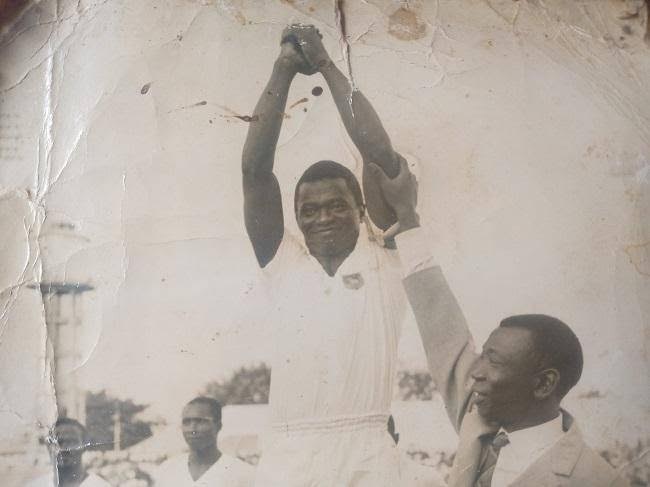
Just months after gaining independence, Guinea set about putting together its first national team. Built on the ruins of the old colonial clubs, the Syli National was born. To raise their standard, Guinea travelled to Germany and Hungary, among other places, for training camps. The side would later shine on the continental and, in particular, regional stage. Now aged 90, Dacky Mbor Camara was to be its first captain. He looks back on the spell that thrust him into the limelight wearing the armband of newly independent Guinea. «After independence, all the colonial teams were dissolved to form a national team between 1959 and 60, to represent Guinea internationally. I was selected in Conakry. And I was part of the group that went to Hungary to play. At that time, Hungary was a great football nation, one of the best teams in the world in the 1960s», explains the nonagenarian. He goes on. «After the players who were to make up Guinea's first team had been picked, we needed a captain. There were two candidates, my friend Aboubacar Barate and me. To settle it, a vote was held. When the votes were counted, I was elected captain and Aboubacar Barate Camara became vice-captain. The group had confidence in me. I was the oldest in the group, as it happens», reveals Dacky Mbor Camara.
This national team, with Dacky M’bor Camara as captain, had its moments of glory but also of failure. This giant of Guinean football enjoyed success during his years in the national side wearing the captain's armband. «Back then, there wasn't much of an organisation to stage major competitions on the continent. So we played in the PDG Cup (named after the single party in Guinea). On top of that, after our training camps in Germany and Hungary, or even in Yugoslavia, we Guineans played a lot against West African countries such as Mali, Ivory Coast and Senegal, among others», he recalls. After the colonial clubs were dissolved, we played in the PDG Cup, which I was lucky enough to win. I was one of the players who took part in that competition. And on two occasions. Both times I played in the tournament, we won the cup, so that's two cups, as it happens», the former captain M’bor Camara remembers once more.
Jail after a defeat
After Guinea gained independence, the regime instituted a reign of terror. Some opponents were imprisoned and others executed. Even footballers did not escape. A number of them ended up behind bars. After a defeat against Liberia, many were deprived of their liberty. «Back then, we worked hard. I remember that once we played a match against Liberia. We lost (1-0). It was a hard-fought match against Liberia. A defeat that went down badly with the authorities, recalls Dacky Mbor Camara. After the game, it was purgatory. The sports minister at the time, Toumany Sangaré, summoned us to the stadium. When we arrived, there was a heavy security presence. The minister berated us, telling us we had not represented the country well. He demanded explanations. Straight afterwards, the police loaded us onto buses and took us to prison. We spent a few days there before being released», the nonagenarian goes over it again.
His career was certainly strewn with obstacles, but it bears witness to what this player achieved. Now 90, Dacky Mbor Camara lives out peaceful days in his family compound in Conakry. Like maître Naby Camara and Ibrahima Kandia Diallo, he belongs to that first generation of sportsmen who gave Guinean sport its prestige in the years straight after the country's independence.
Mamadou Gongorè DIALLO