Audio version in preparation · read aloud by your browser meanwhile
Sport News Africa: Tell us a little about this discipline, Sambo?
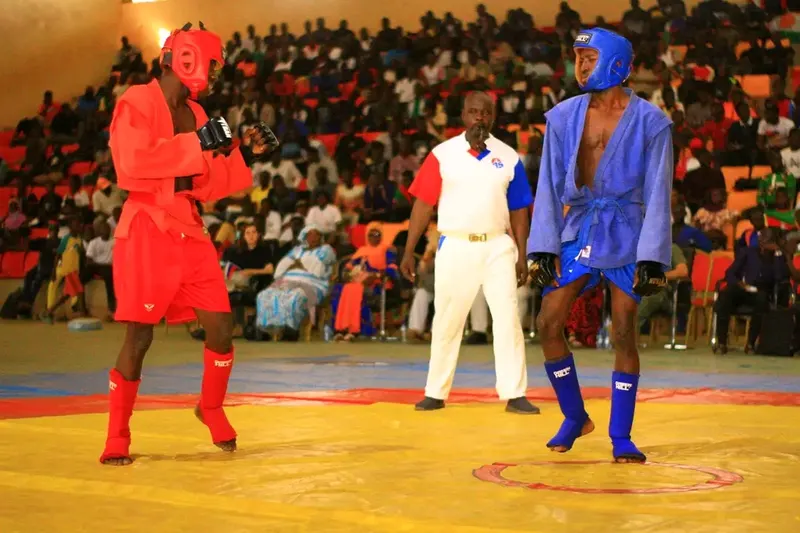
Amidou Guindo: Sambo is a combat sport. It's a martial art of Russian origin whose name means self-defence without weapons. It's a sport that brings together elements of combat sports such as judo, wrestling, boxing and karate...
How does Sambo differ from other martial arts?
Firstly, the discipline's Russian origin sets it apart. Secondly, it's a sport with three styles, even four, namely sport Sambo, which is a blend of judo and wrestling; combat Sambo, which is sport Sambo plus kicks, punches, headbutts and knee strikes; and lastly self-defence Sambo, which is purely about dealing with an assault. That's really about the street: when you're attacked, what do you need to do to defend yourself?
Do all 3 styles feature in competitions?
No, in competitions it's sport Sambo and combat Sambo that come into play. Self-defence Sambo, as I said, is about dealing with an assault. It should be pointed out that Sambo was created for the military. In the 1930s, Russia was going through a difficult situation and the state asked experts to come together to create an effective fighting style for the military. That's how Sambo was born.
How did Sambo arrive in Burkina Faso?
In 2019, I went to Mali for my first training course. Then I went to Egypt, Morocco and Russia so that I could get the discipline established in Burkina. But the Burkinabè Sambo Sports Association was officially set up in September 2020.
How many clubs or practitioners do you have at the moment?
Since the Burkinabè Sambo Sports Association was set up, we've been running awareness campaigns and training courses around the country to get clubs established. At the moment we have more than 12 clubs, in the towns of Koudougou, Fada, Tenkodogo, Ouagadougou and Ouahigouya, and pretty much everywhere except Bobo-Dioulasso for now.
How old do you have to be to practise Sambo?
You can start from as young as 5 and carry on to 50, 60, 70 years old. There are youth competitions at world level. So it's for all ages.
This image is unavailable on the original SNA site (recorded HTTP 404).Amidou GUINDO, secretary general of the ASBS
On the ground, do you face infrastructure problems like other sports in the country?
It's normal to face infrastructure problems, but for us it's a challenge. It's up to us to overcome everything to reach our goals.
Do you have a talent-spotting policy?
Every time we organise activities, we try to engage with secondary schools. We approach them and send them information about the organisation and the discipline so that pupils and others come to Sambo. The aim, as we know very well, is that this is where you find the future.
As for the kit worn by referees and competitors in blue, white and red, does that have anything to do with Russia?
It's to set Sambo apart from the other disciplines. At the start, the outfits were pretty much the same.
How do you go about joining?
To join, we have a centre in Ouaga 2000 where everyone comes to train. Everything is concentrated at the centre for the time being.
What project do you have lined up?
Sambo will take part in the 13th edition of the African Games, which will take place from 8 to 23 March 2024 in Accra, Ghana. It will be a big first for the discipline in Burkina.
Is there a chance of medals for Burkina?
Yes, of course. There's a chance we'll come back with medals in Sambo.
How many will be at the African Games?
Four people: a girl and a boy, along with a continental-level referee, who is a woman, and a coach.
Do you have an appeal for everyone who has just discovered Sambo through this interview?
Yes, the appeal is really to ask people to make an effort and come along each time we organise our activities, to get to know or discover this wonderful discipline, which is rich in techniques, new and very open.
Ablam GNAMESSO