
AFCON 2025: How infighting sank Gabon
Eliminated after two feeble games, the Panthers never existed at this AFCON 2025. Turned in on itself, the national team lived in paranoid isolation around its coach, Thierry Mouyouma, who was in a simmering conflict with several federation officials who would not have minded a failure as a way of getting rid of him.
Romain MOLINA · Author profile ·
Listen to this story
Audio version in preparation · read aloud by your browser meanwhile
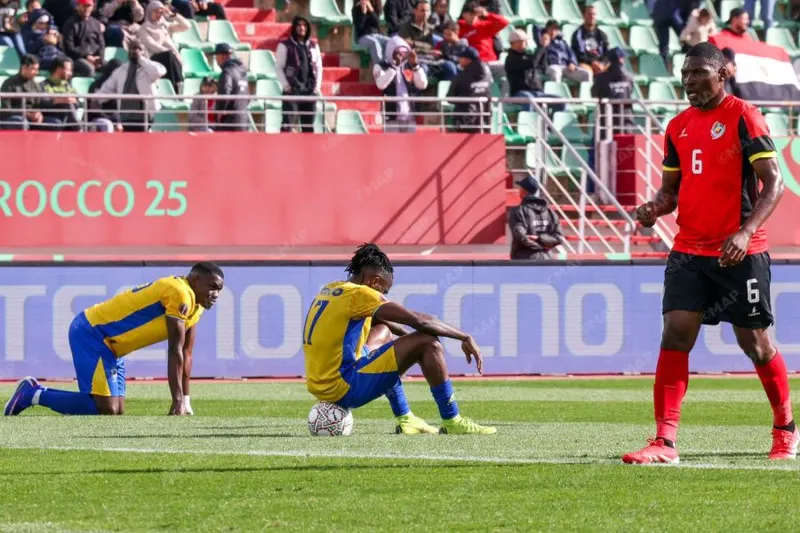
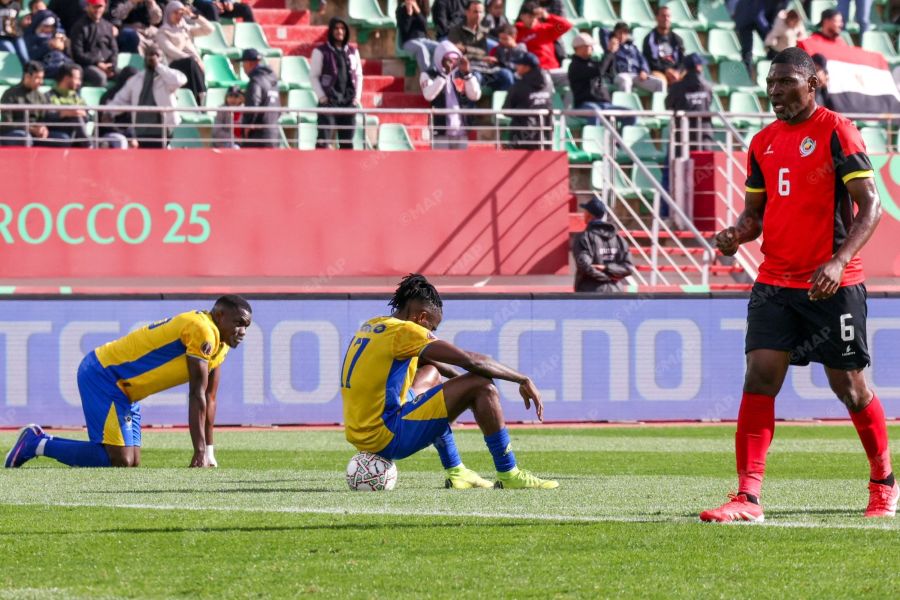
Outplayed by Cameroon (0-1) and then Mozambique (2-3), Gabon were out of this AFCON after just two feeble outings. A sporting fiasco, capped by a third defeat, against Ivory Coast (2-3), that stood in stark contrast to an excellent World Cup qualifying campaign which had stretched to the play-offs, ending in a semi-final defeat after extra time against Nigeria.
Read also: Gabon: Aubameyang sidelined, Mouyouma sacked… Government cracks down after AFCON 2025
So how do we explain such a debacle a month later in Morocco? Explanations vary depending on who you ask, but one thing is certain: the failure of this Africa Cup of Nations is not leaving everyone unhappy within a federation riven by clans and grudges around a deeply embattled coach: Thierry Mouyouma.
Mouyouma, owner of the kit-supply company GASMA
Well before their opening game at this AFCON, Gabon were sabotaging themselves with preparations unworthy of a professional team. As reported by AFC-Sports, the Panthers, for instance, were unable to play their warm-up friendly against Uganda for want of… shirts!
An unheard-of episode that capped an improbable kit-supplier saga involving a brand-new company, Gabon Sports Management “Gasma”, founded on 5 April 2025 for “sports management and the sale of sports accessories and equipment”. Yet the owner and sole shareholder of that company is none other than Thierry Mouyouma, the national coach!
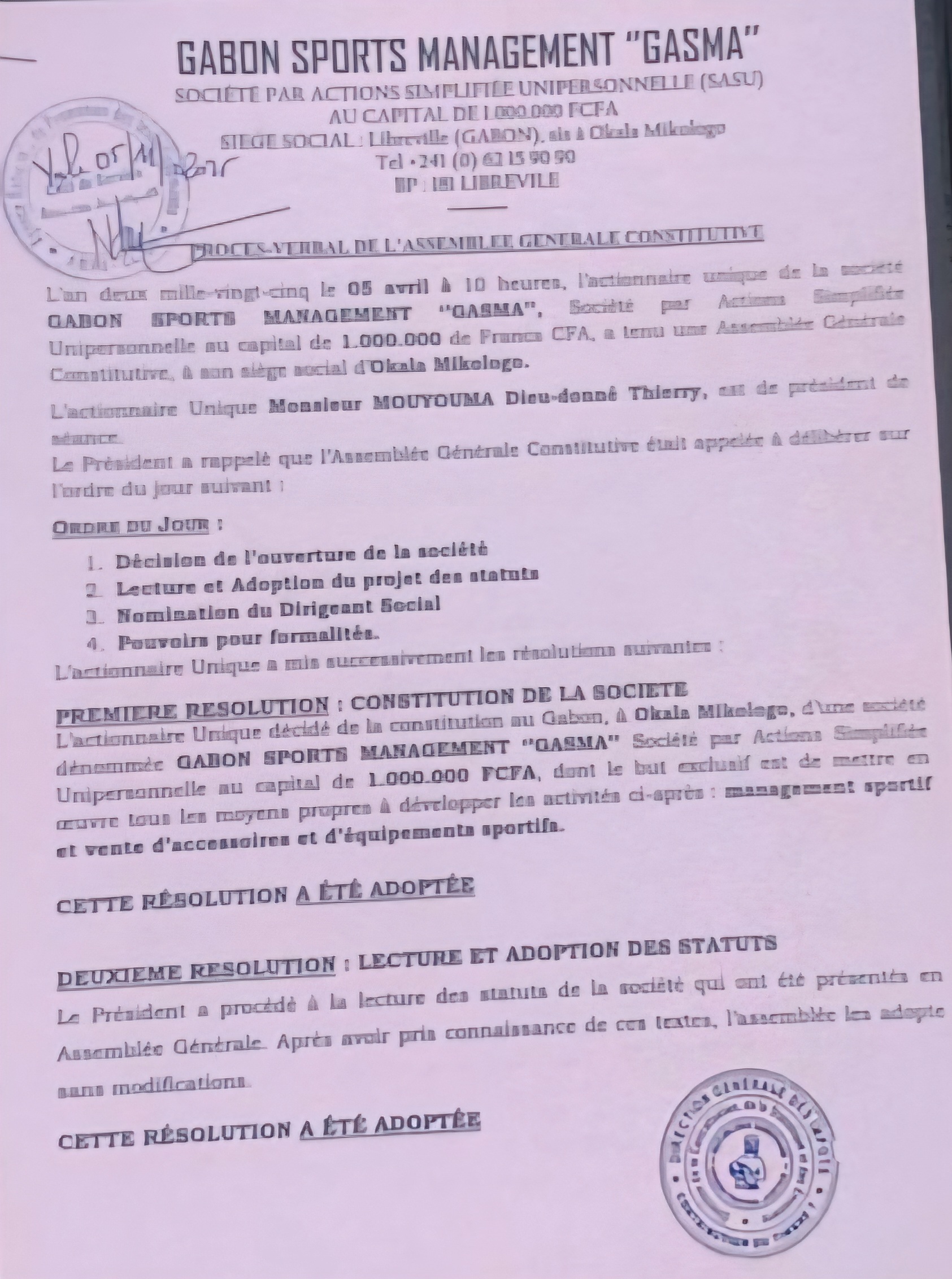
Through Gasma, Mouyouma was to work with the director general of the National Office for Sports Development, Commander Loïc Ngouayit-Kounda, to develop the “Gaboma” brand and give the illusion of a purely Gabonese label after the end of the contract with Puma.
Yet the presidency of the Republic allocated a budget of 300 million CFA francs for the purchase of kit. A tidy windfall that stirred up covetousness and left FEGAFOOT totally divided, well aware of Mouyouma’s interests. The problem: with no experience whatsoever in the field, “Gaboma” met none of the criteria demanded by CAF, which served the Gabonese federation formal notice by official letter for various reasons:
- Non-compliant fabric
- Unregistered brand
- No traceability
- Similarity to Airness’s logo and slogan
CAF’s verdict was final: “Gaboma” is not authorised for the AFCON. In a rush, FEGAFOOT signed a contract with a Moroccan company, AB Sport, but the shirts could not arrive in time for the scheduled match against Uganda. And that is how the Panthers went into the Africa Cup of Nations without a single warm-up game: over a story of big money and private interests, far removed from sporting logic.
Political choices and an ego problem
Installed in October 2023, Mouyouma was never the favoured candidate of federation president Pierre-Alain Mounguengui. In the wake of the coup and the political wish to have a local coach at the helm of the national team, Mounguengui preferred Anicet Yala, a former international who was part of the staff of Patrice Neveu, the previous coach.
But Yala did not hold all the necessary qualifications, like the majority of Gabonese coaches. A godsend for Mouyouma, a former international who was coaching in France while publicly campaigning for change in Gabon, in football and in politics. An activism that alienated the FEGAFOOT bigwigs but found a receptive ear among those close to Brice Oligui Nguema, who like him hails from Haut-Ogooué.
Through several intermediaries, Mouyouma lobbied, playing the “local” card to the full, while some influential federation members convinced Mounguengui. And although the two men got on well at first, the relationship often blew hot and cold until a complete breakdown well before the AFCON.
In private, several FEGAFOOT officials lambast Mouyouma’s ego, as he accepts no criticism. In reality, some are irritated by his “political protection” and by the fact that he has taken over part of the business that previously went to those same officials. With Dieudonné Londo, the Panthers’ general manager, and Merlin Tandjigora, a team kit manager whose role is close to that of an assistant, the coach has created his own little group, which does not please everybody.
As evidence of this tension, Willy Ndong, the sports editor of the newspaper L’Union, who is close to the Mounguengui clan, wrote a scathing opinion piece on 29 December: “Thierry Mouyouma, a coach with no experience and no certainties”. An article particularly appreciated at FEGAFOOT.
Troubled communication, double talk over OM
With no shirts and no warm-up game, the Panthers also had the unpleasant feeling of living in isolation, as if cut off from the outside world. In a paranoid atmosphere, Mouyouma imposed an almost total silence and took on the general communication himself during the AFCON.
Increasingly withdrawn, which is understandable given the enmities within FEGAFOOT, he surprised many players with his press conference remarks, “arrogance” and a lack of self-criticism. Speaking of the “footix” who do not understand his choices, Mouyouma also alienated Olympique de Marseille, even though the Gabonese staff had given their word: Aubameyang would play no more than twenty minutes or so in the first match against Cameroon, given his return-to-play programme. Yet he came on after only half an hour, and the coach played the patriotic card at the press conference, “railing against OM’s attitude”.
Double talk that shocked insiders, as did his line-up against Mozambique, with Mario Lemina, the team’s real leader, deployed in defence. Completely overwhelmed, the Panthers sank in midfield and indeed everywhere. Without any real cohesion in their play, the Gabonese gave all they had, in disjointed fashion, right to the end to try to come back, without success (2-3).
Players picked in return for handing back part of their bonuses?
With no concrete sporting policy for years and no regular league, Gabonese football is losing its way. Given the demographic limits of a country of around 2.5 million inhabitants without a huge diaspora, resources are not eternal; neither are the players’ ages.
With no real new generation coming through, Mouyouma logically turned to his veterans, including captain Bruno Ecuele-Manga. Seriously at fault against Mozambique, he was heavily criticised, but is it the defender’s fault if Gabon can no longer produce players capable of performing at international level? By neglecting local football and youth development, by absolutely failing to tackle the problem of child sexual abuse that has claimed so many victims, FEGAFOOT cannot always count on a miracle from its veterans or on a youngster from its diaspora blossoming abroad.
Despite that, the squad selected for this AFCON still raised questions. Living in real comfort, with a hefty call-up bonus, the national team was nonetheless used to cronyism and favouritism. Half-injured players picked, substitutes who, by their own team-mates’ admission, “are not good enough”, others ignored: are Mouyouma’s choices purely sporting?
Doubt persists over the man who set up that famous company, Gabon Sports Management, whose articles of association state that “sports management” is among its activities. Enough to extrapolate stories of agents or intermediaries? Nobody knows, but off the record, tongues are loosening and explaining that some substitutes owed their selection only to agreeing to hand back part of their bonuses to the decision-makers. An old FEGAFOOT practice that explains the current hypocrisy well: the problem is not Gabon’s elimination but that the business has passed from one clan to another...