
 Bayern München
Kane and Putellas on top
Kane wins ahead of Mbappé and Yamal, Putellas claims her third award: London’s verdict and the verified placings of Hakimi and Mané.
Listen to this story
Synthetic English voice · 4 min 39 s
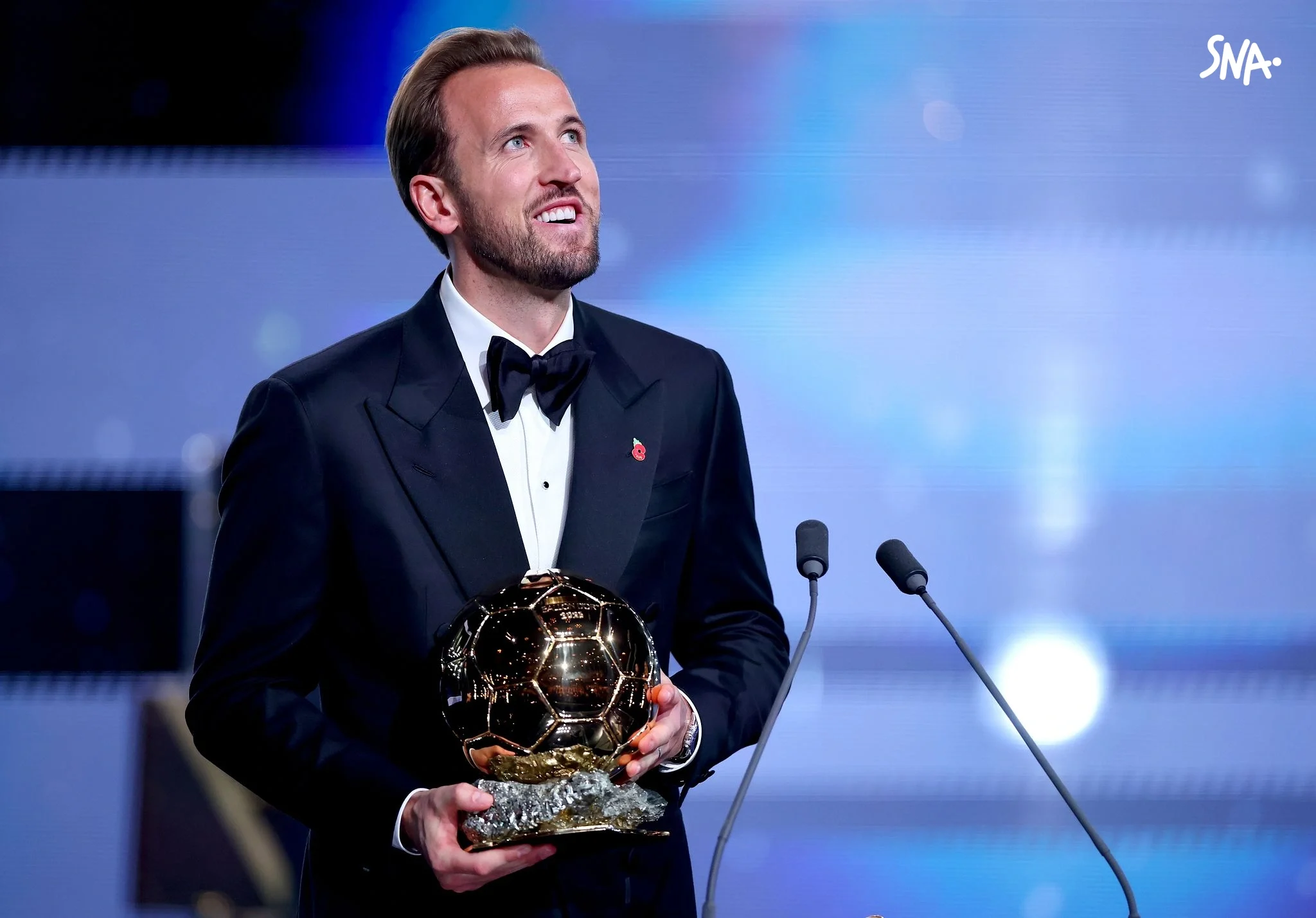
Harry Kane and Alexia Putellas are the headline winners of the 2026 Ballon d’Or, presented at the London Palladium on Monday 26 October. The Bayern Munich striker finishes ahead of Kylian Mbappé and Lamine Yamal. Putellas wins the women’s award for the third time after her successes in 2021 and 2022. London brings together two different journeys: a first coronation for England’s captain and a return to the summit for the Spanish midfielder.
Kane’s award recognises a full season
Kane scored 73 goals in 65 matches for Bayern and England during the 2025-2026 campaign. The breakdown matters: 61 came for his club and twelve for his country. Calling all 73 Bayern goals would misrepresent that record. This award concerns an evaluated sporting period, rather than the opening months of 2026-2027 or the last fixture before the ceremony.
With Bayern, Kane won the league, German Cup and Supercup. Those trophies provide collective context for his output. An individual statistic becomes more meaningful when considered alongside what a team achieved and how consistently its striker contributed. That combination helps explain the verdict without claiming to know every voter’s reasoning.
At 33, Kane becomes the fifth English winner after Stanley Matthews, Bobby Charlton, Kevin Keegan and Michael Owen. Owen received the award in 2001. The 25-year gap adds historical significance without making nationality a voting criterion. Kane also takes the Gerd Müller Trophy for the leading men’s striker.
Mbappé and Yamal complete the podium
Mbappé finishes second and Yamal third. That order settles the vote, but does not make either player’s season a failure. Their place on the podium already recognises major contributions. A fair comparison needs the relevant collective context and assessed period, rather than a judgement based on the latest game.
Ousmane Dembélé, the 2025 winner, is seventh and Michael Olise ninth. Rodri, Lionel Messi, Khvicha Kvaratskhelia, Erling Haaland and Fabián Ruiz also feature in the top ten. A player’s current club and the club represented during the assessed period must be distinguished: a transfer does not rewrite the performances being judged.
Putellas returns to the summit
Putellas claims her third women’s Ballon d’Or following her victories in 2021 and 2022. Her total now matches Aitana Bonmatí’s after her former teammate’s three consecutive wins. Her return is a central story of the ceremony in its own right, alongside Kane’s first victory.
The rewarded period covers her time with Barcelona before her move to London City Lionesses in July. Naming both clubs explains that sequence. The award recognises the campaign being assessed and should not be described as a verdict only on her opening months with a new team.
Hakimi 13th, Mané joint 29th
Achraf Hakimi finishes 13th in the men’s ranking. Sadio Mané shares 29th place with William Saliba. The official list therefore has two players at that position: neither should be assigned an invented 30th place.
These placings reflect a worldwide vote rather than an absolute measure of a player’s importance to club or country. They nevertheless offer a clear starting point for discussing international recognition. SNA’s assessment begins with verified positions and the relevant season, without treating a subjective sense of disappointment as a factual conclusion.
The wider awards recognise collective work
Paris Saint-Germain win the men’s club award and Barcelona the women’s. Lamine Yamal and Vicky López take the Kopa trophies, while Unai Simón and Cata Coll receive the Yashin awards. Luis de la Fuente and Pere Romeu win the coaching honours. Charlyn Corral takes the women’s striker award and Bukayo Saka receives the Sócrates Award.
The ceremony’s significance extends beyond the men’s Ballon d’Or. Young players, goalkeepers, coaches, clubs and social commitment receive distinct recognition. London’s outcome can therefore be read on two levels: Kane and Putellas at the summit, followed by the different contributions behind a successful football season.
Keep reading with SNA
Revisit SNA’s assessment published before the ceremony and follow the Bundesliga schedule and standings. The prediction and the verdict remain separate articles, preserving the distinction between an editorial choice and the announced result.