
 SNA
Big matchLiga · 25/10/2026 Real Madrid
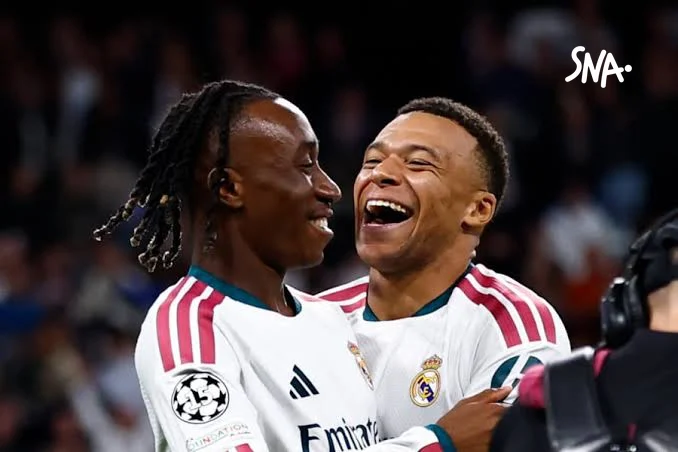
Mbappé brings down Barça
Kylian Mbappé’s double gives Real Madrid victory at Camp Nou on Sunday 25 October. Raphinha had equalised, but Eduardo Camavinga’s decisive run helps the visitors cut the gap to the leaders to three points. Five days after losing 4–2 in Paris, Barcelona suffer a second consecutive defeat. The story, the numbers and SNA’s analysis.
1–2full-time
2Mbappé goals
3points gap
5Lunin saves
Listen to this story
Synthetic English voice · 9 min 57 s
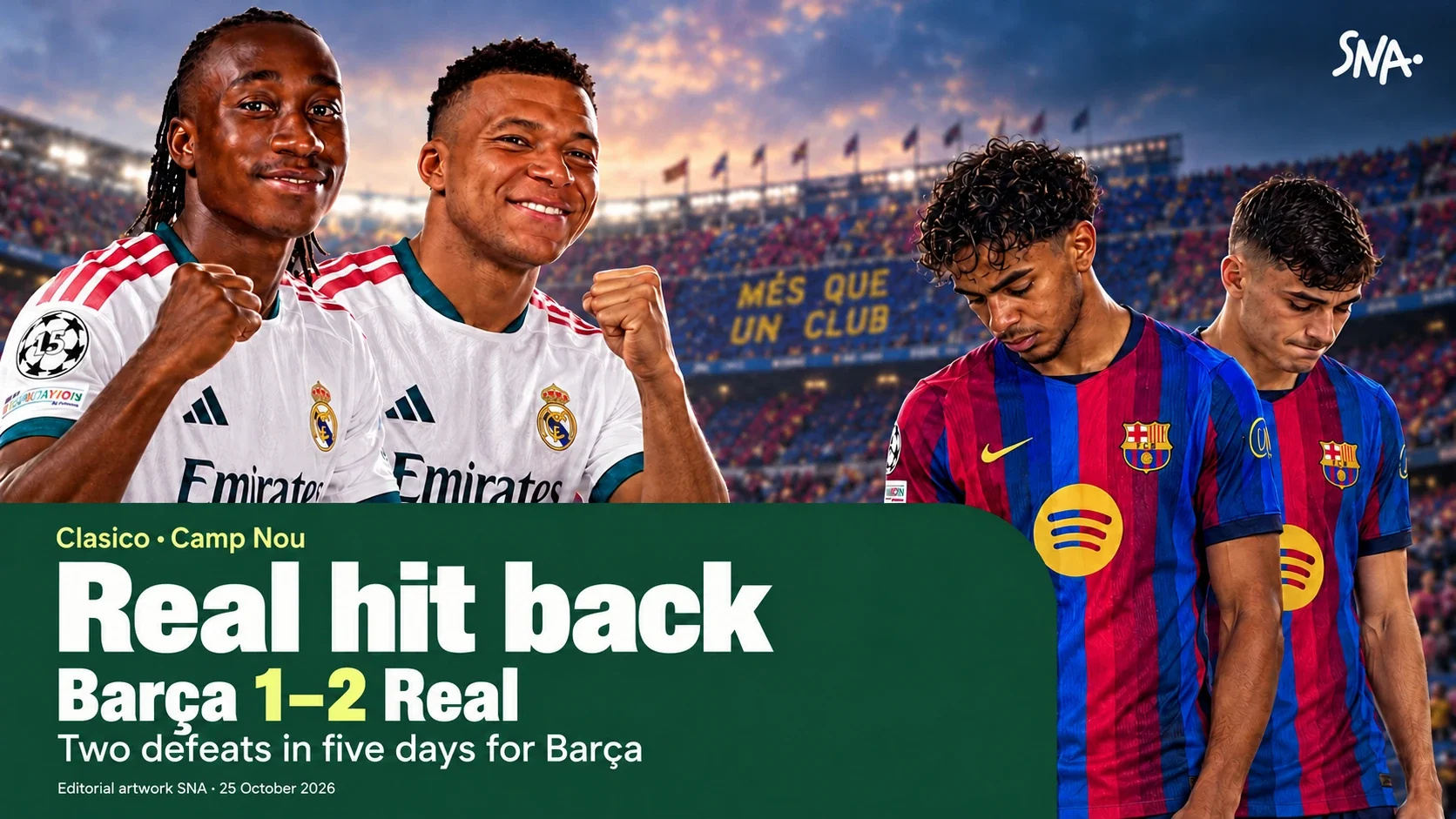
Barcelona began the week defending a perfect start. They end it with two serious warnings. Beaten by PSG in the Champions League on Tuesday, the Catalan club also lost Sunday’s Clasico at home, 1–2. Two heavyweight fixtures, equalisers that were not enough and two costly finishes: the pattern raises questions beyond the result of this match alone.
Real Madrid leave with a victory that immediately changes the title picture. Mbappé opened the scoring in the 41st minute, Raphinha answered in the 61st and the French forward struck the winner in the 87th, assisted by Camavinga. Barcelona remain top on 27 points. Madrid move to 24 and stay third, behind Atlético on 25. The gap between the two rivals has been halved.
Barça 1–2 Real
Mbappé · 0–1
Raphinha · 1–1
Mbappé · 1–2
The story: a fortunate opener, then a constructed winner
Madrid’s first goal contains an element of luck that deserves to be described honestly. Diomandé attacks down the left and delivers a cross. Gerard Martín intervenes, but his attempted clearance hits Mbappé and ends up in Joan García’s net. The forward benefits from a favourable rebound. This is neither a controlled finish nor a reason to invent an official assist for Diomandé.
The move nevertheless rewards a collective intention: shifting the defence, attacking a wide area and putting the ball into a position where a defender must make a quick decision. Madrid did not depend solely on the final accident. The Ivorian created the situation; the rebound turned it into a lead.
At 0–1, Barcelona are still very much in the game. Lamine Yamal misses a chance to equalise before the interval. Madrid’s advantage matters, but this is not a contest they have already settled. That distinction becomes increasingly important after half-time.
Diomandé gives Madrid a route forward
Diomandé’s role extends beyond the cross for the opening goal. His ability to attack space on the left forces Barcelona to retreat and gives Madrid an outlet when the pressure builds. He offers a different reference point from Mbappé: one stretches the flank while the other threatens the penalty area and the space behind the defence.
The Ivory Coast international shows that a player can influence a major fixture without finishing with a goal or a recorded assist. His contribution also lies in the movements he demands, the defensive interventions he forces and the options he creates for team-mates. There is a necessary qualification: he does not convert every opening, and his activity does not spare Madrid long periods of defending.
Raphinha restores parity, Lunin prevents a turnaround
Barcelona equalise in the 61st minute following a short corner. Pedri finds Raphinha inside the area and the Brazilian finishes with his left foot. At last, the hosts turn their preparation into a clear chance. On this move, the quality of the pass and the finisher’s availability matter more than the number of passes completed beforehand.
From that moment, a draw becomes something Barcelona want to improve on and Madrid need to protect. Lunin then takes a crucial place in the story. Starting in the absence of the unavailable Courtois, the Ukrainian makes a sharp reflex save from Gerard Martín’s header. Without that intervention, the same game could turn in a very different direction.
That is the limitation of an account focused entirely on Madrid’s finishing: the visitors also needed their goalkeeper. Barcelona created enough danger to make their opponents resist, but lacked the precision and sustained execution needed to turn their stronger spell into a second goal.
Bellingham starts the move, Camavinga breaks through, Mbappé finishes
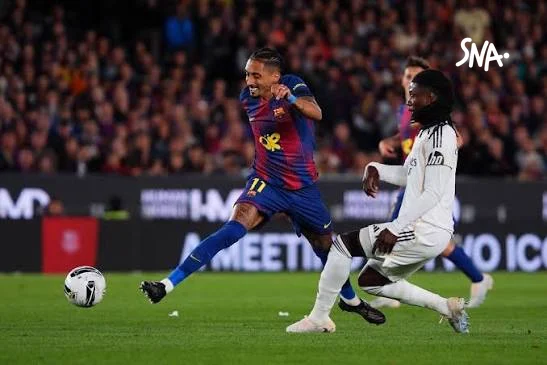
Introduced for Bernardo Silva in the 80th minute, Camavinga adds fresh running and a threat beyond the defence. Seven minutes later, he plays the decisive role. Bellingham helps Madrid escape pressure and set the move in motion; Camavinga attacks the space, gets beyond Cubarsí and cuts the ball back. Mbappé finishes from close range.
This goal is no fortunate rebound. It brings together an escape from pressure, a run, a duel won and a striker’s positioning. Madrid succeed because those actions connect. Reducing the winner to Mbappé’s final touch would erase the work that gives him such a favourable opportunity.
For José Mourinho, the bench’s impact is tangible: a substitute supplies the winning assist. For Hansi Flick, the final defensive sequence leaves a difficult question. At a stage when Barcelona could still win, they fail to protect the space in which Madrid have retained their greatest threat.
The statistics: Barcelona’s possession, Madrid’s more dangerous openings
| Measure | Barcelona | Real Madrid |
| Final score | 1 | 2 |
| Possession | 62% | 38% |
| Shots | 18 | 10 |
| Shots on target | 6 | 5 |
| Expected goals (xG) | 1.27 | 2.01 |
| Corners | 6 | 6 |
| Passes | 640 | 380 |
| Goalkeeper saves | 3 | 5 |
The contrast explains part of the result. Barcelona shoot more often, but the difference narrows considerably when only efforts on target are counted: six against five. Madrid score with two of their ten shots, a conversion rate of 20%. Barcelona convert one of eighteen, approximately 5.6%.
Expected goals also point towards more dangerous Madrid chances despite the lower volume. They do not prove that any result was inevitable. An xG model estimates shooting opportunities; it does not measure the value of a save or every aspect of control. Here, it chiefly helps distinguish quantity from quality.
Barça — Real
Possession62 % — 38 %
xG1.27 — 2.01
Corners6 — 6
Passes640 — 380
Shots and shots on target
SNA analysis: Madrid win in the penalty areas, not throughout the match
Madrid’s approach works because they retain an attacking threat during Barcelona’s periods of control. Diomandé and Mbappé prevent the hosts from concentrating entirely on attack. Camavinga’s run for the winner demonstrates why that threat could never safely be treated as extinguished.
Madrid cannot, however, conclude that they controlled the evening perfectly. Six shots on target conceded and five Lunin saves represent a genuine defensive cost. The equaliser also exposes a poorly protected short-corner sequence. Victory rewards resilience and better decisions at decisive moments; it does not erase the situations Madrid had to survive.
For Barcelona, the problem cannot be reduced to an individual mistake. Gerard Martín’s clearance contributes to the opening goal; Cubarsí is beaten in the move for the second. Around those moments, the collective organisation must offer better support after possession is lost, protect the space behind the defence and prevent one lost duel from opening an immediate route to goal. Having numbers around the opposition area is insufficient if defensive cover behind them becomes inadequate.
After Paris, the same warning in another competition
The comparison with the trip to Parc des Princes is revealing without making the games identical. On Tuesday 20 October, Barcelona lost 4–2 after twice drawing level. On Sunday, they equalise again, recover the possibility of victory and then concede the goal that decides the contest.
The common issue is the difficulty of turning an attacking response into lasting stability. Barcelona know how to respond. They now need to protect themselves better after doing so. In major fixtures, an equaliser is more than an emotional lift: it also demands that a team restore its spacing and choose which risks it is prepared to take next.
It would be excessive to write off the season. Barcelona remain leaders, having won nine of their first ten league games. Yet two defeats in five days against major opponents reduce their margin for error and identify concrete areas for improvement. The response required concerns the protection of the team as much as its finishing.
SNA player of the match: Kylian Mbappé
Mbappé is our player of the match because he scores both goals in Madrid’s victory. He benefits from the fortunate first and positions himself to finish the second. His double turns an evening that could have ended in shared points into a major away win.
This editorial choice does not mean he did everything alone. Lunin keeps Madrid in the contest, Diomandé initiates the opener and Camavinga supplies the final pass for the winner. The finisher receives the distinction; the account must retain those who made his decisive contribution possible.
Tops and flops: SNA’s verdicts
THE SNA VERDICT
SNA Portrait: SNA player profile
TOP 02 · Performance
Andriy Lunin
Five saves and a crucial intervention after the equaliser.
View profile Portrait: SNA player profile
TOP 03 · Performance
Yan Diomandé
His cross initiates the opener; genuine influence without an official assist.
View profile Portrait: SNA player profile
FLOP 01 · Performance
Gerard Martín
His clearance contributes to the opener; Lunin later denies his attempt to make amends.
View profile Portrait: SNA player profile
FLOP 02 · Performance
Pau Cubarsí
Beaten by Camavinga’s decisive run within inadequate collective cover.
View profile Portrait: SNA player profile
FLOP 03 · Performance
Lamine Yamal
A significant first-half chance goes unconverted; this verdict concerns his finishing tonight.
View profileFollow the game through SNA
Find the events, line-ups and statistics in the Clasico match centre, with results and standings on the La Liga page. The Barcelona and Real Madrid team pages provide access to each club’s schedule.
Madrid have cut the gap to three points. Barcelona retain their lead, but no longer the comfort of their opening weeks. This Clasico has not decided the champions; it has changed the questions facing both teams. Madrid must show that they can reproduce this efficiency. Barcelona must demonstrate that they can secure a game after fighting their way back into it.
SNA contribution