
Basketball: why is Benin lagging so far behind?
Sport News Africa spoke to people across Benin's basketball scene to take stock of the sport.
Sport News Africa · Author profile ·
Listen to this story
Audio version in preparation · read aloud by your browser meanwhile
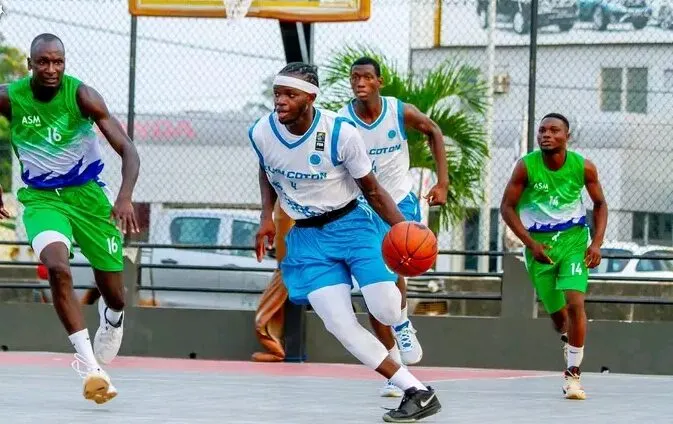
The 2022-2023 season was not a productive one for Benin's teams in international competition. Alongside Elan Coton BBC, who went out in the first round of the Road To BAL, the national teams, who have been back on the African stage since Abidjan 2017, had a mixed campaign. The local team finished second from bottom with just one win in the Afrocan qualifiers. The women's team, ranked sixth at the 2023 Jeux de la Francophonie in Kinshasa, did no better.
For seasoned observers of basketball in Benin, these results are the product of the ills afflicting the game. "Our league has been running regularly since 2019, and I'd say it's still not right. Not all clubs have the same resources. Some are sorely lacking in ambition, a full coaching staff, a training centre and even a simple means of transporting players," warns Samadi, a basketball enthusiast in Abomey-Calavi.
"Preparations where teams are only put together on the eve of the competition..."
For Lewis Ahissou, head coach of the women's team, assistant coach of Benin's local national team and coach of Bosco Star, a lack of financial resources and inexperience explain these results. "The results come down to inexperience. We have things to learn and we need to assess our technical skills. The financial imbalance between clubs is a handicap for our performances at international level," he points out.
Read more on the subject: BAL 2024: Elan Coton's ambitions
On the reasons for the failures on the international stage, Aurélius Kouko, a former coach of Benin's national teams and of the club ASPAC BBC, points the finger at poor preparation. "Poor time management, preparations where teams are only put together on the eve of the competition and the coach is told to do what he can. If it is to work, everything will depend on the development policy and organisation put in place by the national federation, " he insists.
"Clubs are struggling because we failed to prepare the next generation"
In Benin, the Ministry of Sports has been driving the move towards professionalisation since 2020. At the Benin Basketball Federation, the league has moved from a single-table format to a conference league similar to the NBA's. Last season, players and coaches from three clubs with women's sections were sanctioned and thrown out of the league for boycotting the first matchday while demanding changes. The result is a women's league played with just two teams.
Christian Quenum, coach of Renaissance BBC, believes conflicts between those involved and the lack of a next generation are behind the low standard. "It is clear that the standard is low. We had good teams and good players in the past, but the next generation couldn't be secured. Previously, only a group of insiders was sent on the various training courses. When they came back, there was no sharing with the others, it was a bit individualistic. I really put the blame on ourselves first, on the coaches, and then on our elders. There were forms of rivalry and a culture of fearing others. There wasn't a good atmosphere around basketball. Otherwise, we had excellent athletes and it could have taken us very far. "
"For example, every professional club should be required to have youth teams. If you don't develop players, you'll always have to turn to outside players or players from other teams. But in doing so, there will be no competition. On the women's side, it's carnage. Young girls are giving up the sport," laments the coach.
"Ensure grassroots development and support the current generation"
With the diagnosis made, the whole of Benin's basketball movement needs to roll up its sleeves to develop the game as best it can across the country. A player in the league, who asked to remain anonymous, suggests grassroots development and support for young players.
"For me, we need to work on grassroots development and support the current generation. That has already started with the sports classes. And what about those who aren't in school and love basketball? We need to be able to bring in these potential talents for places in centres or academies. In the short term, we need to motivate the current generation, which is a mix of players who were lucky enough to come through the age-group categories. They were followed more or less closely. The players want to work hard and give everything, but they need a minimum of support," he says. "Another policy that could work well is to send talented youngsters abroad, to expose them to top-level basketball. When they finish their apprenticeship, they could come back and play for Benin," the player added.
Unity and training across the whole basketball chain should indeed allow Benin to raise the standard of its basketball in the coming years. That policy has begun, says Christian Quenum. "Today, coaches are trying to come together and share. I'm pleased to see that the federation has decided to organise training courses after four years. A group of coaches have recently been trained at FIBA level 1. I can see referees being trained too. There is nothing without training, " he notes. Repeated attempts to get a response from the Benin Basketball Federation went unanswered.