
Champions League: why points alone cannot explain the table
The second matchday wraps up on Wednesday. With teams level on points, goal difference can already change the order. To understand the race for the round of sixteen, three dividing lines matter: eighth, sixteenth and twenty-fourth place.
Contribution SNA · Author profile ·
Listen to this story
Synthetic English voice · 2 min 54 s
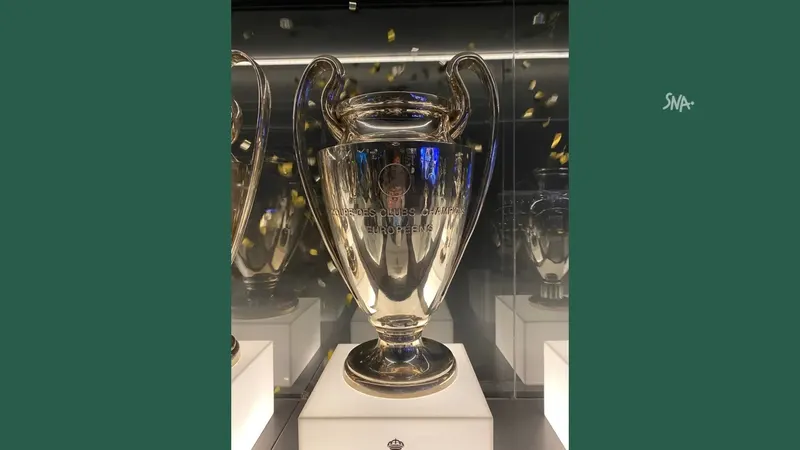
Two teams have the same number of points, yet one stays ahead of the other. In the Champions League, then, winning your match does not always explain where you sit. With the second matchday ending on Wednesday 14 October 2026, the table is starting to offer some markers; it does not yet hand out a single ticket to the round of sixteen.
All 36 clubs appear in one shared table. Each plays eight different opponents, four at home and four away. A win earns three points, a draw one point, a defeat none. Because not every team meets the same clubs, this phase cannot be read like the old four-team groups.
Eighth place avoids two extra matches
After the eight games, the top eight go straight through to the round of sixteen. From ninth to twenty-fourth place, teams must come through a two-legged play-off. Its eight winners complete the round of sixteen. The bottom twelve are eliminated, with no drop into the Europa League. Twenty-fourth place is therefore the last position that keeps a club in the competition.
A team in ninth place carries on, then, but with two more matches than a team in eighth. Sixteenth place marks another dividing line: the clubs ranked ninth to sixteenth are seeded in the play-offs and, as a rule, play the second leg at home. Those placed seventeenth to twenty-fourth normally host the first leg.
Why beating your neighbour is not enough
When teams are level on points, the first criterion is the difference between goals scored and goals conceded across the whole phase. A team that has scored eight and conceded five therefore has a goal difference of plus three.
Take a fictional example: two clubs have twelve points. The first has a goal difference of plus four, the second plus one. If the two sides met and the second won that game, the first still finishes ahead of it. Head-to-head results are not among the tiebreakers.
If goal difference does not separate them, total goals scored come next, then away goals, the number of wins and away wins. After the eight matchdays, further criteria can follow, including opponents' combined results.
To follow your club, then, look at the points, the matches already played and the goal difference, then at its distance from these three lines. A points total described as "sufficient" remains a projection: qualification depends on the final ranking. The table and fixtures are available on the SNA Champions League page.
Sources
UEFA 2026/27 regulations: Article 17, Article 18 and Article 19; UEFA tiebreakers, 13 October 2026. Further reading: Aritz Gabilondo, AS, 8 September 2026; Kedar Bayley, FourFourTwo, 8 September 2026. Rules and SNA page checked on 14 October 2026. ; UEFA league phase fixtures; Sky Sports, 2026/27 format, 27 August 2026.
Archive photo from 7 March 2023: Dom Fellowes / Wikimedia Commons, CC BY 2.0. Resized with margins and SNA watermark; photograph not reconstructed.
.jpg)