
Women's football in Africa: where does it stand, and why is it stalling?
The 2025 Women's AFCON exposes the gaps in the development of women's football in Africa, with a focus on Senegal.
Sport News Africa · Author profile ·
Listen to this story
Audio version in preparation · read aloud by your browser meanwhile
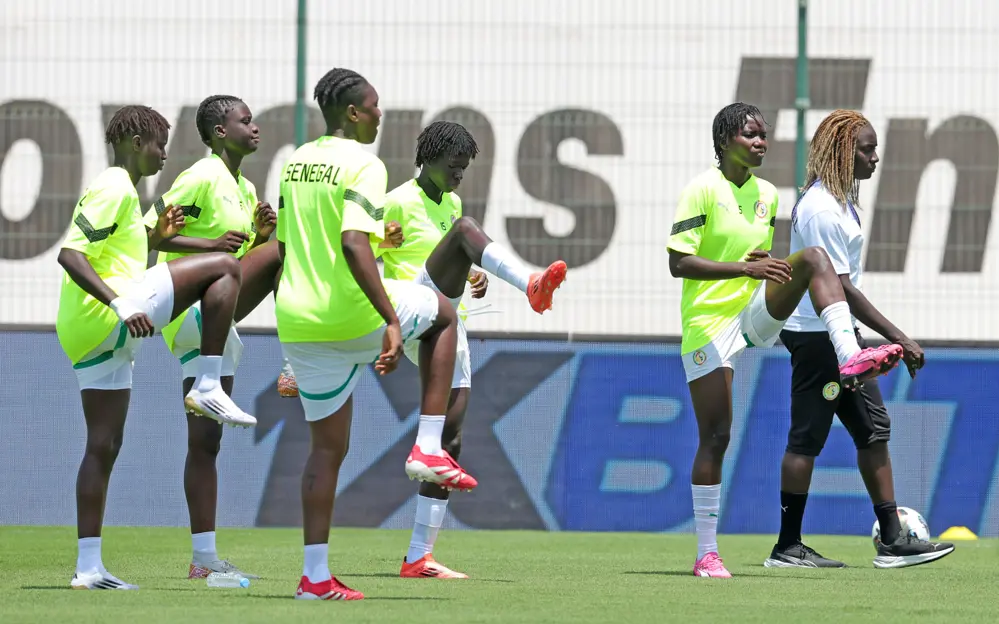
Since 5 July, Morocco has been hosting the Women's AFCON for the second time in a row. Six stadiums in use, genuine public enthusiasm, bigger prize money and growing media coverage: all the signs are positive. Elsewhere on the continent, meanwhile, the disparities remain glaring. Senegal, for example, is struggling to build a viable ecosystem for its women's game. "Women's football is going through a critical period. In five years, the number of active clubs has fallen by 21%. The lack of structures, competitions and recognition... all of that discourages young girls and stifles talent," warns Amina Dieng, founder of the Amina Vision Foundation and candidate for the chair of the women's football commission at the Senegalese Football Federation.
A two-speed development
The continental momentum is real, though. Of the 54 federations affiliated to CAF, 47 now have a senior women's national team and 49 run a top-flight league, some of them even professional. But as Clémentine Touré, former head coach of Ivory Coast, points out: "There has been significant progress, but a lot remains to be done to structure women's football across the whole continent." Clubs without resources, unqualified coaches, unattractive kick-off times, little media coverage... the picture is damning.
"The AJEL de Rufisque team is still waiting for a simple affiliation. We have to stop thinking that women's football is limited to the national team. There is a whole local fabric to be kept alive," insists Amina Dieng. CAF has admittedly doubled the prize money for this Women's AFCON ($1 million for the winner, $3.47 million in total), but that is still a long way short of the $21.2 million at the men's AFCON in 2024. In practice, the development of women's football still relies largely on FIFA or state subsidies. "We are developing a model based on private partnerships, sponsorship and self-financing. It's the only route to sustainable development," says Amina.
Visibility and governance: the other battles
In 2022, the Morocco v South Africa final drew 50,000 spectators in Rabat. A symbolic figure, still unthinkable in much of West Africa. "We need to create dedicated events, strengthen partnerships with the media and, above all, change how society views the women's game," urges Amina. For Kanizat Ibrahim, a member of the FIFA council, "there need to be more women in decision-making bodies. It brings a sensitivity to realities on the ground." Amina Dieng shares that view: "As long as decisions are made without women, they will remain misdirected. That is why I'm standing, to open up decision-making spaces to women in football."
With the Women's AFCON in full swing, amid popular enthusiasm and the rise of the leading nations, part of the continent remains on the margins. There is no shortage of talent. Nor of energy. What is needed is political will, and the conviction that the future of African football is female too.