
Futsal substitutions explained: how to follow the rotation
A rotation can happen while the ball is still moving. The order of exits and entries, the substitution zone and the possible return of players are the key points to watch.
Contribution SNA · Author profile ·
Listen to this story
Synthetic English voice · 2 min 29 s
The ball is moving, one player drifts towards the bench and a team-mate gets ready to come on. To follow a futsal match, watching only the action around the ball can mean missing a rotation. A few pointers help you keep track of who is playing, who is waiting and who can return.
This guide describes the standard procedure under the FIFA Laws of the Game 2025/26. It does not replace the specific regulations of an individual competition.
The exit comes before the entry
The incoming substitute waits until the player being replaced has left the pitch. Under the normal procedure, each goes through their own team's substitution zone. The Laws provide for exceptions to leaving via this zone.
The bib is also part of the change: it is complete once the incoming player is fully on the pitch via the zone, having handed the bib to the player being replaced. Watching the bib alone is therefore not enough to tell whether the procedure is finished.
A player going off is not gone for good
Substitutions are unlimited and a replaced player may return. They are allowed whether the ball is in play or not, except during a timeout. Leaving the pitch therefore does not necessarily mean a player's match is over.
UEFA's explainer states that changes can be made individually or in groups. To read a rotation, look first at the players going off, then at those coming on, rather than treating the bench as a fixed group.
What the rotation tells you
Take a fictional scenario: the ball stays in play. Two players from the blue team leave the pitch through their zone; two substitutes wait for those exits before each carrying out the entry procedure. A rotation can therefore take place without any stoppage in play. It must nonetheless follow the prescribed order and steps.
The spectator can then work out who is on the pitch, but not necessarily what the coach intended. A substitution does not, on its own, prove an injury, a sanction or a specific tactical plan. Explaining those reasons in a real match requires other documented evidence.
Sources
FIFA, Futsal Laws of the Game 2025/26, Law 3, pages 31 to 32, document in force since 5 September 2025; separate publication date not established. Standard procedure, without an exhaustive presentation of the exceptions.
UEFA, Football vs Futsal: The key differences, explainer published on 16 January 2026, updated on 19 January. Two separate bodies; squad rules specific to UEFA competitions are not carried over to an African tournament. Initial document check: 7 October 2026; rechecked on 11 October 2026. Blue-team scenario is fictional.
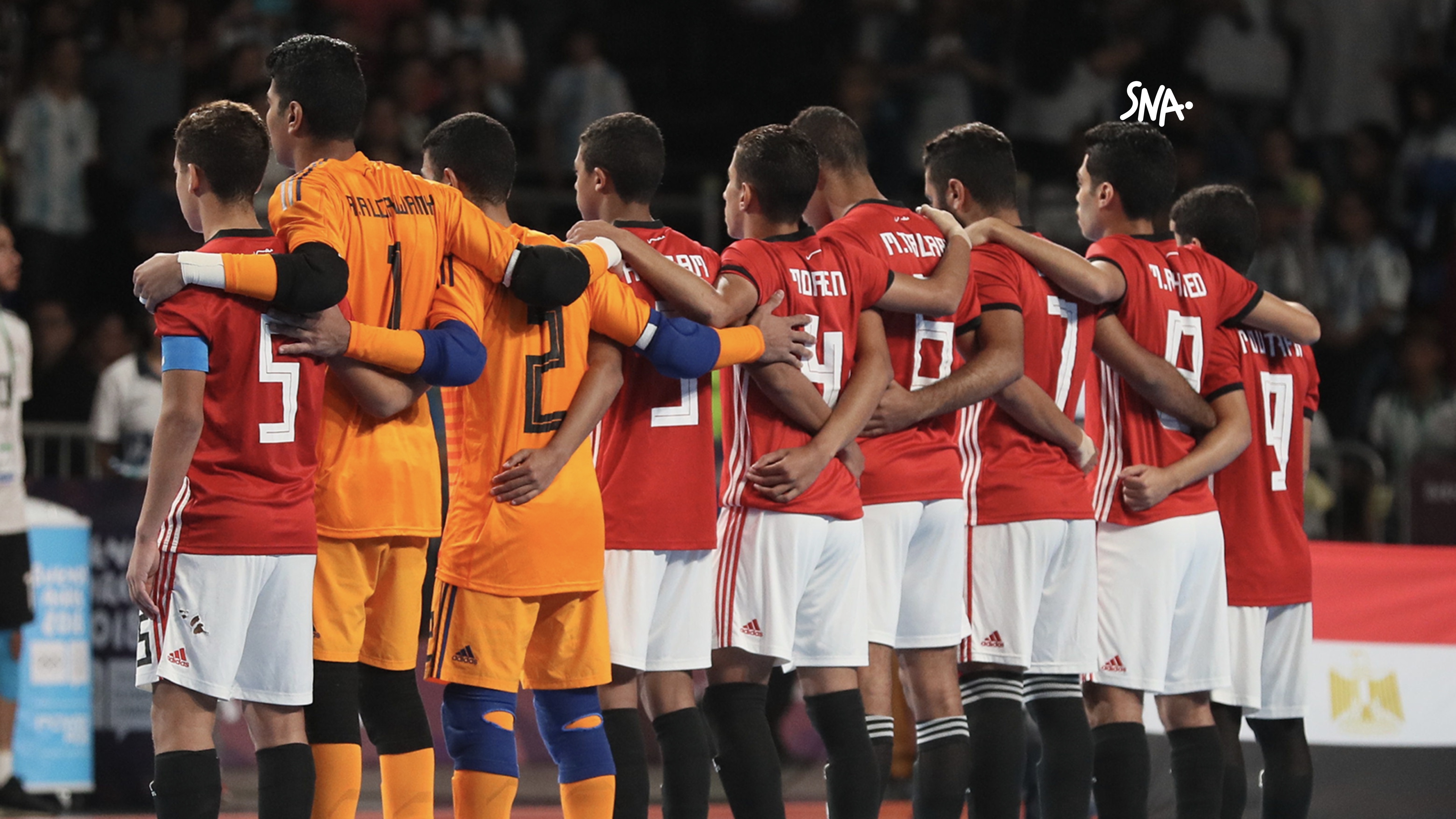
File photo: Egypt boys' national youth team, bronze medal match at the Buenos Aires Youth Olympic Games, 18 October 2018. Sandro Halank / Wikimedia Commons, CC BY-SA 4.0. Cropped, resized and with the official SNA logo added; adapted under the same licence. This photo does not show a substitution.
_at_2018_Summer_Youth_Olympics_by_Sandro_Halank%E2%80%930010.jpg)