
African dual nationals at the heart of the geopolitics of sporting talent
In the world of sport, the issue of dual nationals has become more central than ever and a genuine geopolitical issue.
Sport News Africa · Author profile ·
Listen to this story
Audio version in preparation · read aloud by your browser meanwhile
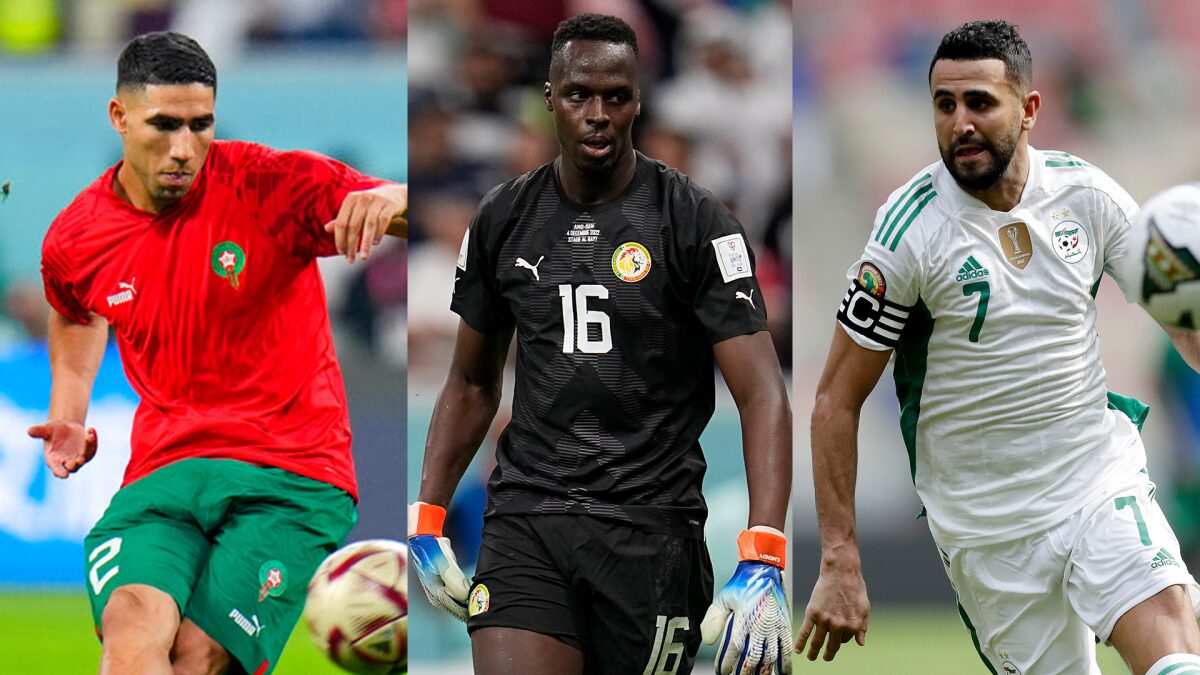
It has become commonplace to notice the mix of backgrounds that characterises many national football teams at tournaments. Yet one injustice in this trend has to be called out: many countries, African ones in particular, are losing their sporting talent, a sign of a geopolitics that starts with migration towards an Eldorado where some believe they will find glory and wealth.
At the outset, a question of migration
Athletes are identified as dual nationals because they have gone through migration: involuntarily, when the decision was made by their parents or forebears, or voluntarily, when migration stems from a wish to try out many other possibilities. Many then find themselves caught in the maze of migration terminology, sometimes as refugees, with a legal status granted by the Geneva Convention of 28 July 1951, sometimes as migrants, exposed to the sensitivities and over-sensitivities of the international community because they are subject to each state's migration policy.
In "A modern Odyssey: the experience of migration through the work of Fatou Diome ", African migration is explained by living conditions in Africa, which paradoxically swing between simplicity and misery, debt and dignity, unemployment and the plight of young people. There are also underdevelopment, the condition of women and the idealisation of Europe. Curiously, the difficulty or danger of the journey does not always deter the many would-be emigrants who are lucky enough to achieve the impossible.
Read on the subject: Brahim Diaz, Ben Seghir, Habib Diarra... these dual nationals who chose the African route
Speaking to journalist Charles Villa, MMA champion Francis Ngannou recounted in 2023: "To reach Europe I left Cameroon, then I went through Nigeria and Niger, and finally Algeria - Morocco. I spent nearly a year in Morocco. The security there is huge, on the Moroccan side as on the Spanish side. I tried to climb the fences to get to the Spanish side, but it didn't work. I was literally ripped apart by barbed wire. When I tried to get past security, I nearly had my intestines pulled out, it's extremely dangerous. In fact I felt more confident about crossing the Mediterranean in the end, because there was less brutality. Given my build, when you are caught at the border, you are automatically considered a leader. And when you are a leader, only God can come to your rescue ".
Europe, the Eldorado of African talent
Since the founding of their nation, Americans have broadly agreed that the United States is the best land of opportunity for them and their families. That view has rested on the abundance of resources, purchasing power, high wages, retirement security, and the chance for their children to improve their social and economic position compared with the previous generation. To describe this unique situation, in 1931 the historian James Truslow Adams coined the expression "American Dream".
In sport, the American dream finds its place, however paradoxical it may seem, on the old continent of Europe. Many sporting talents migrate to Europe hoping to play in the top leagues, knowing that it is an incredible opportunity not given to everyone, and that it is also a huge opportunity for a dual national's family to see him play in Europe.
In that respect, the legend Samuel Eto'o gave the following account on France 24, in 2014: " I made the wrong decision, like every young African who dreams of making it in Europe. I decided to stay undocumented. I arrived in France with a visa for only 10 days. I went first to Marseille, Avignon, and then I decided to stay in Paris, at Notre-Dame. I stayed here for several months [...] it was a difficult time because I spent several months in Paris without papers. I left my lodgings only two or three times because, back then, everyone was suspected of being undocumented. And when you were caught, you were sent back home. It was really very hard because on top of that it was really very cold when I went out ".
Africa in the geopolitics of sporting talent
According to expert Pascal Boniface, we speak of the geopolitics of sport because "sport today is much more than sport. [...] We have entered the era of globalised sport. Sport has become the new arena of 'peaceful and regulated' confrontation between states. It is the most visible way of showing the flag, of being a dot on the world map and of existing in everyone's eyes ".
It is with great regret that one must note that the flag is at half-mast in almost all CAF nations in the battle over the geopolitics of sporting talent. At a press conference, coach Sébastien De Sabre said: "We have no names to give for potential arrivals among the dual nationals. A lot of nonsense gets read on social media. Some players we contacted flatly refused. We are following quite a few youngsters. Today many have already been called up by other national teams such as Holland, Belgium and others, but we understand them. But for us, the aim is to work with those who are focused on the goal of Congo".
Moreover, Africa is where dual nationals legitimately belong. The legislative elections of 30 June and 7 July in France made it plain that dual nationals in many Western countries will always be exposed to migration issues. Kylian Mbappé, the team captain, said: "I urge young people to go and vote, we can see the extremes are at the gates of power, we have the chance to choose the future of our country [...] We need to identify with the values of tolerance, diversity and respect. I hope we will still be proud to wear this shirt on 7 July".
Meanwhile, continental football is gaining in value, as shown by Morocco and its run at the 2022 World Cup, to the point that head coach Walid Regragui says: "Now, European countries are afraid of us and want to take our players. Naturally, we are becoming a great nation".
African states therefore need to put in place policies that will make dual nationals bring value to the nations of the CAF zone, which offer them security, at the expense of those Western countries where they constantly face migration issues.
Gauthier PIKADJO, sports law researcher