
Mahrez, Mendy, Saïss and more: a generation of African leaders bows out of international football in 2026
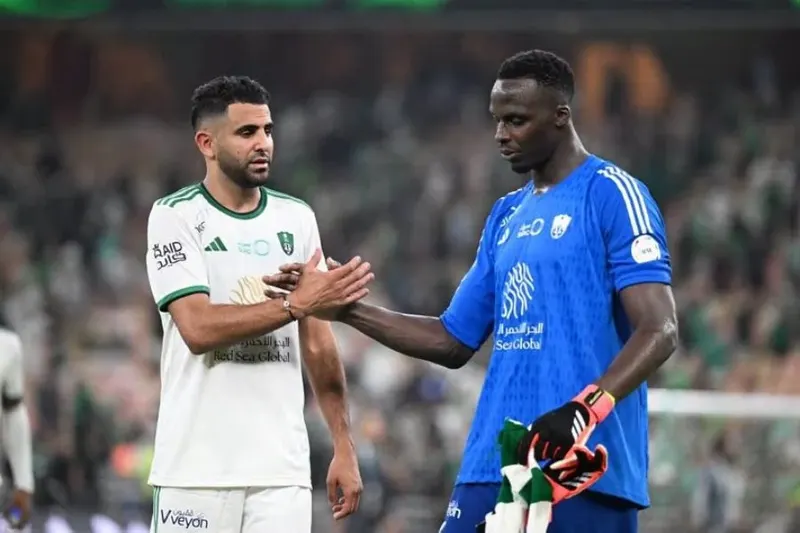
African football is undergoing a major generational change. In 2026, several players who shaped the recent history of their national teams have announced their international retirement. Riyad Mahrez, Édouard Mendy, Aïssa Mandi, Romain Saïss, Jean Michaël Seri and Seko Fofana are among the figures turning the page. The departures affect several of the continent's major football nations and open a new chapter for their teams.
Rieltony LOUBOKO · Author profile ·
Listen to this story
Synthetic English voice · 4 min 56 s
Algeria lose two architects of their continental triumph
Algeria are particularly affected by this wave of retirements. Riyad Mahrez announced the end of his international career in July, after the Fennecs were knocked out by Switzerland at the 2026 World Cup. The former captain leaves the national team with 119 appearances and 40 goals, according to the Confederation of African Football (CAF).
His name will remain closely tied to Algeria's 2019 triumph. As captain of the Fennecs, he scored the decisive free-kick against Nigeria in the semi-final of the tournament. After twelve years with the national team, he leaves a significant legacy, both for his performances and for his leadership.
Defender Aïssa Mandi has also announced his international retirement in July. With more than 110 caps, he was long an essential part of Algeria's defensive set-up. The departures of these two African champions now force the team to lean more heavily on a new generation, embodied notably by Ibrahim Maza, Anis Hadj Moussa, Mohamed Amoura and Amine Gouiri.
Senegal turn the page on their African champions
Senegal are also going through a major transition with the departure of Édouard Mendy. The goalkeeper announced his international retirement in September, after eight years with the Lions of Teranga. He ends his career with 59 caps and 31 clean sheets, according to CAF.
His role in Senegal's first continental title remains a major one. In the final of the 2021 Africa Cup of Nations, won in February 2022 against Egypt, he helped his side to victory by stopping an opposition attempt in the penalty shootout.
Another member of that historic generation, Cheikhou Kouyaté, announced in October the end of his professional playing career. The midfielder, who has 92 caps for the Lions, was also part of the team that were crowned African champions. His departure marks another page turned for Senegalese football, as players such as Lamine Camara and Pape Matar Sarr are expected to take on greater responsibility.
Saïss, Seri and Fofana among the other notable departures
Morocco have also lost one of their senior figures with the international retirement of Romain Saïss, announced on 23 February. The defender, who has 86 caps for the Atlas Lions, was part of his country's historic run to the semi-finals of the 2022 World Cup in Qatar. His experience and leadership were long important assets for the Moroccan team.
In Côte d'Ivoire, two players from the generation crowned African champions in 2023 have also left the international stage. Jean Michaël Seri announced his retirement in July, after more than ten years with the Elephants. Seko Fofana followed suit in September, aged 31, after 34 caps. The two departures deprive the Ivorian midfield of experienced players.
Ghana are also affected by this changing of the guard. Forward Iñaki Williams announced his international retirement in September, having represented the Black Stars at two World Cups. He ends his international career with 28 caps, four years after choosing to play for his parents' country.
A new cycle to build for Africa's national teams
These departures are not just the end of individual careers. They reflect a generational shift within several African national teams, who must now find new leaders and rebuild their squads around younger players.
From the 2019 Africa Cup of Nations champions in Algeria to the 2021 winners with Senegal, by way of the architects of Côte d'Ivoire's 2023 triumph and the leaders of Morocco, the 2022 World Cup semi-finalists, this wave of retirements involves players who helped write the recent history of continental football.
The challenge now is to preserve that legacy while preparing for the future. For these teams, the succession is open and the new generation is expected to take over.