
2030 World Cup: FIFA promises "an extraordinary celebration of football"
FIFA has stepped in to explain why the 2030 World Cup will be staged across six countries and three continents.
Sport News Africa · Author profile ·
Listen to this story
Audio version in preparation · read aloud by your browser meanwhile
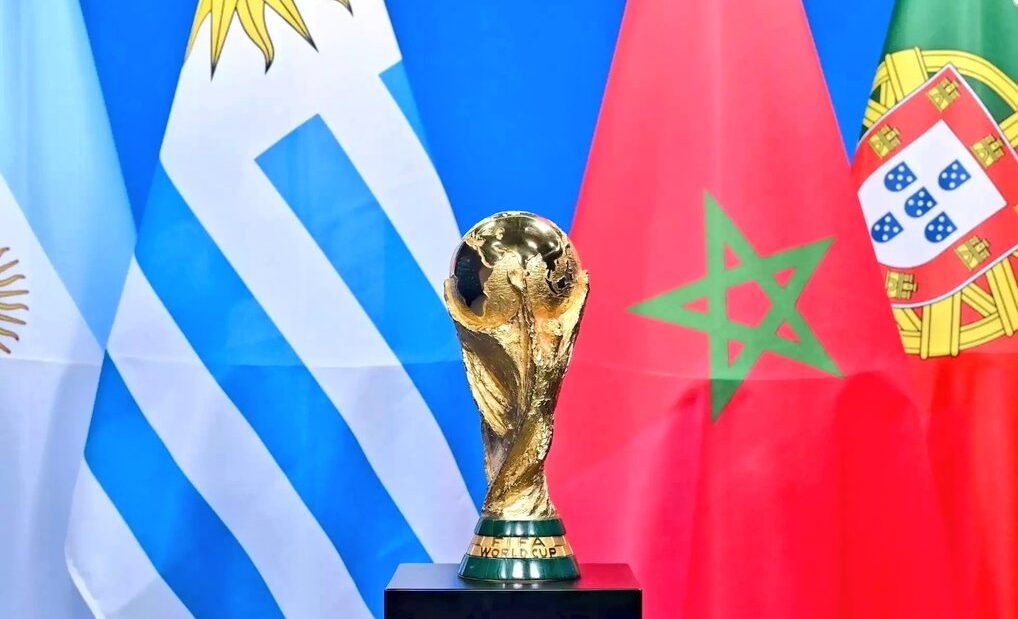
"The 2030 World Cup will be an extraordinary celebration of football " – that is how FIFA has set out its stall for the 2030 World Cup. Spain, Morocco and Portugal are officially the host nations, but in practice the tournament will straddle six countries and three continents. Matches will also be played in Uruguay, where the first World Cup was held, in Argentina and in Paraguay. It is a way for football's world governing body to mark the centenary of its flagship tournament. But the announcement of this unprecedented set-up, made on 4 October 2023, was met with a mixed reaction from football fans. The number of countries qualifying automatically as hosts, the long distances and the travel demands on supporters were among the many aspects criticised.
A tournament open to more people
Faced with these reactions, FIFA decided to break its silence to explain "just how beneficial this celebration of football can be for the whole world", according to the governing body. It begins with the point that more supporters will be able to access the 2030 World Cup under this new format. "South American fans who would find it too expensive to travel to Europe or North Africa have an excellent opportunity to enjoy three matches on their own continent. African fans have long complained about strict visa requirements in many countries, which prevent them from experiencing the World Cup, but in Morocco that drawback should be significantly reduced", it says.
Read more: 2030 World Cup: Sepp Blatter's wild reaction
But FIFA also acknowledges that "while it is true that avid fans who want to see the majority of the 48 teams in action will struggle to do so, this has to be set against the need for the greatest number of people to have access to the biggest celebration of football in the world." The governing body points to recent competitions to justify the format, such as the last European Championship, the 91 Rugby World Cup in five countries, and the recent basketball World Cup played in the Philippines, Japan and Indonesia. "Just two years ago, Euro 2020 (which was played in 2021) was magnificently staged in 11 cities in 11 countries. From Baku, near the Caspian Sea, to Seville, in the Spanish sunshine, a distance of more than 6,000 km, everything went off wonderfully. " On environmental concerns, FIFA said it will try to learn from the mistakes made at that Euros in order to improve its sustainability initiatives.
Significant cost savings and international exposure
Another argument put forward is a financial one. With the tournament growing ever larger, with more teams and a longer schedule, the investment cost borne by the host country is soaring. "One of the main problems with staging major sporting events is the considerable investment in the necessary infrastructure. Stadiums, hotels and transport systems are not cheap and can cost billions of dollars. Joint hosting allows the burden to be shared, as the 2030 edition clearly shows. Rather than hosting a tournament in a single country, the costs can be split between several countries ", it argues.
Among the other arguments are a significant boost to tourism and the spotlight falling on many regions at once, which guarantees them considerable exposure. "Since 2010, South Africa, Brazil, Russia and Qatar have managed to use hosting the tournament to project a positive image of themselves ", says FIFA, which hopes for the same benefits for Morocco in particular at this 2030 World Cup. "That is the power of the World Cup. For Africa in particular, it is a crucial issue, because the tournament is returning to the continent for only the second time in its history. It has taken 20 years, but Morocco - judging by its recent hosting of many sporting tournaments, including the 2022 Club World Cup - will give the world an unforgettable African flavour." For the governing body, it is wishful thinking. It remains to be seen whether this defence will be enough to win over those who object to XXL-format tournaments.