
New NBA season: why an offensive rebound leaves just 14 seconds
With 20 October approaching, here is a reference point for moving from national-team basketball to the NBA: recovering your own missed shot gives a second chance, but not a fresh full possession.
Contribution SNA · Author profile ·
Listen to this story
Synthetic English voice · 4 min 04 s
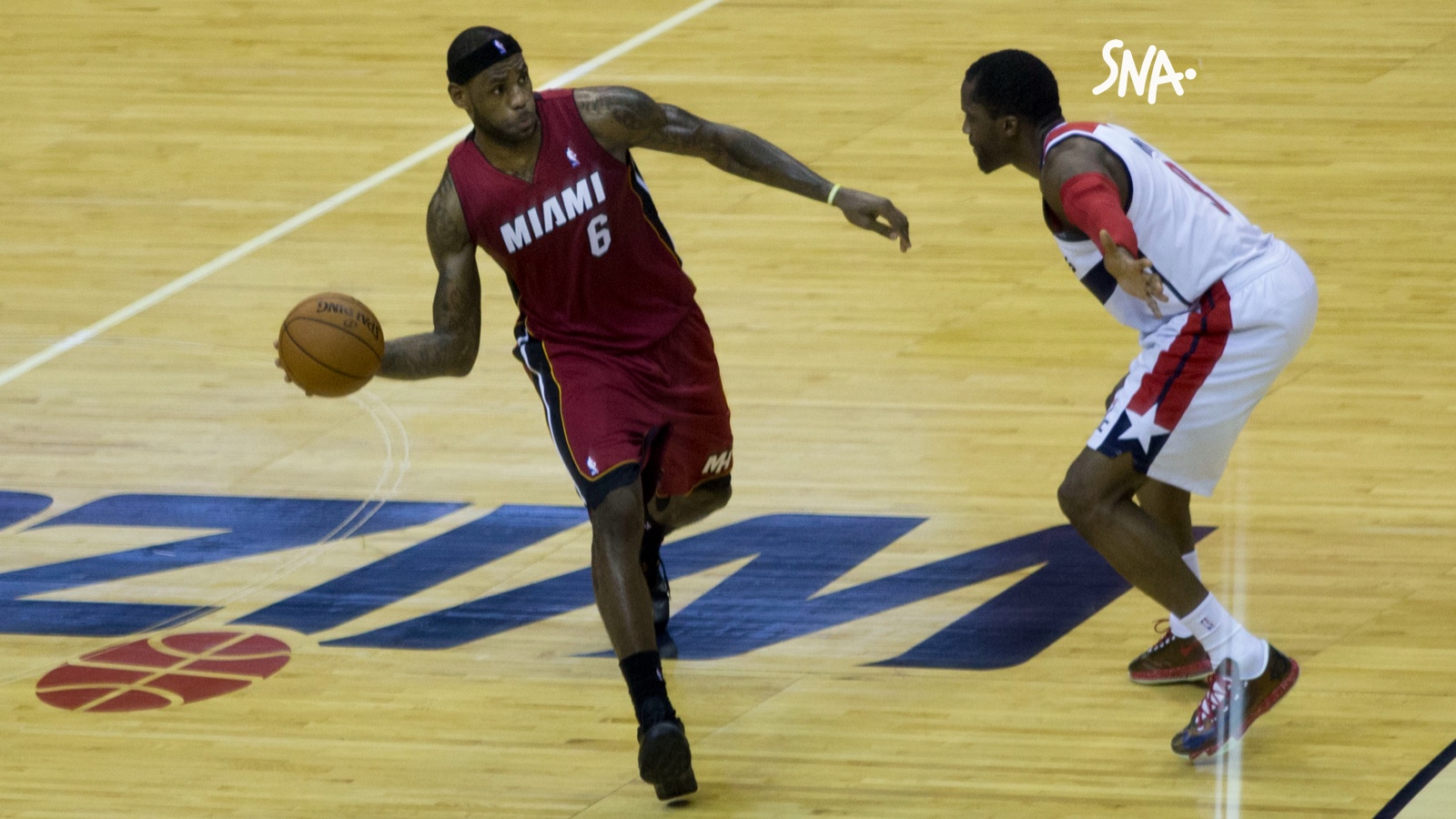
The NBA regular season begins on 20 October. For anyone switching from a game involving their African national team to a match in the American league, one reference point stays the same. After a missed shot that hits the rim, the same team that regains the ball has 14 seconds to try again. The principle also exists in international basketball governed by FIBA.
It helps explain why winning a rebound near the opposing basket does not necessarily slow the game down. The team keeps a chance to score, but must play it faster than a new 24-second possession. In a tight finish, that difference matters as much to the team in front as to the one trying to catch up.
Two clocks help to read the situation: the game clock shows the time left in the quarter; the shot clock limits the time a team has to attempt a basket.
The missed shot that gives a second chance
Picture a play well away from the end of the quarter. There are five seconds left on the shot clock. A player shoots before it runs out. The shot hits the metal rim, and a team-mate grabs the rebound.
That is an offensive rebound: the same team recovers its own missed shot. It then has 14 seconds to play again. In our example, the team therefore gets more time than the five seconds it had before shooting, but ten fewer than for a fresh possession. If the ball goes to an opponent, that player starts a new possession with 24 seconds.
Shot hits the rim → same team gets the rebound: 14 seconds.
Shot hits the rim → opponent gets the rebound: 24 seconds.
Shot misses the rim → same team gets the rebound: the clock keeps running.
Why take away those ten seconds?
Before the 2018-2019 season, an offensive rebound after a shot that hit the rim reset the clock to 24 seconds. The NBA cut that to 14 to speed up the pace of the game.
A team that is leading and recovers its own miss can therefore no longer use a fresh 24 seconds to move the ball around. It has to take its next shot sooner. For the defence, conceding that rebound means ten fewer seconds to survive than under the old rule.
A shared reference point, not a new rule
FIBA adopted this reset to 14 seconds in 2014; the NBA applied it from the 2018-2019 season. It is therefore not a novelty of the October restart.
This common ground applies to the rebound described here. It does not mean that all NBA and FIBA rules are identical, particularly on fouls and throw-ins.
Recovering the ball is not always enough
Contact with the rim counts. If the shot hits only the backboard behind the rim, or misses the basket completely, a recovery by the same team does not reset the shot clock to 14: the clock keeps running.
Another case, with no rebound: a defender who deflects a pass without taking control of the ball does not give the attackers any extra time, as long as the ball stays in play.
Finally, the 14 seconds never extend the quarter. If there are fewer than 14 seconds left on the game clock, the end of the period stops play. Fouls and throw-ins can alter these reference points. To read the change on a play like the one in our example, first look at whether the ball hits the rim, then at which team takes it.
Going further: the origin of the 24 seconds
Why impose a time limit on shooting? NBA India tells the story of the origin of the 24 seconds in this short video.
https://www.youtube.com/watch?v=ed2htx8ZsYE
NBA India, 11 December 2021. Running time: 2 min 37.
Sources
NBA schedule 2026-2027, updated 6 October 2026, accessed 12 October: regular season resumes on 20 October.
FIBA, Official Basketball Rules 2026, article 29.2.7, edition in force since 1 October 2026; background to the FIBA–NBA alignment in 2018. Accessed 12 October 2026.
NBA Rule No. 7, sections II and IV, accessed 12 October 2026: official shot clock rules.
Press and background: Kurt Helin, NBC Sports, 21 September 2018, adoption of the rule and its consequences; Ben Rohrbach, Yahoo Sports, 21 September 2018, overview of the 2018-2019 rules. Two bylined articles read in full on 12 October 2026; the adoption of the rule is cross-checked against the NBA and FIBA rulebooks.
Archive photograph: Keith Allison, Miami at Washington, 15 January 2014, via Wikimedia Commons. Licence CC BY-SA 2.0. Cropped and SNA logo added; photographic adaptation under the same licence.

Video: NBA India, The Story Of The 24 Second Shot Clock (official channel), 11 December 2021. Embedded YouTube player; video remains on its original channel. It covers the origin of the 24 seconds and does not serve as a demonstration of the reset-to-14 cases.