
TV scheduling: CAF score an own goal
By scheduling key fixtures at the same time as UEFA games, CAF appear to be undermining their own ambitions
Sport News Africa · Author profile ·
Listen to this story
Audio version in preparation · read aloud by your browser meanwhile
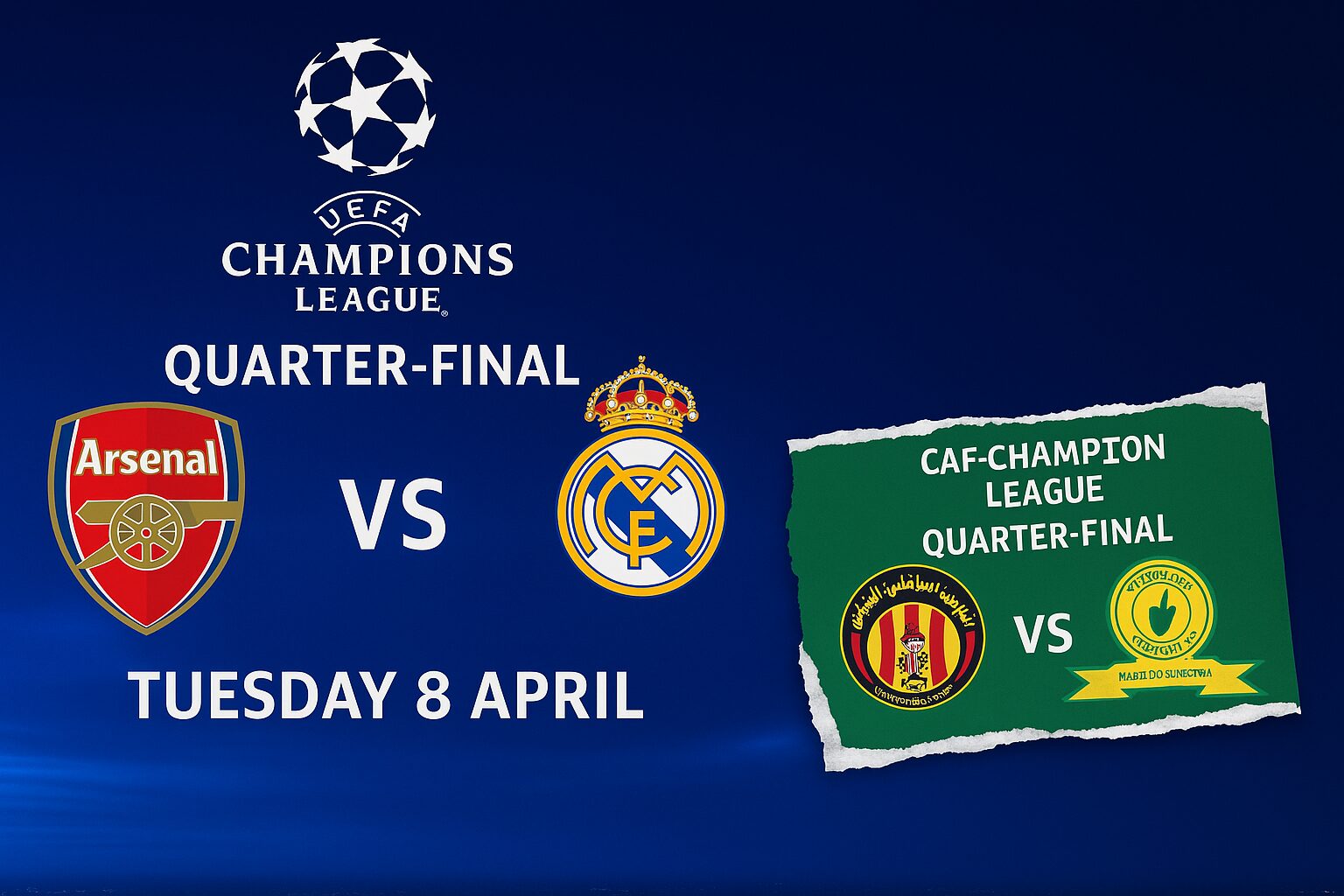
Another paradox. Despite an undeniable pool of talent and a passion that runs right across a continent, African football still struggles to make its mark on the global media stage. The cause is a series of questionable strategic decisions by the Confederation of African Football (CAF), who struggle to promote their own competitions. The latest example: the second legs of the CAF Champions League quarter-finals have been scheduled for the same evening and the same kick-off time as those of the UEFA Champions League. A decision that defies common sense.
Read also: CAF Champions League: Espérance Tunis in danger, Al Ahly to confirm
Because that is exactly what CAF's competitions committee has signed off: on Tuesday 8 April, it scheduled three of the four CAF Champions League quarter-final second legs at exactly the same time as the UEFA Champions League first-leg quarter-finals, Arsenal v Real Madrid and Bayern Munich v Inter Milan. It is a decision that raises questions, given that competition with the European giant looks unavoidable... and, for now, a battle already lost.
Reduced media exposure
When European ties such as PSG v Liverpool, Real Madrid v Atletico and others grab the attention of the whole planet, it is hard for matches like Espérance de Tunis v Mamelodi Sundowns or AS FAR v Pyramids to find space in the media landscape. The outcome is stark: almost no visibility outside the continent, and even outside the home countries of the clubs involved, where supporters mostly follow European sides. There is no need to point out that Arsenal fans in Africa will tonight be watching the Gunners take on Real, rather than Espérance v Sundowns, which is nonetheless a genuine heavyweight clash on the continent.
This head-to-head clash not only damages the profile of African clubs but also weakens the appeal of CAF competitions to broadcasters, sponsors and the wider public. At a time when FIFA is stepping up initiatives to give more weight to so-called "minor" confederations, CAF's attitude gives the impression of an own goal, scored with total calm.
What is more, this scheduling choice is not an isolated case. It is part of a wider problem in promoting African competitions. Communication around matches is often inadequate, television coverage patchy, and digital initiatives still too timid, even if CAF's digital department deserves credit for its work over the past several months. It has grown considerably and now gives competitions proper treatment, as with the U17 AFCON currently being played in Morocco. While the 2026 World Cup qualifiers continue, the scheduling of some matches less than 72h after the start of the squads' get-togethers has already sparked debate, with no change.
The Confederation Cup, which is equivalent to the Europa League, also suffers from a chronic lack of visibility. Matches are sometimes played at unfavourable times, even in the middle of the day on weekdays, with no clear strategy apparently guiding these decisions. It is one more obstacle, when the first question is often whether a match will be broadcast at all and who the broadcaster will be. It is an obstacle course for team supporters and African football fans, and it leads some to give up.
A strategy to rethink and an identity to build
CAF nevertheless have huge potential. The last edition of the AFCON in Ivory Coast was the perfect illustration, and that interest can also carry over to club level. Emblematic sides such as Al Ahly, TP Mazembe, Raja Casablanca and Espérance de Tunis have millions of fans, solid infrastructure and a rich history. But to earn a media profile, they need to be given a favourable setting rather than having obstacles put in their way, even unintentionally.
That necessarily means better coordination of fixture calendars, avoiding clashes with major European dates, but also serious work on television production, the creation of engaging digital content, and storytelling that puts African football's clubs and protagonists in the spotlight. The aim is not to take on UEFA head-on, because the balance of power is uneven, but to promote an identity specific to African football. An identity built on popular fervour, big derbies, talented players looking for recognition, and a unique football culture that should be showcased, and certainly not set against other heavyweights.
To achieve this, CAF must set out a clear vision serving their clubs, their supporters and their economic development. The aim is not to copy Europe, but to promote the distinct identity of African football: its flagship national teams, its legendary clubs, its unique atmosphere, its local talent, its popular roots. CAF must assert themselves as an organisation that defends the interests of African football, instead of constantly reacting to the European agenda. Because as long as they keep scheduling their big fixtures in the shadow of European heavyweights, their competitions will remain under-exposed and their potential untapped.