
African sport: challenges, opportunities and strategies for a revival
Despite the continent's immense potential, performances remain below expectations. How can African sport be developed?
Sport News Africa · Author profile ·
Listen to this story
Audio version in preparation · read aloud by your browser meanwhile
A mixed record and persistent structural challenges
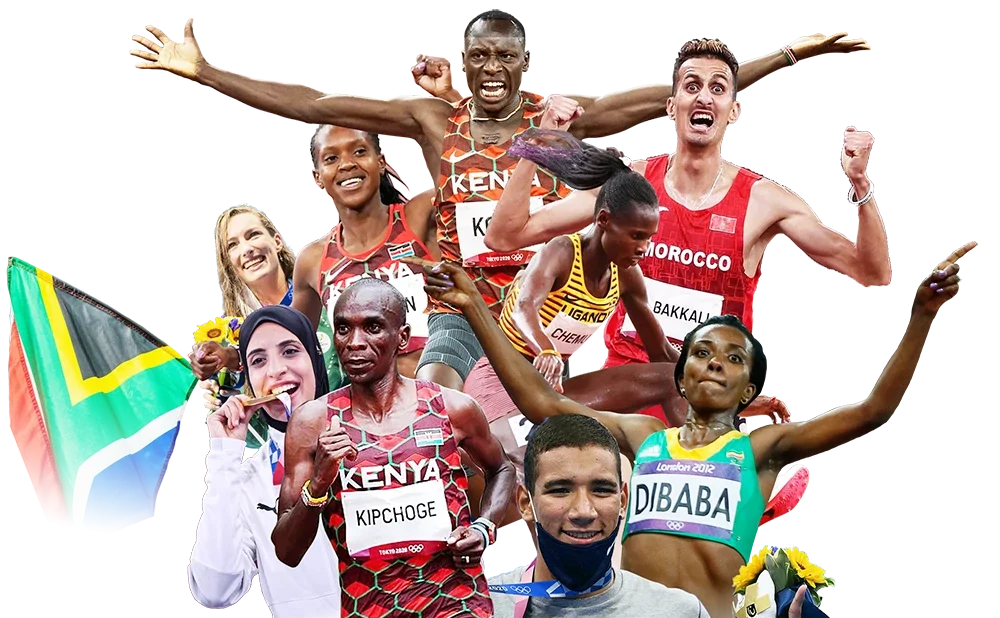
The results at the Paris 2024 Olympics have exposed the weaknesses of African sport. Kenya, with 11 medals, and South Africa, with 6 medals, finished top among African nations. However, those countries rank 17th and 44th respectively in the world standings, which shows how hard it is for Africa to compete with the major sporting powers. These results contrast with notable individual successes, such as Kenya's exploits in athletics, as it continues to dominate the distance events.
Chronic underinvestment
One of the main challenges facing African sport is chronic underinvestment. Sport accounts for just 0.5% of African GDP, against a global average of 5%. This low level of funding translates into a lack of quality infrastructure, inadequate training programmes, and an inability to keep talent, which leaves for countries offering better opportunities. The problem is made worse by the lack of any direct correlation between budgets allocated and performances, as the comparison between Uganda and Morocco shows, where sporting results do not reflect the investment made.
Read also: What should Africa take from the 2024 Olympics?
Governance challenges and the lack of a long-term vision
African sport also suffers from weak governance and a lack of long-term strategic vision. The management of sports funds often lacks transparency and accountability, which limits the effectiveness of investment. Moreover, human capital in sport is insufficiently trained, and limited access to funding holds back ambitious sports projects. The drain of talent abroad is another major challenge, depriving the continent of its best athletes.
An imbalance in sports investment
Football overwhelmingly dominates sports investment in Africa, at the expense of other disciplines. Events such as the Africa Cup of Nations and the 2030 World Cup, which Morocco will co-host with Spain and Portugal, absorb a disproportionate share of resources. This concentration of investment in football neglects the development of amateur and grassroots sport, which is nonetheless essential to produce future generations of champions across a range of disciplines.
A lack of pan-African strategy and an untapped economic potential
The absence of continental coordination in the development of African sport is another cause of stagnating performances. Major disparities between countries in their approach to sport, and little pooling of resources and expertise across the continent, limit the impact of isolated initiatives. A coherent pan-African strategy could help overcome these obstacles by aligning the efforts of different nations behind common goals.
Sport is still largely underused as an economic sector in Africa. Although it could play a key role in developing related industries, such as sports equipment, media and sports tourism, those opportunities remain underdeveloped. Moreover, African sport is little used as a tool of soft power and diplomacy, unlike in other regions of the world.
Towards a revival of African sport?
To relaunch African sport, it is essential to draw up a long-term pan-African sports strategy. A continental sports development agency could coordinate the efforts of the different nations and put in place mechanisms for transparency in the management of funds. Such an approach would encourage better allocation of resources and more strategic planning of sports development.
Raising the share of GDP devoted to sport to reach the global average of 5% is a crucial step towards strengthening sports infrastructure and training programmes. A pan-African sports development fund could also encourage public-private partnerships in financing sports projects, while ensuring a fair distribution of resources.
Developing infrastructure and training
African sport cannot develop without quality infrastructure. A continental programme to build and renovate sports facilities, coupled with the creation of regional academies for various disciplines, is indispensable. Strengthening physical education in school systems would also help build a sporting culture from a young age.
Developing professional continental leagues in several disciplines, along with creating an African sports media ecosystem, are key initiatives to professionalise the sector. Supporting entrepreneurship in sport and related industries would help create an environment that favours innovation and sport-related economic growth.
Promoting an inclusive sporting culture
Finally, it is crucial to develop specific programmes to encourage women and young people to take part in sport, to support adapted sports for people with disabilities, and to promote traditional African sports and games. This inclusive approach would help strengthen community engagement and promote diversity in African sport.
To turn these ambitions into reality, a clear action plan must be put in place. In the short term, a pan-African summit on sports development could lay the foundations for stronger continental collaboration. Creating a continental sports development agency, tasked with coordinating initiatives, is also a priority. By investing in these reforms, Africa could turn its immense sporting potential into a driving force for its economic and social development.