
 Paris Saint-Germain
Strasbourg–PSG: Safonov holds firm, Dembélé turns the game
Paris win 3-1 at Strasbourg after a difficult afternoon. Statistics, critical analysis and SNA player of the match: Safonov, crucial before the turnaround.
Listen to this story
Synthetic English voice · 6 min 24 s
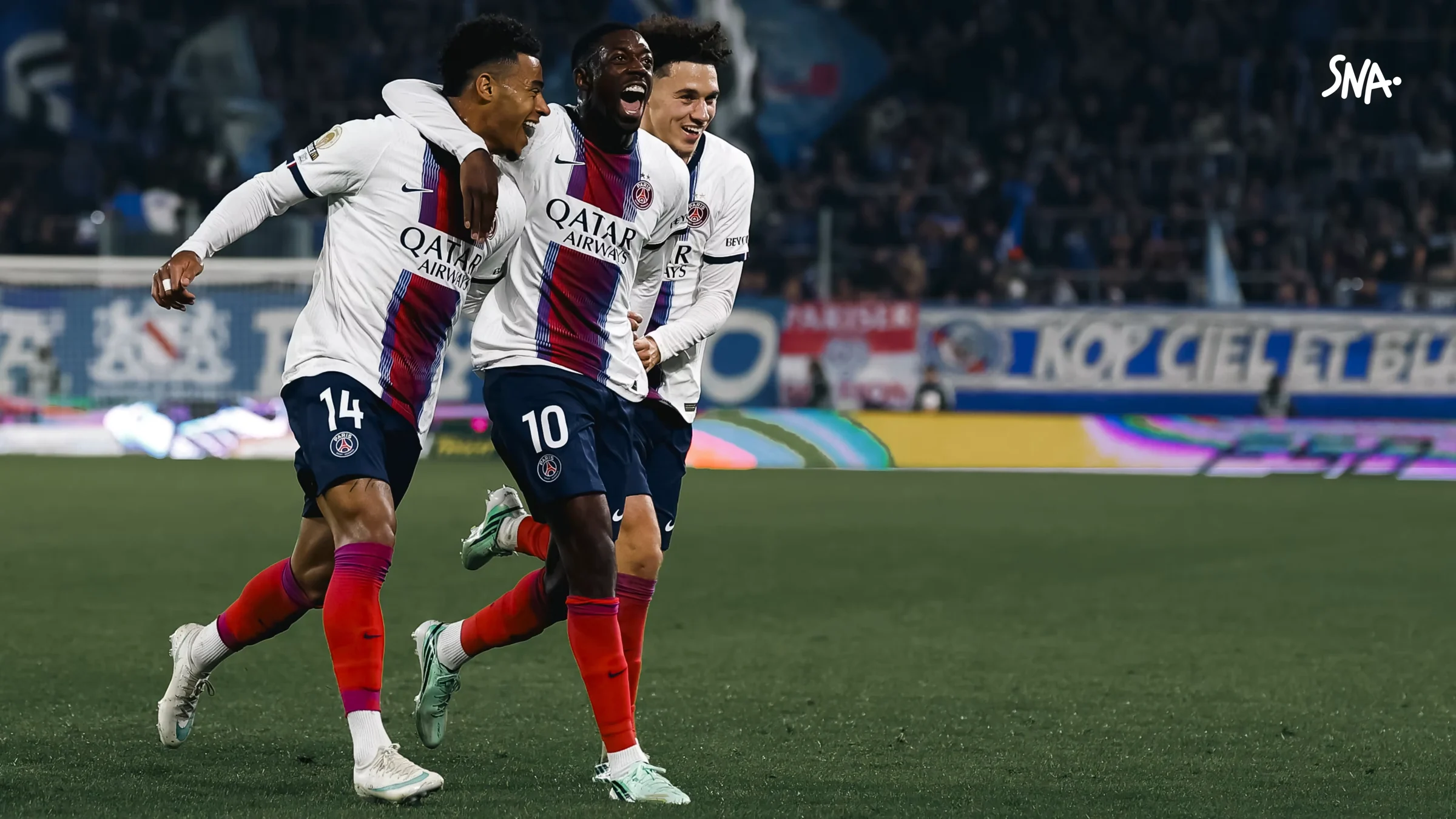
Paris Saint-Germain won 3-1 at Strasbourg on Saturday, October 17, on Ligue 1 matchday seven. The score suggests a comfortable margin. The game tells a different story: Paris trailed until the final quarter of an hour and needed Matvey Safonov’s saves before their substitutes turned the contest around.
Strasbourg – PSG
Strasbourg – PSG
Strasbourg – PSG
Strasbourg – PSG
How the score changed
- 17′ · Reyna 1–0
- 77′ · Zabarnyi 1–1
- Late in normal time · Dembélé 1–2
- 90+3′ · Doué 1–3
Strasbourg threaten despite limited possession
Giovanni Reyna opened the scoring in the 17th minute with a slightly deflected shot. Strasbourg led 1-0 at half-time, and their advantage was not built on a single attack. The hosts had found space and created several openings, although Paris also had opportunities through Maghnes Akliouche and Ferran Torres.
The home threat continued after the interval. Conrad Harder tested Safonov from close range and with a header. Those chances explain the importance of the goalkeeper’s contribution: his interventions kept the deficit at one while Paris were struggling. That mattered as much to the outcome as the three goals that followed.
73% possession, fewer shots on target
Strasbourg–PSG: possession 27%–73%; shots 16–18; shots on target 8–7; corners 3–6. The totals describe a more competitive match than the final score. Strasbourg recorded one more shot on target than Paris despite having far less of the ball. PSG’s possession did not prevent the hosts from regularly threatening their goal.
These figures do not establish the quality of every opportunity. They do, however, rule out describing the victory as a sustained exhibition of control. Paris controlled the ball without consistently controlling the danger. Luis Enrique must assess the passages in which Strasbourg were able to attack, as well as his substitutes’ ability to repair the situation.
Dembélé decisive after missing a penalty
Ousmane Dembélé’s introduction changed the attack’s output. Yet his first major opportunity went to waste when he sent a penalty off target. It prolonged PSG’s difficulties and should not be erased from the assessment simply because they eventually won.
His response was tangible. He delivered the cross for Illia Zabarnyi’s equaliser in the 77th minute, then scored the second goal late in normal time. Achraf Hakimi, another substitute, had sent the ball into the box during that move. The Moroccan thus played a part in the move that put Paris ahead.
Désiré Doué added the third in stoppage time from Ferran Torres’s cutback. Paris were finishing with ten players after Nuno Mendes went off injured, with all substitutions already used. The length of his absence remains to be clarified ahead of Barcelona’s visit.
The substitutions: an answer to an inadequate start
Luis Enrique changed several positions after the interval. Nuno Mendes, Vitinha and Doué came on around the 54th minute, followed by Hakimi and Dembélé in the 63rd. His bench supplied solutions: Dembélé and Doué scored, while Hakimi was involved in the second-goal move. Their output justifies those changes. It does not retrospectively validate the starting side’s performance: Strasbourg had taken the lead and continued to create opportunities after half-time. The substitutions repaired part of the problem; Paris still need to avoid remaining in that position for so long.
SNA player of the match: Matvey Safonov
Our choice is Safonov. Dembélé was the player who transformed the score, supplying an assist and a goal after his missed penalty. The goalkeeper kept that comeback within reach by preventing Strasbourg from extending their lead. His repeated contribution while Paris were in difficulty is what tips our assessment in his favour.
Strasbourg can regret failing to make more of their attacking production. Eight shots on target for one goal also reveal a limit to their effectiveness, while reflecting the opposing goalkeeper’s work. Reducing their performance to a late collapse would overlook what they did to trouble Paris. PSG take the three points; their next task is to protect their goal better, so that they do not rely for so long on their goalkeeper’s saves.
Tops and flops
Top · Safonov. Several saves, notably against Harder, kept Paris within one goal. His work came before the turnaround and underpins our player-of-the-match choice.
Top · Dembélé. An assist and the go-ahead goal after a missed penalty. His contribution in open play changed the score without erasing the failed spot kick.
Top · Reyna. His 17th-minute opener converted Strasbourg’s threat into a lead. The final result does not erase his contribution to making Paris uncomfortable.
Flop · PSG’s protection of their goal. Eight shots on target conceded despite 73% possession left their goalkeeper far too exposed. Winning does not make that imbalance acceptable.
Flop · Strasbourg’s closing stages. Three goals conceded from the 77th minute. After holding their lead, Strasbourg could not protect the result when Paris finally converted their attacks.
Flop · Dembélé’s penalty. Sending the attempt off target was poor execution at an important moment. This judgement concerns that action; his overall contribution remained strongly positive.
Official highlights
beIN SPORTS USA · Watch on YouTube