
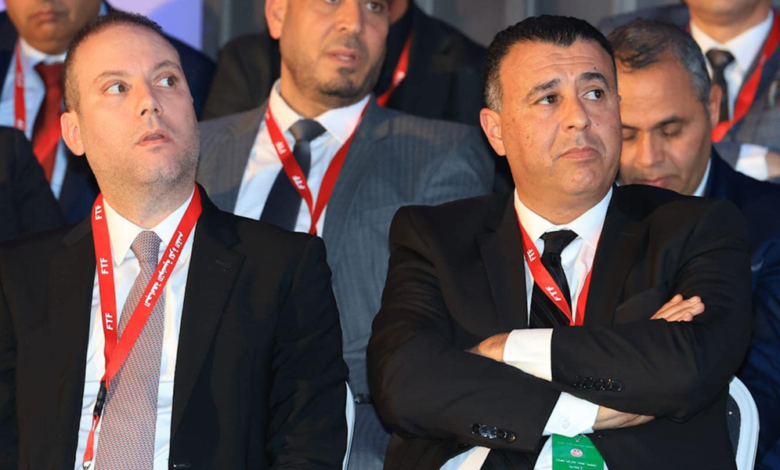
Tunisia: murky dealings and old habits at the FTF
After a hugely disappointing 2025 Africa Cup of Nations that ended in the round of 16 against Mali, the Tunisian Football Federation is under fire. Supposed to embody a new era since the imprisonment of former president Wadie Jary, it has in reality not changed the methods of a system that thrives on opacity and personal or political interests.
Romain MOLINA · Author profile ·
Listen to this story
Audio version in preparation · read aloud by your browser meanwhile
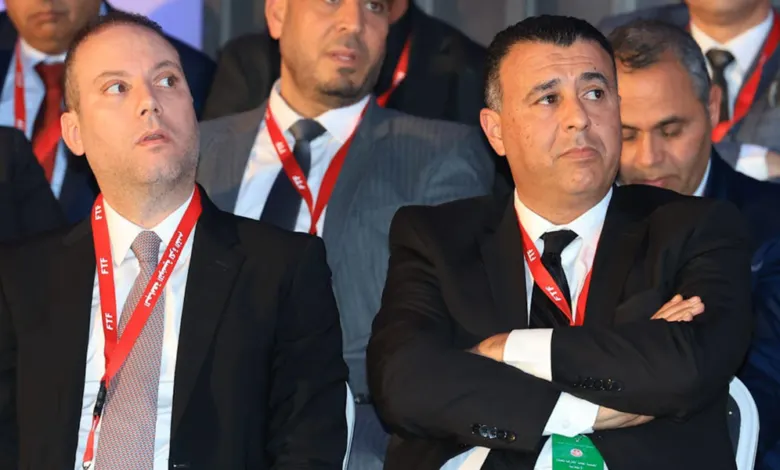
Since Saturday's elimination by Mali, a wave of criticism has crashed down on the FTF and the national team. The departure of head coach Sami Trabelsi, already planned before the AFCON, has been confirmed, while the wildest rumours about international coaches are spreading everywhere.
And while some big names may be tempting, the reality is very different: Tunisia may have qualified for the World Cup, but the federation cannot afford to sign a top-name coach along with his entire staff.
The contract with a trade-fair organiser: Sport Edge
Financially drained, with debts and late salaries owed to its youth coaches and employees, the FTF was relieved to qualify for the World Cup and be certain of pocketing several million dollars.
While waiting for that much-needed windfall, however, the federation handles the cash it does have in a rather paradoxical way: it agreed, for example, to pay around 100,000 dinars in accommodation at the Sheraton Tunis for the Burkina Faso national team, who came for a friendly last June.
That sum was part of an overall bill of approximately 300,000 dinars issued by the match organiser, Sport Edge, a company that is nevertheless registered in the commercial register as a trade-fair organiser, as revealed by Inkyfada.
Run in particular by Safwen Aidi and a FIFA-licensed agent (Moez Brahmi), the company has close ties with the president of the Mauritanian football federation (Ahmed Yahya) and his counterpart and friend in Djibouti (Souleiman Waberi). It was also backed by the all-powerful president of the Moroccan federation, Faouzi Lekjaa, who looked very favourably on Moez Nasri's election as head of the FTF last year.
Polishing the image of vice-president Hussein Jenayah
Amid this political game, Sport Edge has gained influence within the Tunisian federation. As proof, the FTF even hired staff linked to the company without any competition or call for applications, notably for logistics in the person of Chaker Ferjani.
Others move back and forth between the two entities, such as Mahmoud Trabelsi, who had to suspend his activities at the FTF because of sick leave. His brother Ahmed, oddly enough, also works for Sport Edge, mainly accompanying the Mauritanian national team.
While this small circle seems to know each other well and manages to get money flowing out, the federation also signed an individual (AdibJebali) for digital communication. A good idea in itself, but in practice his job also involved polishing the image of vice-president Hussein Jenayah, whose influence was colossal.
A reminder of the disastrous organisation of the friendly against Brazil
Omnipresent, Jenayah was one of the key figures in persuading voters from regional leagues, among others, to back Moez Nasri. If last year's elections showed one thing, it is that the system put in place under former president Wadie Jary was still firmly in place.
Despite his imprisonment, the methods have not changed; proof of that is the resale of tickets that are in theory meant for players' families during matches (or those families end up being moved to the least attractive seats in the stadium).
Patronage and opacity still reign, as the friendly against Brazil showed. As a reminder, the squad were not given a special flight, as is customary for such an occasion, but a regular flight (in economy class) to Brussels, then a bus journey to Lille the evening before. The aim was simple: save every last cent, including another night in a hotel.
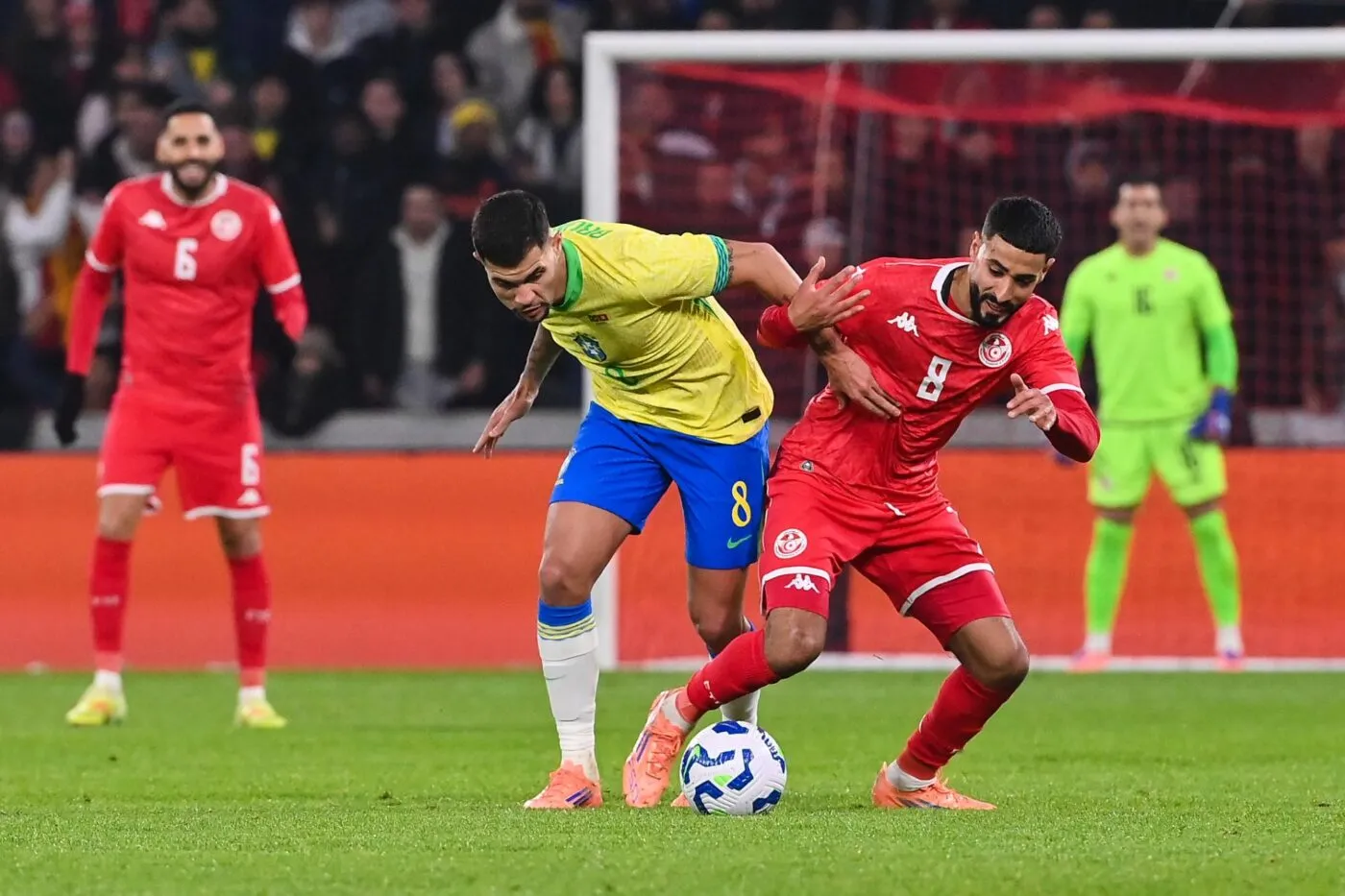
Understandable given the FTF's financial situation? Not necessarily, because the contract signed with the match-organising company (the same one that handled the game against Senegal) was precisely meant to provide a sum of money upfront to optimise preparations and travel conditions.
According to information gathered by Sport News Africa, the sum in question (between 300 and 400,000 dollars) was in fact rather meagre compared with the revenue generated by such a match. Which understandably fuelled some rumours behind the scenes...
"Extra" spending for the AFCON
If the federation kept the details of the contract shrouded in mystery, along with any share in the revenue from the friendly (ticketing, TV rights and advertising space), one thing was certain: transparency was not on the agenda.
The row over visas illustrated this double talk and the FTF's possibly hidden motives. Head coach Sami Trabelsi had publicly announced that eight players could not feature in the match against Brazil because they had not received their French visas.
Yet the federation then issued a statement denying that version, insisting that it had simply not applied for visas for the eight players following "a decision taken in line with the choices and directions of the technical staff for this specific match".
A U-turn that irritated several people internally. According to information gathered by Sport News Africa, the FTF above all wanted to save more money, even if that meant shortening the squad and affecting the national team's sporting performance.
A sense of priorities that has not changed for the AFCON, where the squad list was not solely the head coach's job. To please various people's friends, a few players were added to satisfy club officials and agents. Old habits, capped by the Hussein Jenayah affair, which went before the CAF disciplinary committee after he insulted two protocol officials who refused him access to the VVIP area so he could sit next to CAF president Patrice Motsepe for the match against Nigeria.
And while Jenayah counts on his new friendships at the African confederation and his network cultivated through Sport Edge, one thing is certain: the excesses are not limited to words, since "extra" expense claims of nearly €50,000 were logged by the FTF. A sense of priorities that raises questions: meanwhile, far from the festivities, several employees and service providers are still waiting for their money...