
Women's football: Congo forfeit Olympic qualifier against Morocco
Days before the two-legged tie against Morocco in the second round of the African qualifiers for the Los Angeles 2028 Olympic women's football tournament, the Congolese Football Federation (FECOFOOT) has decided to withdraw the national team from the competition. The pull-out sends Morocco straight through to the third round and highlights the structural difficulties facing Congolese women's football.
Rieltony LOUBOKO · Author profile ·
Listen to this story
Synthetic English voice · 5 min 15 s
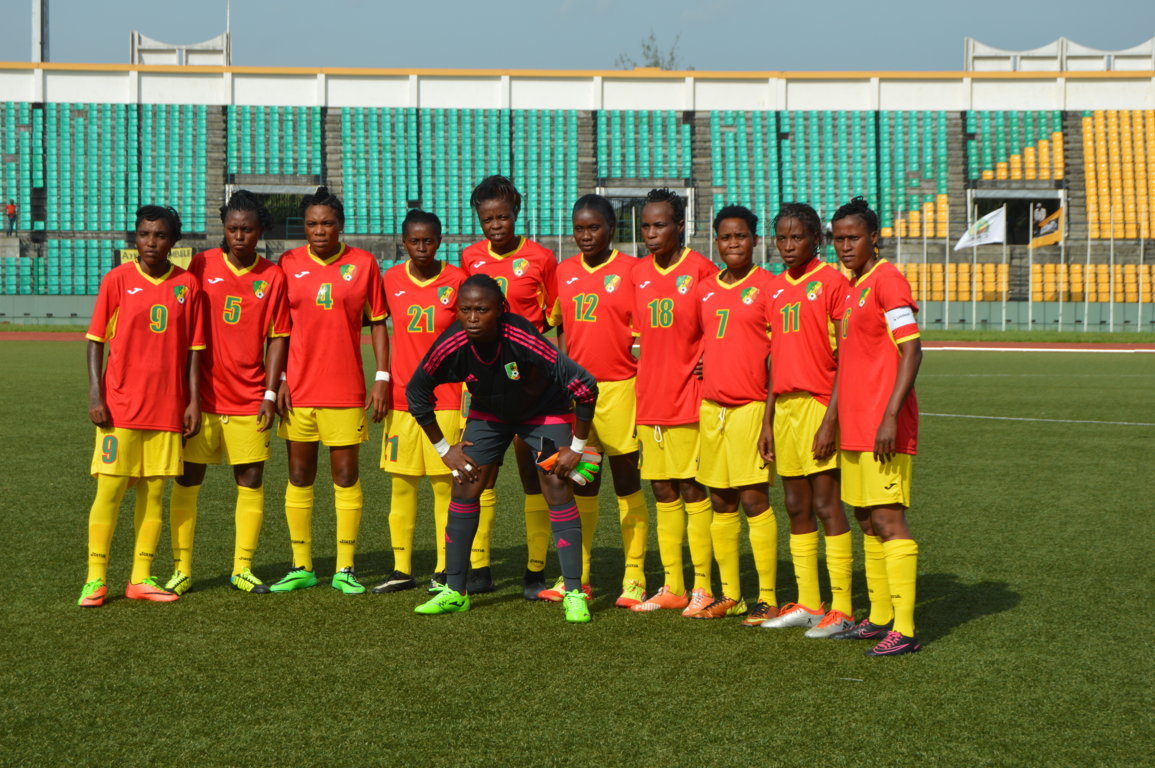
What many feared has been confirmed. Congo's women's Red Devils will not play their two-legged tie against Morocco's Atlas Lionesses, scheduled for October, in the second round of the African qualifiers for the Los Angeles 2028 Olympic women's football tournament. The Congolese Football Federation has written to the Confederation of African Football (CAF) to notify it of the national team's withdrawal, leaving Morocco to go straight through to the third round.
The decision follows a period without regular competition and with little preparation for the national team. A few months earlier, Red Devils women's coach Berjona Mbemba had nonetheless welcomed the return of local competition after two seasons on hold because of an internal crisis at the federation.
Speaking to Télé Congo, she said: “Recently, the women's football clubs played the Congo Cup, which was a signal for the women's game. I watched a few matches played in Brazzaville. I think there is a core there, but what remains is the work.”
Behind that hope of a revival, uncertainty lingered. Until September, no camp programme for the squad had been set, according to available information. The situation had already raised doubts over Congo's ability to prepare properly for this international assignment.
A women's game that has lost its bearings
The forfeit against Morocco exposes the persistent difficulties of Congolese women's football. For several seasons, the leagues have suffered prolonged interruptions, national competitions have remained irregular and clubs have struggled to build anything sustainable. In these conditions, preparing a competitive national team becomes especially difficult.
The Red Devils' record tells the story. Congo have appeared in only one Women's Africa Cup of Nations finals, in 2006. Nearly twenty years on, the team is still waiting to return to the continental tournament.
In the 2023 Women's AFCON qualifiers, Congo got past Guinea-Bissau with two wins before falling to Tunisia. Beaten 5-2 away, they drew 1-1 in Brazzaville, going out 6-3 on aggregate.
Those matches remain the team's last international appearances. Withdrawing from the Olympic campaign therefore extends a worrying spell of inactivity for the players and the technical staff.
Resources and governance questions
While several African countries are gradually strengthening their frameworks for developing women's football, Congo is still grappling with a major problem: the lack of continuity in how competitions are run. A league suspended for several years can neither ensure steady progress for players nor give clubs enough sporting visibility.
That instability also undermines the regular crowning of a national champion and clubs' preparation for continental competition, notably the qualifiers for the CAF Women's Champions League.
Developing women's football requires a genuine strategy from the federation. Congo have players who could strengthen the national team, including dual nationals playing abroad. But a system for identifying, monitoring and recruiting them still has to be put in place, built on a coherent sporting project.
From pledges to action
When he was elected to lead FECOFOOT, Eric Alain Mantot made clear he wanted to make women's football a priority. “Women's football: it will no longer be a footnote, but a priority, with real resources,” he said in his first speech as federation president.
The Red Devils' withdrawal from the Olympic qualifiers is now a test of that ambition. Reviving the women's game cannot be reduced to statements of intent. It demands a stable national calendar, financial support for clubs, technical support for players and rigorous preparation of the national team.
Appointing an experienced coach, backed by a competent staff, could help the revival, provided it is part of a broad, lasting project. Training, talent identification, the structuring of clubs and transparency in managing resources must also be among the priorities.
The forfeit against Morocco is not just a missed opportunity in the race for the Los Angeles 2028 Olympic Games. It highlights the limits of a system that struggles to guarantee its players regular activity and its national team adequate preparation. For FECOFOOT, the challenge now is to move from pledges to action. Without a regular league, without proper player monitoring and without a genuine development project, the Red Devils' return to the continental stage risks remaining a distant goal.