
Aliou Cissé caught between contract limbo and waning fan support
Since his contract expired on 31 August 2024, Aliou Cissé has found himself in a delicate contractual situation
Sport News Africa · Author profile ·
Listen to this story
Audio version in preparation · read aloud by your browser meanwhile
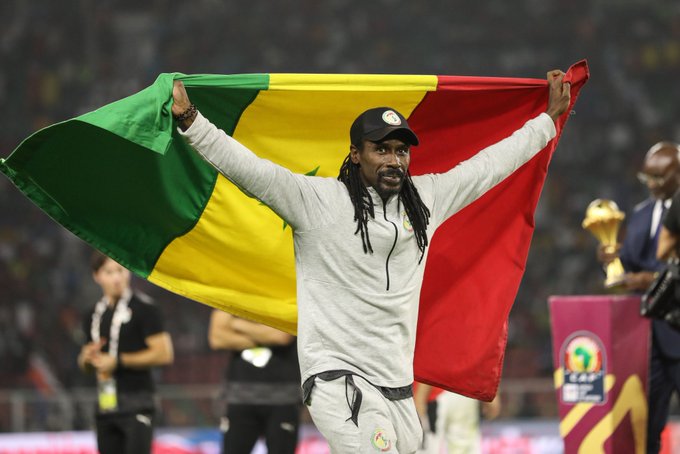
It is a thorny subject that the Senegalese Football Federation (FSF) is trying to avoid. In charge of the Senegal national team since 2015, Aliou Cissé saw his contract run out on 31 August, having signed an extension in November 2022, a few days before the World Cup in Qatar. That deal included clear targets: reaching the quarter-finals of the 2022 World Cup, qualifying Senegal for the 2023 AFCON in Ivory Coast, and defending the continental title. Of the three targets, Cissé met only one, qualification for the AFCON, before going out in the last 16.
Read also: Senegal: Aliou Cissé, contract extension in the offing
It emerged on the eve of that tournament that the Lions' head coach was owed several months of unpaid wages. Hardly the best way to prepare for a competition. And many months on, the coach's situation is still unresolved. According to Sport News Africa, he had still not received all of his arrears by the time of the September international break, something he half-confirmed at a press conference. It is another problem that only adds to an already tense situation. The FSF, although in favour of extending his deal, is running up against a lack of response from the Ministry of Sports (which pays Cissé's salary and must approve the extension), leaving the coach's future in doubt.
The Ministry of Sports under public scrutiny
The ministry's silence is partly explained by growing disenchantment between Aliou Cissé and a section of Senegalese supporters. Despite his success in 2021 in winning Senegal's first ever AFCON, Cissé now faces sharp criticism over his tactical choices and the decline in the team's performances. The 1-1 draw against Burkina Faso in 2025 AFCON qualifying marked a turning point, with some FSF members and a section of fans calling for him to go. Before that, the 1-1 draw with DR Congo, again at home but in 2026 World Cup qualifying, had shown the first signs of this wave of discontent, born of the disappointment of the 2023 AFCON.
Public opinion is therefore playing a major part in this contractual impasse. Some observers believe the ministry is reluctant to renew a coach who, despite his record, appears to be at the end of a cycle with the Lions. Behind-the-scenes talk suggests that keeping Cissé on could be badly received, both by part of the FSF leadership and by the public, who are increasingly voicing their frustration.
Stakes beyond the pitch
Beyond the financial side, this contractual stalemate also highlights wider tensions over how the national team is run. Although Cissé has been defended by some figures in Senegalese football, such as national technical director Mayacine Mar, the lack of clarity from the sporting authorities is raising plenty of questions. The new sports minister may also be swayed by a desire to overhaul more broadly how the national team is managed and to respond to popular pressure.
What future for Aliou Cissé?
With Senegal preparing to play matchdays 3 and 4 of 2025 AFCON qualifying in October, Aliou Cissé's future remains uncertain. Without a formal renewal of his contract, Cissé could, as things stand, leave his post, ushering in a new era for the national team. That is not on the agenda for the coach, who wants to take part in the 2025 AFCON and the 2026 World Cup with the Lions. He has set himself those goals despite his contractual situation.
The situation reflects a wider dilemma: whether the time has come for Senegal to move into a new cycle under a new coach, or whether Aliou Cissé, with his experience and his attachment to the team, can still add value in future competitions.
While awaiting a decision from the ministry, Aliou Cissé and the Lions face a complicated build-up to the fixtures ahead, with popular support seemingly ebbing away.