
CAF: Suspicions of manipulation and power struggles surrounding the general secretariat
While African football is taking stock of the participation of its 10 representatives in the 2026 World Cup, its administrative backstage is once again shaken by intense turmoil. Since the departure in March of former secretary general Véron Mosengo-Omba, the interim leadership by Samson Adamu has crystallized all tensions. Between an opaque recruitment process and the very tight influence game of FIFA, the organization is experiencing new upheavals.
Malick BAMBA · Author profile ·
Listen to this story
Synthetic English voice · 4 min 57 s
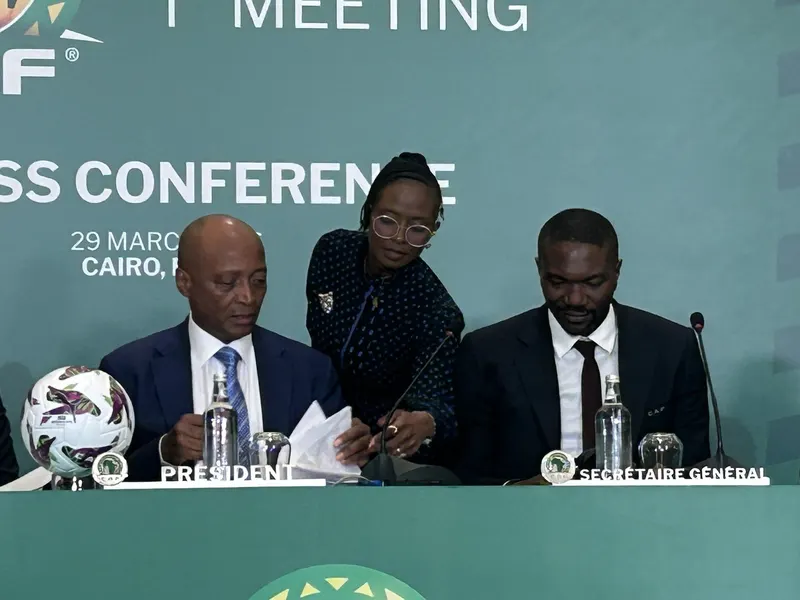
On June 29, CAF took what appeared to be a historic initiative: publicly opening applications for the position of secretary general, one of the most powerful and influential executive roles in African football. But this showcase of transparency quickly cracked under the weight of a schedule that is, to say the least, provocative.
24-hour countdown
The notice of vacancy was initially published with an application deadline set for June 30, giving potential candidates barely 24 hours to prepare and submit their applications. Faced with widespread outrage both internally and externally, CAF was forced to postpone the deadline to July 10.
For many observers, the damage is already done and the argument of administrative oversight does not hold water. This timeline bears all the hallmarks of a deliberate attempt to lock down the process and prevent any real competition. Moreover, launching such a process during the World Cup, when the attention of the entire football community and media is focused on the competition, appears to be a maneuver to shield this crucial decision from public scrutiny.
The cumbersome shadow of the Adamu dynasty
At the heart of suspicions of manipulation is the current interim secretary general, Samson Adamu. Appointed following the departure of Véron Mosengo-Omba, the Nigerian enjoys strong popularity within the organization and is especially appreciated for his previous role as director of competitions. Several members of the executive committee would look favorably on him being confirmed in his new position.
But some suspect him of maneuvering behind the scenes to secure a definitive appointment and take a dim view of a future nomination to the post because he is the son of Amos Adamu. A disgraced figure in continental football, the former FIFA Executive Committee member was heavily sanctioned in November 2010 by the international body's Ethics Committee. Caught on hidden camera by undercover Sunday Times journalists, he was filmed soliciting $800,000 in exchange for his vote for the awarding of the 2018 and 2022 World Cups.
Found guilty of serious violations of the Code of Ethics (notably regarding rules of conduct, loyalty, confidentiality, and corruption), Amos Adamu received a three-year suspension, confirmed on appeal and upheld by the Court of Arbitration for Sport (CAS) in February 2012. In 2017, FIFA's independent Ethics Committee handed him a second two-year suspension for further breaches during his term. Seeing his son now potentially take over the administration's leadership raises fears among African football stakeholders of a dreadful step backwards, marked by cronyism and opacity.
Two-speed governance
These backstage maneuvers highlight a striking contrast within CAF. On the one hand, African football is experiencing renewed health, driven by historic performances in international tournaments and a steady increase in commercial investments. On the other hand, the administrative machinery seems stuck.
Internal sources report structural and recurring failures in governance. In particular, the opacity of decision-making processes, grey areas in financial management, and a pronounced stagnation in the pace of institutional reforms are being criticized. For stakeholders, the appointment of the next secretary general will not be a simple HR decision, but a strong indicator of CAF's genuine willingness to move towards transparency and accountability.
FIFA waiting in the wings to keep control
In this battle for influence, CAF is not the only player showing its hand. According to our information, FIFA is closely monitoring the progress of this recruitment. The world football governing body would be very pleased to see the post go to a candidate from its own ranks, following the example of outgoing secretary general Véron Mosengo-Omba.
For Zurich, the stakes are high: placing a trusted person at the head of CAF’s administration would allow for maintaining a tight grip on the African body and ensuring a key channel of geopolitical influence within world football, as president Gianni Infantino seeks a new term in March 2027.
As CAF remains silent and refuses to officially comment on the deadline blunder or criticism of its operations, African football finds itself at a crossroads. The question remains whether the organization will choose to prioritize integrity and reform, or yield to the old habits of behind-the-scenes deal-making.