
Cameroon: old demons return ahead of the 2026 Women's AFCON
Given a lifeline to compete in the 2026 Women's AFCON, the Indomitable Lionesses of Cameroon are already plunged back into a deep crisis that is shaking up their preparations. Withdrawals, clashes around key players, and a backstage power struggle: the den is reigniting tensions that many thought were a thing of the past.
O. GOMUS · Author profile ·
Listen to this story
Synthetic English voice · 4 min 26 s
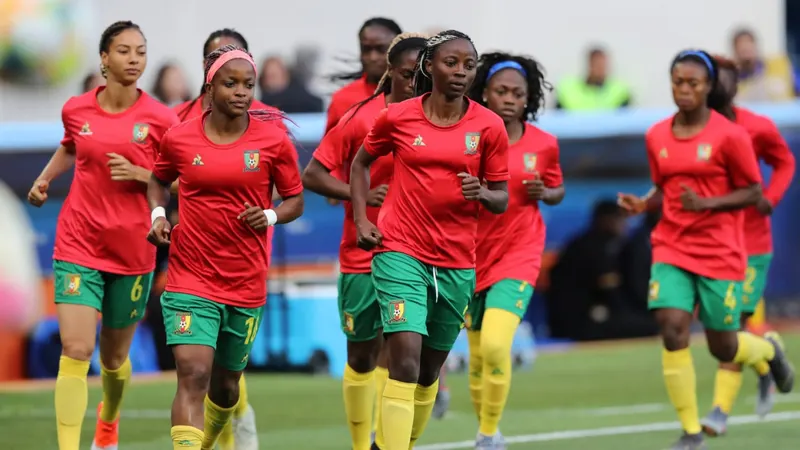
A few weeks before a 2026 Women’s AFCON that Cameroon shouldn’t even have been playing in, if not for an administrative reprieve after failing on the pitch, the Indomitable Lionesses are plunging back into a familiar crisis. In Odza, on the outskirts of Yaoundé, the training camp has turned into an open rupture. What was supposed to be a moment to build momentum after several weeks of unexplained break now looks like another phase of internal tension, amid a cascade of withdrawals, rebellion from senior players, and a battle for influence with social networks buzzing in the background. after several weeks of unexplained pause, now resembles a fresh episode of internal tensions, with defections piling up, senior players protesting, and a power struggle fueled by social media in turmoil.
Two key players slam the door
On June 21, 2026, a thunderclap in the den: Nchout Njoya Ajara and Falone Meffometou leave camp without warning after training. Two historic mainstays, two experienced players meant to embody the stability of a team in rebuilding mode. In the aftermath, seven other players are released on June 23, among them Flora Kameni, Chelsea Ngole and Adama. Officially, the staff cites a "reorganization" and "technical evaluations". Unofficially, the group’s cohesion is already fractured.
The reasons for the split are multiple and tangled. According to several sources close to the locker room, tensions erupted surrounding bonuses, the new strict equality policy set by Victorine Nguele’s staff, and especially the captain’s armband, taken from certain senior players in favor of Colette Ndzana. The method, judged brutal by some on the team, subjects all players to physical and technical tests, regardless of seniority. A breach of moral contract for players who felt they still carried weight in the hierarchy.
Fracture
Very quickly, the conflict spills beyond the field. On social media, factions form. Media and pages perceived as close to the Fécafoot president Samuel Eto'o relay harsh messages, questioning the players’ ages and indirectly praising their departure. “At 33 and 35, they need to make room for the younger ones,” and “the team can finally breathe without the old guard”, can be read here and there. Meanwhile, Falone Meffometou posts a chilling message on her networks: “Your future depends on you. Greetings from the old lady.”
"I have experienced situations I did not consider compatible with the values that have guided my entire career. I chose to step back, not out of anger, but out of responsibility. I didn’t want my presence to be a distraction or a source of division in a group that must stay united around a single objective: defending the colors of Cameroon," Nchout Ajara also responded. Two statements that illustrate the fracture.
But reducing this crisis to a simple generational opposition would be misleading. Ajara, in particular, is no ordinary player. Present for over a decade, having played in major competitions — Olympics 2012, AFCON 2014, 2016, 2018 and 2024, World Cups 2015 and 2019 — she remains one of the most decisive forwards in the history of Cameroonian women’s football, nominated for the Puskás Award after her widely-shared goal in 2019. With her, it’s both a part of sporting memory that departs and a technical authority tough to replace in a team under reconstruction.
Behind the scenes, another narrative is circulating: this of a conflict stoked by old rivalries. Certain former internationals now retired are quietly accused of fanning the flames to weaken the remaining senior players. While Fécafoot’s mediation attempted to bring back Ajara and Meffometou, talks broke down. On June 26, the expanded squad for the AFCON is released: the two players are not included. A decision that confirms a definite split, just weeks before a tournament where Cameroon is already moving forward under pressure, haunted by its old demons: internal divisions, ego clashes, and chronic instability at a time when, finally, it should have been rebuilding.