
Holiday leagues: in Cameroon, football becomes a playground for political elites
Across Cameroon, football tournaments held during the school holidays are turning into political shop windows.
Sport News Africa · Author profile ·
Listen to this story
Audio version in preparation · read aloud by your browser meanwhile
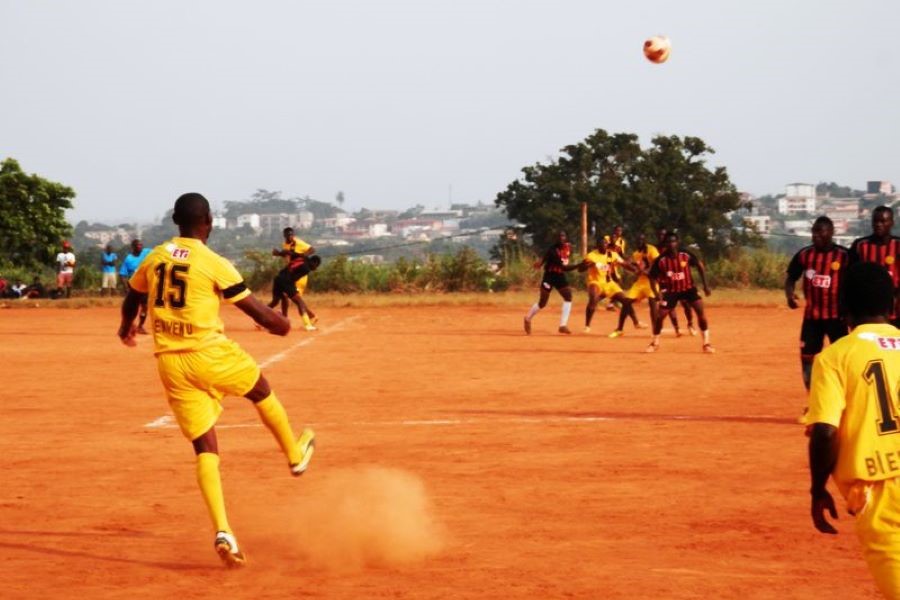
“Here, we play for the neighbourhood, but above all for the patron”. Max, 19, is the star striker for the Ekié team, from a district of Yaoundé. This Saturday afternoon, he and his team-mates are taking on their rivals from the neighbouring district on a makeshift pitch, ringed with banners praising a local political figure. That is the patron Max is talking about. A supporter of the ruling Cameroon People's Democratic Movement (RDPC), he is the man bankrolling the tournament. Holiday leagues like this one are staged in almost every region of Cameroon at this time of year.
Read also: Cameroon: the Geremi Njitap affair, when Fécafoot defies CAF
Football, populism and local roots
Originally, these community competitions were meant to keep young people occupied during the school holidays. But very quickly they took on a distinctly political edge. “These tournaments have become genuine tools of local patronage ”, says Etienne T., a political science doctoral student at the University of Yaoundé II. “In a context where political parties have a weak territorial presence, football becomes a means of direct contact with voters. Especially in an election year, as is the case now”.
The organisers – MPs, mayors, senators or rising figures on the political scene – invest considerable sums in them. Cash prizes, brand-new kit, media events… Everything is done to project the image of a benefactor, without going through official campaign channels. “These sporting competitions contribute not only to promoting the party's ideals, but also to mobilising and recruiting new activists”, the ruling party states on its official website.
Political ground
For many young people, often unemployed, taking part in these competitions represents an opportunity, even a hope of recognition. “It's the only time of year when anyone takes an interest in our neighbourhood”, says Idriss, 22, who lives in the Cité des Palmiers in Douala. “You can earn a bit of money, or get help with your studies. You can use a match to talk to the promoter, hand him your CV, and so on.”
But this system often rests on a logic of implicit loyalty. Promoters take the opportunity to slip in political messages, with calls to back or, conversely, to reject certain players on the local scene. This drift from sport towards political communication is part of a broader strategy to win over young people. “Football then becomes a space for the reproduction of power, where young people are both instrumentalised and given responsibility”.
For now, the phenomenon escapes any regulation. The Cameroonian Football Federation has been trying to regulate these tournaments for almost three years. In a circular signed on 22 January 2022, the governing body of Cameroonian football invites the “promoters of these holiday championships to affiliate them with Fécafoot through the regional and departmental leagues in their territorial area ”. That is not enough in a climate where the authorities turn a blind eye, seeing in these holiday leagues a tool for strengthening social cohesion and peace. So every summer, on the dusty pitch of a forgotten neighbourhood, the most important match may not be the one between the two teams, but the one being played behind the scenes by the sponsor seeking influence.