
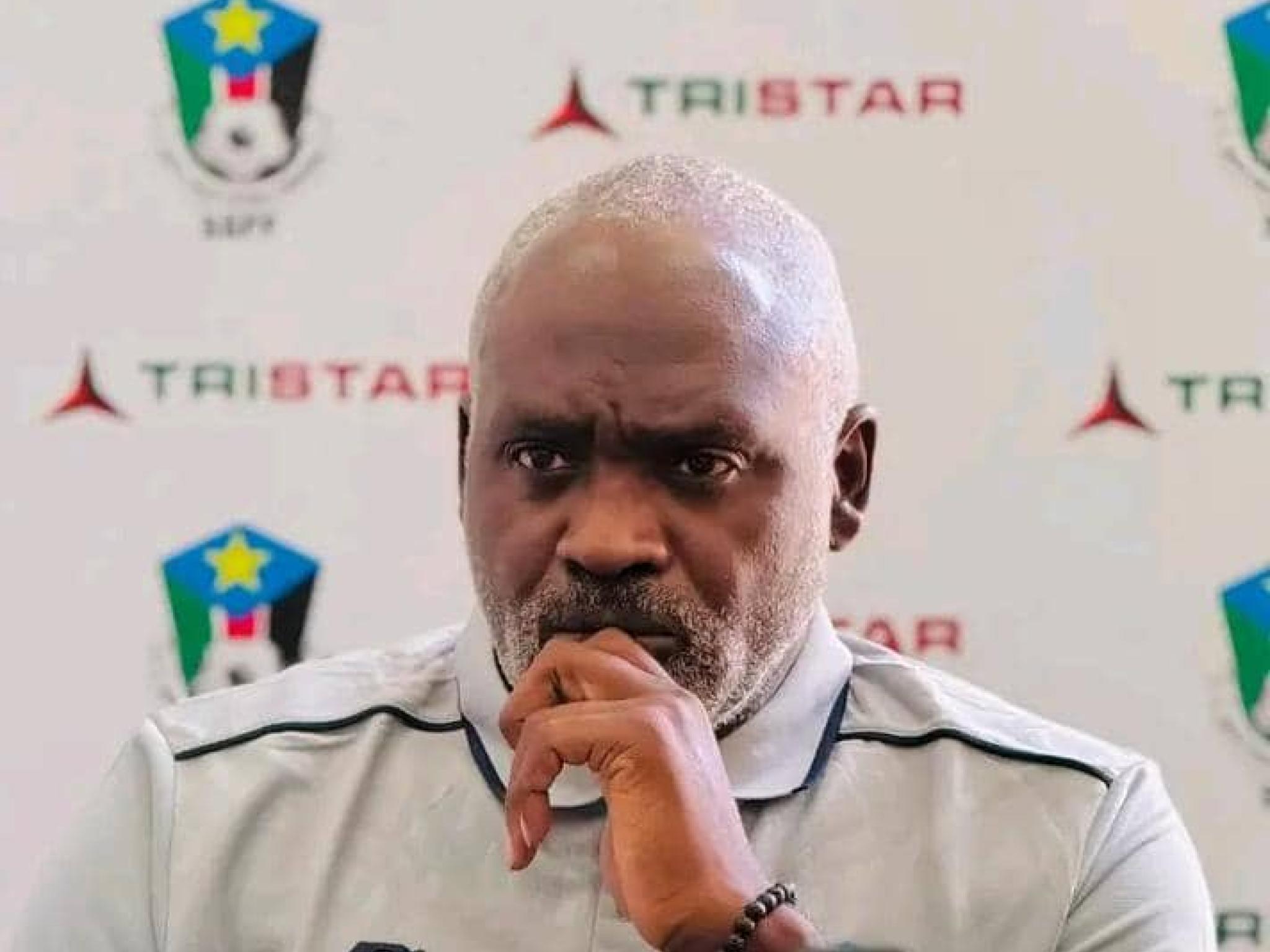
You are known notably for having been head coach and national technical director in the Democratic Republic of Congo. However, since 2020, you have no longer coached or held a position in Africa. Was that due to a lack of offers or the absence of a project that interested you?
It's true that it has been more than five years since I was last in charge of a national team. Just after Congo, I had a few vague proposals that led nowhere. Let's say that people were interested in me, trying to find out whether I was available or not, but it ended up wasting my time more than anything else. The only proposal that seemed concrete came from Equatorial Guinea, but due to a change in the person who had the contact, it came to nothing.
So I went back to work in Belgium. For three years, I was assistant technical director at Molenbeek, then spent a season at RAAL La Louvière, who had just been promoted to the first division. I was asked to work with the youth players, particularly the U20 and U23 groups. I was like a consultant, someone who brought their experience in management and leadership to already very talented coaches. I also had an approach from a Congolese club, Sanga Balende, but nothing came of it.
That is why your arrival at South Sudan was surprising this summer. How did it come about?
It was someone close to the federation president (Francis Amin Michael) who put my name forward: "He's good as a coach and a developer." That fitted their idea of improving the senior team and also working with the U23/U20 sides. I made it clear to them that it was impossible to combine the roles of head coach and technical director given the workload. However, I do coordinate with the U23 and U20 teams while giving the young local coaches tools in terms of development, scouting, and always maintaining the same mindset.
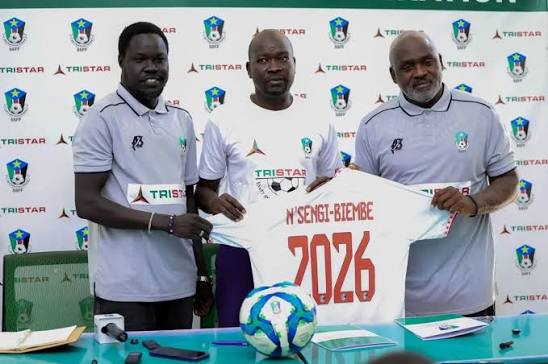
So I arrived in Juba on 9 August. I wanted to live here, to see the daily life of a population that is rebuilding itself — very, very welcoming people, I might add — and to see how football was experienced. I felt a great deal of humility, helpfulness, and empathy around me. Perhaps because I am the head coach, but I don't think so. I believe it is mostly just their nature.
"I wanted to live here, to see the daily life of a population that is rebuilding itself and how football was experienced"
South Sudan has tried in recent years to call upon its diaspora to strengthen the national team, even at the expense of local players. Knowing your profile and the team's recent disappointing results, one imagines the idea will be to rebuild with a new generation...
Already, I am discovering another reality of African football. It is a different mentality, a different footballing tradition. I built myself in Congo, with a certain working method, seeing how certain coaches operated, including Claude Le Roy, whom I used to observe from a distance back when I was in charge of the U23s.
My thinking does not stop at the national team alone. Our project goes beyond that, and that is what the president wanted; it is also why I accepted this mission, because you can sense when someone genuinely wants you by their side. We must therefore create continuity between the different age categories and build a South Sudanese footballing identity. I must not impose my own philosophy but rather offer advice to improve a philosophy specific to the country that is already underway. We also need to establish principles for all the young players so that they are ready when they knock on the door of the first team.
Of course, it will require work and patience — a great deal of patience. Nevertheless, in Africa, there are many opportunities to develop young players because they simply have classes in the morning and are free in the afternoon. In Europe, they go to school in the morning and often in the afternoon too. That gives us freedom and an advantage — more time for football development. They say it takes around 10,000 hours of training for a young player, so with good organisation…
"I came without my family, without my children… I love football, it is all I have, quite clearly, so I give everything"
What are the overall objectives set by the federation for this new cycle?
First, to make the team progress. Then, to give ourselves a chance at a first qualification for AFCON. As long as it is mathematically still possible, there is always a chance. I respect all of our prestigious opponents (Angola, Egypt, Malawi) but I am not going to fear them. When you have ambition, you cannot be afraid — you have to face up to challenges.
I know where we are starting from. The road will be difficult, but I know that all hard work eventually pays off. I came without my family, without my children… (He pauses) I love football, it is all I have, quite clearly, so I give everything. This challenge has to be taken on, and I enjoy it because I love blank pages. Being able to contribute to this challenge, to lay a foundation on which the country can build over time — perhaps with other people who will come after and bring something of their own — that is the objective.
On top of that, I am very well settled in. I don't want to make anyone envious, but I think I am better set up here than I was in Kinshasa, where I spent three years in a hotel. Here, even though it is a small federation, within fifteen days they had put me in an apartment and even provided a driver. There is a genuine will, and that is what drives me. And as the great coach Rinus Michels once said: "A good eleven is worth more than eleven good players." There will inevitably be people who are disappointed, people who will say that perhaps this or that player should have been picked, but I ask myself just one question: will these good players form a good eleven? That is what we will be working on to run a strong qualification campaign.
Join our sports community!
Follow us on social media to never miss real-time sports news.
À propos de l'auteur
Romain MOLINA
Rédacteur sportif
Journaliste et écrivain, auteur de nombreuses enquêtes dans le milieu du sport.