
Comoros: What future for Stefano Cusin and the federation?
Committed until March 2026 with the selection of Comoros, the Italian coach is expected to leave his position amid growing frustration between each side. The epilogue of a two-and-a-half-year collaboration that had ideally started before withering over time.
Philemon MBALE · Author profile ·
Listen to this story
Audio version in preparation · read aloud by your browser meanwhile
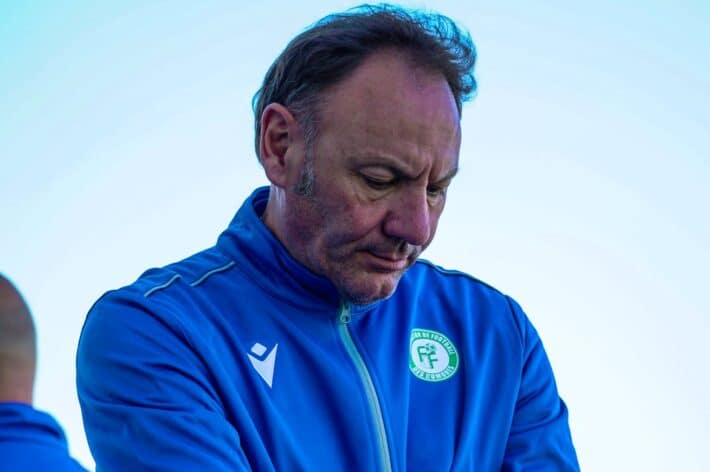
Unable to score a goal, the Comoros left AFCON 2025 in the group stage despite two draws against Zambia and Mali.
Two insufficient points with content deemed disappointing, notably in the face of Zambians who were clearly within the reach of the Coelacanths.
If the defensive approach was understandable against Morocco for the opening day, the way the team played the other two games is reduced to a minimalist offensive animation with two attacking players (Rafiki Said and Myziane Maolida) isolated from the rest of their partners and basic recovery circuits.
An exceptional first year
Arrived in October 2023 after an excellent spell in South Sudan, Cusin had immediately sparked a renewal within a national team in the midst of a crisis with striking players and gloomy results.
Without renouncing his principles, he had made the whole of the federation and his group adhere to his methods by being understanding, demanding and open to dialogue. Thanks to the addition of a few new binational players, including Ismaël Boura, Rayan Lutin, Warmed Omari, Rémy Vita and Zaydou Youssouf, the squad improved and obtained its second qualification for the AFCON thanks to an epic journey by finishing first and unbeaten in its group ahead of Tunisia.
With an equally perfect start in the elimination phase at the World Cup, including a prestigious victory against Ghana in Moroni, Comoros dreamed aloud with a coach logically extended and upgraded until March 2026.
Cusin was already looking for an exit door
Problem, this euphoria marked the end of Cusin’s love story with the Coelacanths. In a federation plagued by economic issues and turning downright abandoned with a president monopolized by his various missions at COSAFA and CAF, the Comorian football federation also sank sportively.
From defeat to defeat, the fantasy of the 2026 World Cup seemed very far with a fourth place among the six teams making up the qualifying group. Gangrened by endless battles for influence and political games behind the scenes, a shaky organizational chart where everyone suddenly improvises for a role that is not their own, the federation was sinking but refused to see its sad reality.
Wearied by this context, Cusin was also no longer this friendly coach with contagious motivation. Huddled up with his Italian staff, he had been looking for a way out after the AFCON, even speaking in the autumn with John Williams, the sports director of Amiens, and other agents for a more lucrative position in Africa.
Far from winning unanimous approval, unlike its beginnings, the coach alienated a good part of the leaders at this African Cup for his choices and his inability to transcend a group that anyway did not have the physical resources necessary to play three matches in one week, the fault for a lack of club playing time for many players who also play in less intensive championships.
Any other upcoming departures at the federation?
And if the Comoros are finally in their place, that of a good small team capable of qualifying for the AFCON but having limits against tougher selections, the adventure of Cusin, whose contract extension seems highly unlikely, will finally stop on an avoidable frustration if each of the parties had taken the time to talk to each other instead of burying their heads in the sand.
A disappointment for a federation that should (finally) be taken back in hand by the president, Said Ali Said Athouman, who did not really taste the wishes of several individuals before and during the AFCON.
Taking into account the official departures of Djamal Mohamed, whose real role escaped many people ("sports director" of the team) and who had returned after an absence, and Mohamed Thani, team manager and sports coordinator who was the main relay to convince several binationals, the national team will be relieved of several people including the best striker in its history, El Fardou Ben Nabouhane, who announced his international retirement.
Enough to turn a page to make way for an uncertain future but perhaps necessary; in the Comoros more than elsewhere, it was time to stop living through the past.