
Congo: the difficult integration of women into sports governing bodies
Congo-Brazzaville: the place of women is a talking point. Sports governing bodies rarely appoint women to positions of responsibility
Sport News Africa · Author profile ·
Listen to this story
Audio version in preparation · read aloud by your browser meanwhile
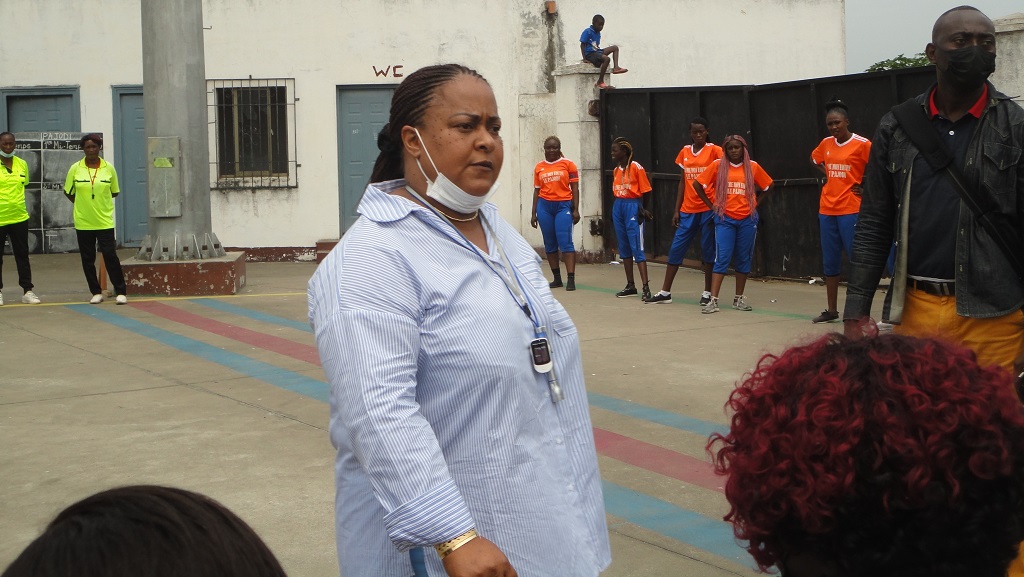
“At last! We've managed to fill the gap!” So said Paul Samba recently, president of the National Women's Football League of Congo-Brazzaville. The vacancy was for vice-president of the league. And it has gone to Berthe Bongo-Passy, who was vice-president of the women's football governing body from 2011 to 2017.
“I'm delighted that my colleagues chose me. I'll make sure I do better than in my first spell in the role,” promises Bongo-Passy. Women have often been poorly represented in this league, but this time the new board has three women to four men, a female representation rate of 42.85%. That is slightly ahead of the Congolese Rugby Federation (FECORUG), whose executive board has four women out of eleven members, or 36.36%.
It is an approach in line with the principles of international bodies. “In keeping with the recommendations of the international bodies we are affiliated to, we at the national women's football league made a point of ensuring that the vice-presidency of our league is held by a woman,” explains Paul Samba.
Meeting the requirements of international bodies
And it is worth the effort at a time when the world marks the 47th edition of International Women's Day, on 8 March 2024, under the theme “Invest in women: accelerate the pace”.
But how do you “accelerate the pace” within Congolese sport? It is an environment where, generally speaking, women are barely represented on sports governing bodies. That is the case at the Congolese Handball Federation (FECOHAND), which has only two women on a board of eleven members, a representation rate of just 18.18%. The Brazzaville departmental women's rugby league, for its part, has only two women to ten men, or 16.66%.
Read also: Congo women's football: Chaïda Mabondzo, saviour of the Red Devils
Beyond the numbers, there is also the question of positions. Apart from the nzango federation, headed by Aminata Cissé Adjakou, all of Congo's sports federations are run by men.
This situation is seen across every area of Congolese sport, and it is not without explanation. Observers point to a sense of resignation among Congolese women in sport. “In federations and leagues, the posts are elected. Unfortunately, few women show a willingness to stand for office to run sports bodies. So the under-representation of women on sports bodies in our country is really down to resignation,” says retired journalist Georges Bweillat.
People active in Congolese sport acknowledge this. “Do you know how many days we spent trying to find a candidate for the vice-president's post? Many of the women we approached turned down the offer,” laments Paul Samba. “I put myself forward as a candidate. And I was elected to the board of the Brazzaville departmental women's rugby league. But you couldn't elect a woman who hadn't stood!” says Émilie Marie Nkazi, third vice-president of the Brazzaville departmental women's rugby league.
Tackling resignation and discrimination
Besides resignation, there is what Solange Koulinka Ipolo calls bullying by men. “I'm happy for us women to be scolded for being resigned when it comes to elected posts. But I wonder whether there are as many men as women in appointed posts. UN Women has said clearly that we must invest in women. And if there is no willingness to invest in women, it is hard for them to get involved. I served as secretary general of ONSSU for eight years. I'd like someone to list the blunders I made, so that I am no longer consulted today,” says the four-time African handball champion with the Congo national team. But for sports journalist Derich Ngatala, “the under-representation of women on governing bodies is down to two factors: resignation and discrimination”.
Congolese officials intend to put an end to this state of affairs. “With the two other women on the board, I will make sure I fight tooth and nail against resignation and discrimination so that equality of the sexes and of opportunity becomes a reality in the upper echelons of Congolese football,” promises Berthe Bongo-Passy.
John Ndinga Ngoma