
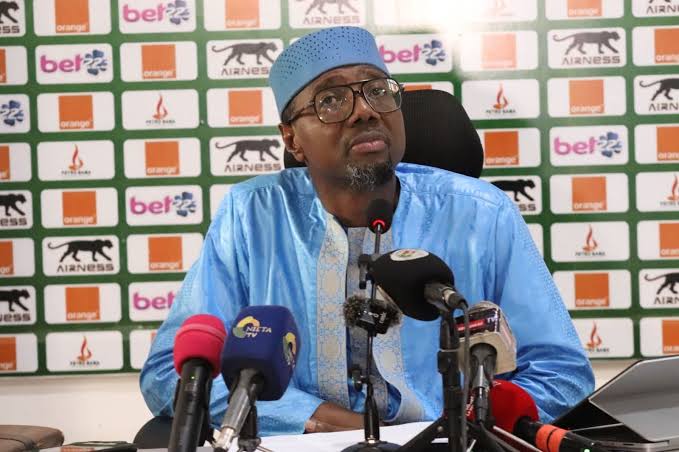
A hundred days are never enough to judge a presidency intended to last four years. However, they do allow one to observe a method, identify priorities, and assess the first actions taken. At the head of the Malian Football Federation (FEMAFOOT) since April 16, 2026, Mahazou Baba Cissé chose to act swiftly. In an institution marked in recent years by governance crises, internal divisions, and sporting results below the country's ambitions, the new president knew he was expected to deliver.
Armed with his experience gained at ABM Foot Académie, he quickly set the tone. Within the first weeks, several decisive moves demonstrated his intent to break with certain habits and embark on a profound reorganization.
The first project: reviving the Eagles
The first sign came from the national A team. Although Tom Saintfiet was still under contract until August 31, FEMAFOOT opted for an amicable separation before handing the reins of the Eagles to Portuguese coach Antony Da Silva. A clear choice reflecting the will to inject new energy into a team already focused on qualifying for AFCON 2027.
To prepare for this event, the Executive Committee established a coordination unit bringing together the technical, medical, financial, marketing, media, and organizational commissions in order to optimize every aspect of sporting and logistical preparation.
A fresh start for the national teams
The reorganization did not stop with the A team. Despite the U17's historic qualification for the World Cup, Demba Mamadou Traoré left his post at the end of the CAN. He was replaced by Soumaïla Coulibaly, now tasked with leading the Young Eagles to the World Cup set for Qatar.
At the same time, Bako Seck took charge of the new generation U17 set to compete in the UFOA A qualifiers. After eighty MRI exams, the preliminary squad entered its final phase before the Dakar tournament.
Youth categories remain one of the pillars of the federation’s project. The U20s continue their preparations for the UFOA A tournament, which Mali will host in October, while the U15s are multiplying training camps at Mamadou-Konaté Stadium, eyeing the FIFA Youth Festival and African school competitions.
Women's football regains its place
Long relegated to the background, women's football now enjoys special attention. The Federation notably took care of several players injured during national team gatherings, financing their surgeries and medical follow-up.
On the sporting front, the Lady Eagles participated in the Women's AFCON in Morocco before exiting in the group stage. Before the tournament, FEMAFOOT had financed an extra day of preparation to optimize the selection’s working conditions.
A deeply reorganized administration
Change is also noticeable in the internal workings of the Federation.
The replacement of the former general secretary Sidy Békaye Magassa by Abba Mahamane is one of the most notable decisions at the beginning of the term. Welcomed by many actors in Malian football, this appointment illustrates the desire to strengthen administrative efficiency.
Institutional communication also appears more structured. Decisions of the Executive Committee are now published regularly, while the judicial commissions, having reached the end of their term, have been renewed in order to accelerate the handling of numerous pending files.
The management of the Bamako District League crisis illustrates this new approach. After two annulled elections, dialogue, consultation, and strict compliance with the rules finally allowed the organization of a vote recognized by all stakeholders.
Structural reforms to professionalize football
Beyond the urgent sporting needs, FEMAFOOT is working on deep-rooted reforms. The specifications for the 2026-2027 season raise the requirements imposed on clubs in order to gradually improve the level of organization of national competitions.
At the same time, a specialized commission continues revising the Federation’s regulatory texts. Nineteen working sessions have already finalized five texts aimed at modernizing federal governance.
Another long-awaited project: coaches’ training. After nearly ten years of interruption, a CAF A License session was finally held in Mali. Twenty-three coaches are currently undergoing this training, whereas the country had previously had only seventeen holders of this qualification.
Partners return
The development of football also relies on strengthening resources.
After nearly twenty years of collaboration with Airness, the Federation is preparing to officially announce tomorrow, Saturday, August 8, its partnership with WA Team Sport, which will become the new kit supplier for the national teams.
Orange Mali is also increasing its support. The company is raising its financial contribution by 200 million CFA francs and will henceforth cover the national coach’s salary. An unprecedented partnership that demonstrates renewed confidence from economic stakeholders in the Federation.
Meanwhile, discussions are underway to revitalize professional Ligue 1 with the goal of making the championship more attractive, both for fans and commercial partners.
FIFA’s support
The reforms underway also benefit from FIFA's support. During an induction mission conducted from July 28 to August 1, the world body assisted FEMAFOOT on several strategic matters, notably strengthening administrative capacities and completing the Kabala National Technical Center, whose handover is expected before the end of the year.
A set course, many challenges remain
Obviously, not everything can be resolved in a hundred days. Some reforms still need to show results, several Executive Committee members remain expected to fulfill their responsibilities, and resistance to change persists within the federal administration.
But a trend is already emerging. In a hundred days, Mahazou Baba Cissé has put his stamp on things: a more structured governance, rapid decisions, a desire to professionalize competitions and to strengthen all components of Malian football, from the youth teams and the Eagles to women's football and training.
The real test will now take place on the field. Because beyond announcements and reforms, it is the ability of this new governance to translate these ambitions into lasting results that will determine the success of the mandate.
Join our sports community!
Follow us on social media to never miss real-time sports news.
À propos de l'auteur
Drissa NIONO
Rédacteur sportif
Journaliste Le Buteur et correspondant SNA au Mali.