
Football: witchcraft a common practice in Burundi
Witchcraft is a deep-rooted problem in Burundian football. The Burundi Football Federation is taking the issue seriously.
Sport News Africa · Author profile ·
Listen to this story
Audio version in preparation · read aloud by your browser meanwhile
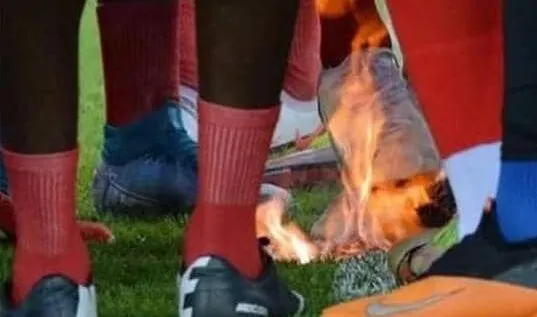
The Burundi football league has sixteen teams in the first division and twenty teams in the second division. There are also lower divisions that supply players to the top-flight sides. Most Burundian clubs cannot afford to sign experienced players from the sub-region, so they have to make do with local talent. Even so, the league is fiercely competitive. As proof, it has been more than ten years since any team won back-to-back league titles. Some club presidents and players turn to witchcraft in the hope of getting good results.
On 13 May 2023, in Gitega, the political capital of Burundi, during the quarter-finals of the President's Cup between Musongati and Messager Ngozi, Messager players were searched from head to toe to check whether they were carrying gris-gris charms. The football fans that Sport News Africa spoke to say the practice should be banned. In their view, this pre-match search of players is a form of mistreatment that unsettles the athletes.
Players, coaches and club presidents believe in witchcraft
“ In our team, witchcraft was a common practice. All the players had to follow the instructions of our witch doctor, whether you liked it or not. Even our club president encouraged us to take part. Personally, I didn't believe in it, but I was obliged to go onto the pitch with gris-gris. There were even cases where players battling for a place in the starting line-up cast evil spells on each other. I was a victim myself on two occasions and I had to end my career earlier than planned ”, says Ndihokubwayo Adil, a former Vital’o player.
Vital’o's current president, Evariste Mukurarinda, told Sport News Africa that these practices no longer exist at his club, but that witchcraft is a reality at many clubs. “I was lucky to have a coach who is against these dark practices. There are players at our club who believe in witchcraft, but since nobody among the officials believes in it, the players are obliged, despite themselves, to toe the line. Those who try to get involved in these practices are dismissed from the club ”, Mukurarinda explains.
Jimmy Ndayizeye, coach of Messager Ngozi and former national team coach, laments that there are still coaches, players and club officials who believe in witchcraft in the 21st century. “Personally, I don't believe in it at all. I do know some coaches who think witchcraft can help bring positive results. In the national team, in my time as a player and as a coach, I never saw anything like that ”.
Another national team staff member backs up Ndayizeye's comments but says some players consult witch doctors in private. “There are national team players based in Europe who regularly pay witch doctors and consult them when they are struggling. Unfortunately, some of them later realised they had been conned ”, he reveals.
A member of the executive committee of the Burundi Football Federation, who asked not to be named, says witchcraft will be on the agenda of the FFB general assembly scheduled for the end of May. He adds that the practice is starting to become widespread and that a solution must be found quickly to stop the phenomenon growing further.
Désiré HATUNGIMANA