
Roland-Garros 2026: Mayar Sherif, the Egyptian tree that holds the desert of African tennis
While the 2026 edition of Roland-Garros began this Sunday, the loneliness of the Egyptian Mayar Sherif in the singles tables highlights a deep structural crisis. In the absence of Ons Jabeur, away from the courts for a happy maternity, African tennis presents itself in Paris amputated of its living forces. Between financial elitism, omnipresence of football and lack of training, investigation on a continent at the crossroads.
Philemon MBALE · Author profile ·
Listen to this story
Audio version in preparation · read aloud by your browser meanwhile
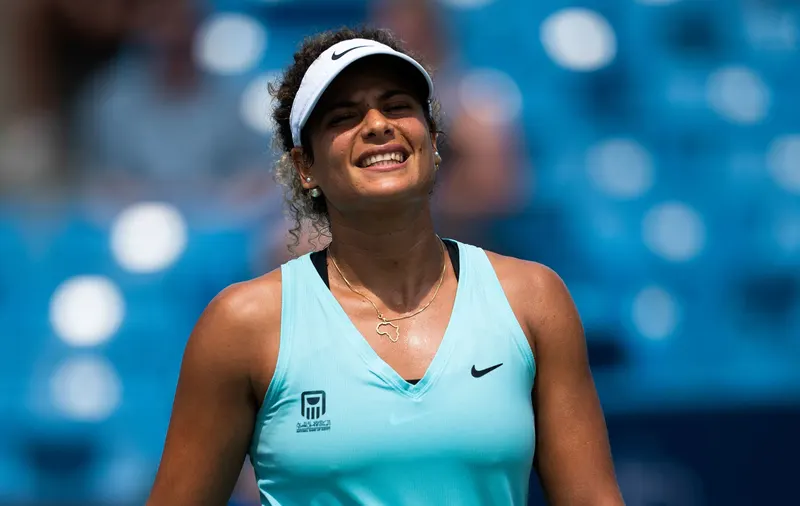
The audience at La Porte d'Auteuil will only have eyes for her, at least on the African side. This Tuesday, Mayar Sherif will make his debut on the Parisian ochre against the Hungarian Dalma Galfi. What’s so special about her? After battling in qualifications to win her place in the main draw, she will be the only representative from all over the African continent, men and women combined, to tread the courts in singles during this 2026 edition of Roland-Garros.
This isolated situation is accentuated by the legitimate pause of the Tunisian Ons Jabeur, the usual locomotive of African tennis, who has momentarily left the circuit to give birth to her child. But behind this desert picture, the absence of a replacement raises a crucial question: why does Africa, an inexhaustible pool of athletic talent, struggle so much to exist sustainably at the top of the small yellow ball?
The mirage of past years
For anyone observing the circuit, the alarm signal is not new. The 2025 edition of Roland-Garros had already acted as a serious warning. With the notable exception of South Africa’s Kgothatso Montjane, a semi-finalist in wheelchair tennis, the African campaign had turned to standstill.
Ons Jabeur, then in difficulty with her tennis, had lost in the first round to Poland’s Magdalena Fręch. In the men’s category, South African Lloyd Harris, after extricating himself from qualifying, came up short against Andrey Rublev. In doubles, Mayar Sherif herself had not passed the first milestone. In 2026, without the presence of Jabeur to mask the cracks, the raw reality burst into the open: African tennis is being rebuilt, if not broken down, structures.
Roland-Garros 2025: a complicated assessment
Ons Jabeur (Tunisia) - Eliminated in the first round
Lloyd Harris (South Africa) - Eliminated in the first round
Mayar Sherif (Egypt) - Eliminated in the first round (double)
Kgothatso Montjane (South Africa) - Semi-Finalist (chair)
A sport of the rich in the shadow of football
The first barrier remains, unsurprisingly, economic. Professional tennis is one of the most expensive sports in the world. Between the equipment, technical supervision, plane tickets and accommodation to run tournaments around the world, the bill quickly becomes prohibitive for families.
Interviewed by Sport News Africa, Hugues-Henry Ngouélondélé, first vice-president of the Congolese Tennis Federation (Fecoten), perfectly sums up this impasse:
«Tennis is an expensive sport, and I emphasize the importance of funding: a player who aims for the professional level must be able to cover equipment, travel, accommodation and adequate nutrition. These are significant expenses, far from being within everyone’s reach. Moreover, our federations lack financial resources, which is why the support of patrons and sponsors is essential.”
Without these precious supports, tennis remains in the gigantic shadow of football, which captures almost all state subsidies and popular enthusiasm.
The other reality of the continent is its profound geographical disparity. There is a North Africa (Morocco, Tunisia, Egypt) and a South Africa that have a tennis culture, clubs and infrastructure of relative quality. Behind this "Top 10" completed by Algeria, Nigeria, Zimbabwe, Botswana or Burundi, it is the great void.
In most of Central and West Africa, tennis remains a confidential or even invisible discipline.
«Tennis is a discipline that remains little known to the general public. As a result, very few young people dream of becoming professional tennis players"
deplores Hugues-Henry Ngouélondélé by taking the example of the Republic of Congo. Without a popular base, it’s hard to see champions hatching on a regular basis.
Ways to break the glass ceiling
To reverse the trend and no longer depend solely on individual and isolated achievements, African authorities are trying to respond through three major axes:
Bringing the international circuit to Africa: To limit the astronomical travel costs of young players, several federations now organize ITF Junior tournaments, Future (M25) tournaments and ATP Challenger tournaments directly on African soil. A way to allow the locals to earn ATP/WTA points at home.
The transfer of skills: Modern tennis requires a technicality that many local coaches, cut off from global developments, struggle to teach. Twinning partnerships, notably initiated with the French Tennis Federation (FFT), are beginning to emerge to train African coaches.
Infrastructure optimization: Several African countries have modern sports complexes built during major regional games. The challenge is to open them up to young people and to create dynamic national circuits to keep the graduates in constant activity.
The solitude of Mayar Sherif this week in Paris reminds us that the raw talent of African youth is no longer enough to face the ultra-professionalized machine of world tennis. For Africa to once again gain a place on the tennis map, the time is no longer for observations, but for massive investment and global structuring.