
Hassan II Stadium: Morocco set to make football history
Ahead of co-hosting the 2030 World Cup, Morocco is to build the world's biggest stadium, named the Hassan II Stadium
Sport News Africa · Author profile ·
Listen to this story
Audio version in preparation · read aloud by your browser meanwhile
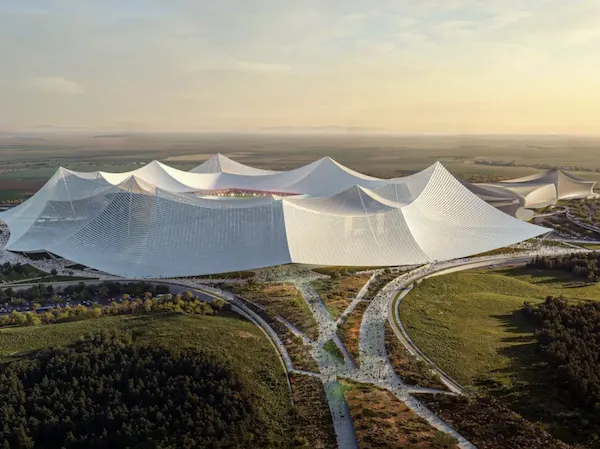
Morocco is preparing to make football history by building the Hassan II Stadium, a colossal project that will make the venue the largest football stadium in the world, with a capacity of 115,000. Located in Casablanca, it will surpass the Rungrado May Day Stadium in North Korea, currently the biggest at 114,000.
The ambition behind the project goes well beyond simply building a sporting facility: it is about positioning Morocco as a key player on the world stage, notably by hosting the 2030 World Cup, which the country will co-host with Spain and Portugal.
An XXL project for a historic event
The Hassan II Stadium was designed by the architecture firms Populous and Oualalou + Choi, who have drawn on traditional Moroccan tents, the "Moussem". The stadium will be adorned with hanging gardens 28 metres up, offering stunning views over Casablanca. One of its most striking features will be its imposing roof, designed to cover all of the stands, making the building a genuine masterpiece of engineering and design.
This image is unavailable on the original SNA site (recorded HTTP 404).
Three steep, multi-tiered stands will hold 29,500 spectators, and five levels of hospitality and corporate seating are planned, able to accommodate 12,000 guests and VIP visitors in the royal box. The stadium will be located in the town of El Mansouria, 38 km north of Casablanca, on a 100-hectare site.
€460 million invested
Work on the Hassan II Stadium will begin at the end of 2024 and is expected to last four years, with the opening scheduled for 2028. Construction will require considerable resources, both financial and technical. Particular attention will be paid to complying with FIFA and CAF international standards, to ensure the stadium is ready to host the biggest sporting events in the world. The total estimated cost of building the new stadium is 5 billion dirhams, roughly equivalent to €460 million. The budget covers not only the stadium itself but also the whole surrounding complex, as well as investment in upgrading other sports facilities across the country ahead of the World Cup.
The 2023 World Cup is the main motivation for building this stadium. It is a historic event for Morocco, which will be co-hosted with Spain and Portugal. It is a chance for the Moroccan kingdom to stage football's greatest show, after seeing the 2010 edition slip away to South Africa. Morocco hopes the final will be played in this brand-new venue, but no decision has been made yet as Spain also wants to host the final of the tournament.
Impact and legacy
But beyond the World Cup, the Hassan II Stadium will be more than an architectural feat. It is intended to become a catalyst for Casablanca's urban and economic development. As well as being a football venue, the stadium will be able to host concerts, cultural events and other international gatherings, boosting the local economy and attracting foreign investors. After the 2030 World Cup, the stadium will become the home of Casablanca's two big clubs, Raja and Wydad, ensuring the facility is used continuously.
This image is unavailable on the original SNA site (recorded HTTP 404).
It is one way for Morocco to make sure the Hassan II Stadium does not become a white elephant, an underused facility after the World Cup that risks falling into disrepair over time. That is why it has been designed to be versatile, able to host a variety of events in addition to football matches. It is also a way of getting the most out of this massive investment for the country, while strengthening its standing on the international stage.