
Women’s football: Cameroon in the middle of a shipwreck
The elimination of the U17 women’s team against Senegal confirms the deep crisis that is hitting Cameroonian women’s football, now deprived of all international youth competitions this year. This new failure seals an unprecedented statistical decline since 2021, contrasting with the glorious past of the team on the African and international scene.
Philemon MBALE · Author profile ·
Listen to this story
Audio version in preparation · read aloud by your browser meanwhile
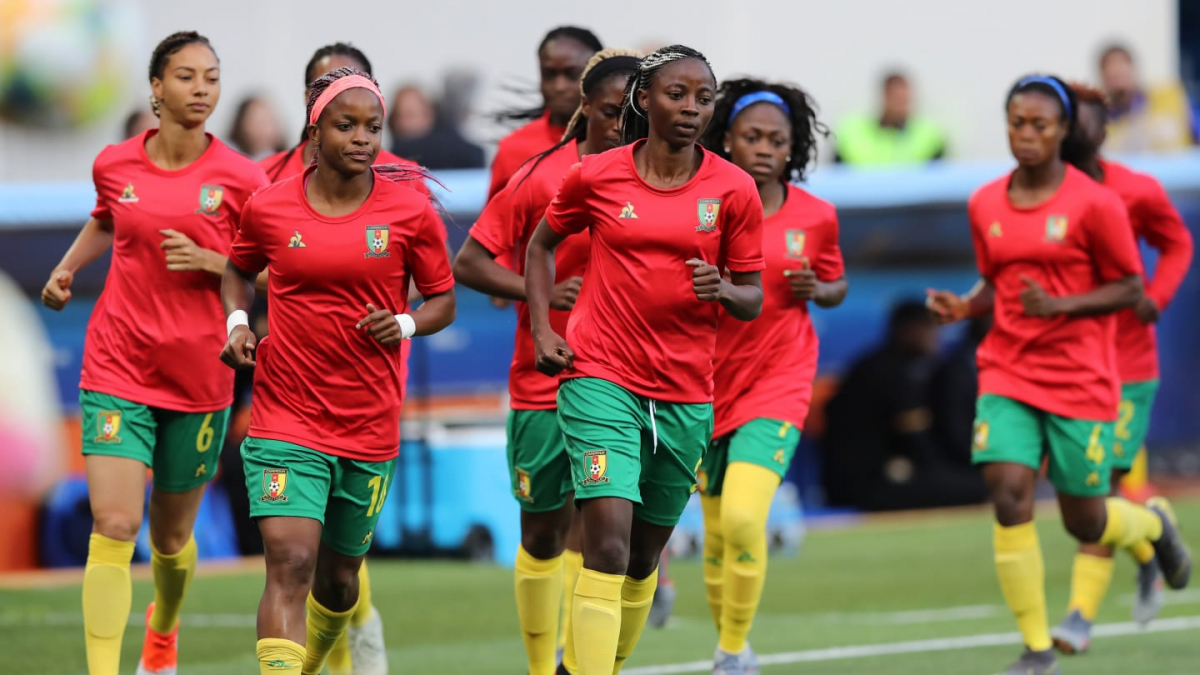
Cameroonian women’s football is going through a period of profound disappointment, marked by another elimination of the U17 selection at the gates of the 2026 World Cup. The debacle that occurred on Saturday, May 30 against Senegal sealed a black year for the country’s youth selections. After a scoreless draw in Dakar, the Lionnes [Indomitable? ] failed to make the difference in Yaoundé, finally losing on penalties (5-4) after a cumulative score of 0-0. This painful defeat deprives the country of participation in the next World Cup in the category in Morocco and adds to the failure of the U20 selection, eliminated a few days earlier from the race for the 2026 World Cup by Tanzania.
A marked decline since 2021
This double disillusion among young people illustrates a global decline in performance since the advent of Samuel Eto'o as president of the Cameroonian Football Federation (Fécafoot) at the end of 2021. The record of women’s selections has been significantly worsened by failures: non-qualifications for the 2023 Senior Women’s World Cup, the 2024 Olympic Games and the 2024 AFCON. If the senior Lionesses obtained their ticket for the 2026 WAFCON, this was done through an administrative draft contest after an initial failure on the field. In the youth category, apart from a round of 16 at the U20 World Championship in 2024, the U17 categories missed the 2022, 2024, and now 2026 editions, while the 2025 campaign ended with elimination in the first round after three consecutive defeats.
This trajectory contrasts sharply with the regularity that characterized Cameroonian women’s football before this period. In the past, Cameroon had established itself as a stronghold of the African continent. The Lionnes had reached the podium of the CAN women’s cup on several occasions, with a final in 2014 and 2016, and two third places in 2012 and 2018. The senior selection also participated in the 2015 and 2019 World Cups, each time reaching the round of 16. Among the youth, the U17 had even competed in the 2016 and 2018 Worlds, confirming a competitive level that is now difficult to find.
A managerial instability pointed out
For many observers, this crisis of results is partly explained by technical instability and contested managerial choices. Just before the 2025 U17 World Cup in Morocco, coach Briand Ndoko from the Baby Lionnes was sacked. And Ndoumou Mike was appointed to act as interim. Since then, a strong concentration of technical powers has taken place: the same staff supervises most of the categories.
Ndoumou Mike leads the senior selection—after the dismissal of Jean-Baptiste Bisseck—while remaining at the head of the U17 with the assistance of Hassan Balla, who also trains the women’s U20. Analysts also point out that extra-sporting tensions have led to the sidelining of talented players, permanently weakening the workforce.
Rethinking youth football
Faced with this situation, calls for an overhaul of the national strategy are multiplying. Industry specialists believe that the visibility of the national championship cannot mask the lack of a solid foundation at the base of the women’s football pyramid. The decline in competitiveness of local female players at international events illustrates the lack of pace and high-level opposition during their training course.
The expert and football coach Thierry Metomo recommends a radical change of policy to get out of this negative spiral. According to him, the effort must absolutely focus on decentralized structures:
"we really need to think about youth football (U15, U17, U20) and have championships played in departments and regions."
He insists on the need to multiply internships, to plan international friendships and to fully integrate young girls from existing training centers in order to rebuild competitive national selections in the short and medium term.