
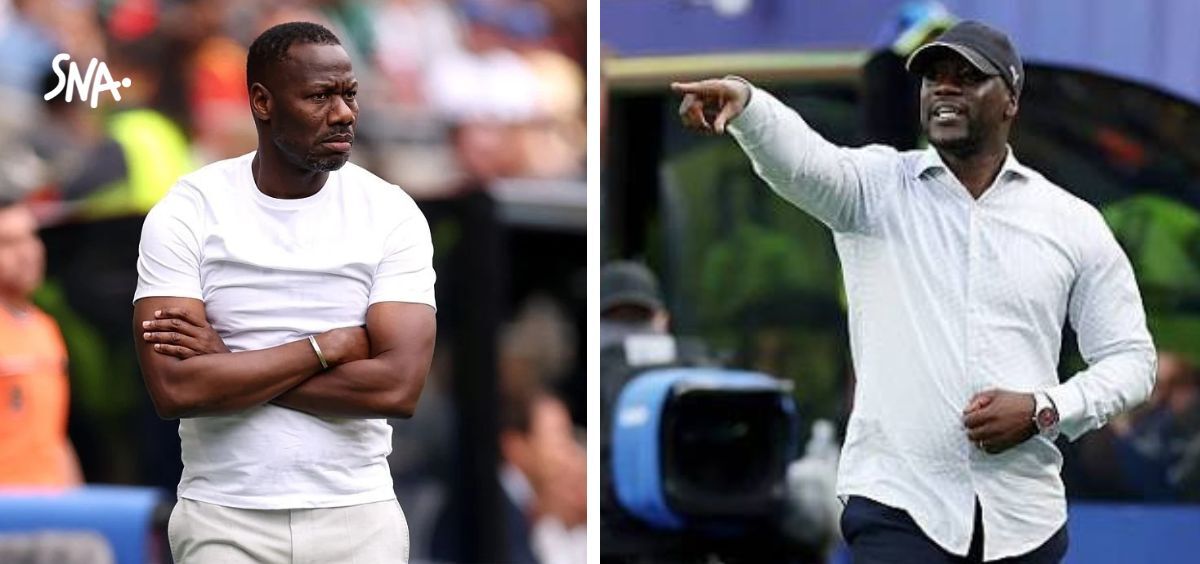
Coaches imprisoned by their key players' status
Although they had different journeys, even though they were eliminated at the same level of the competition (Round of 16), Emerse Faé and Pape Thiaw made the same managerial error that sank their teams. For the Lions, it was known to everyone that Kalidou Koulibaly and Idrissa Gueye arrived at this World Cup weakened, with the former not even having played for his club since the end of March due to a thigh injury.
Yet, he kept his starting spot in the national team, being fielded against France (1-3 defeat) and Norway (2-3). While he wasn't completely outclassed against the French, it was especially against the Norwegians that Kalidou Koulibaly completely exposed Senegal, being at fault for all three goals conceded by the Lions. Beyond the lack of transparency from the player, who publicly claimed he was fit to play, it was above all Pape Thiaw's lack of courage that allowed him to play these two first important matches—the only ones he played anyway—when he was physically unfit. And to think that he left Malang Sarr on his list of reserves.
On the Ivorian side, Elephants supporters also had the feeling of having a manager who almost has no power left. In his list as well, the fact that Emerse Faé left out Martial Godo has never been accepted in Ivorian football circles, especially since he included Evann Guessand on the roster despite a knee problem—who only ended up playing 17 minutes, namely 16 against Germany (1-2) and a single minute against Norway (1-2).
The inclusion in the same list of Jean-Michael Seri (only 14 games in Slovenia with Maribor) did Emerse Faé no favors, as he visibly lost autonomy over his group. Indeed, the 34-year-old midfielder brought very little to the Elephants, even staying on the bench during the squad rotation for the last group game against Curaçao (2-0), during which he had just 13 short minutes for his only appearance in the competition.
If Pape Thiaw faces only the influence of his veterans in his sporting choices, as exclusively revealed by Sport News Africa on Tuesday, Emerse Faé also has to deal with the omnipresence of his federation president, Idriss Diallo.
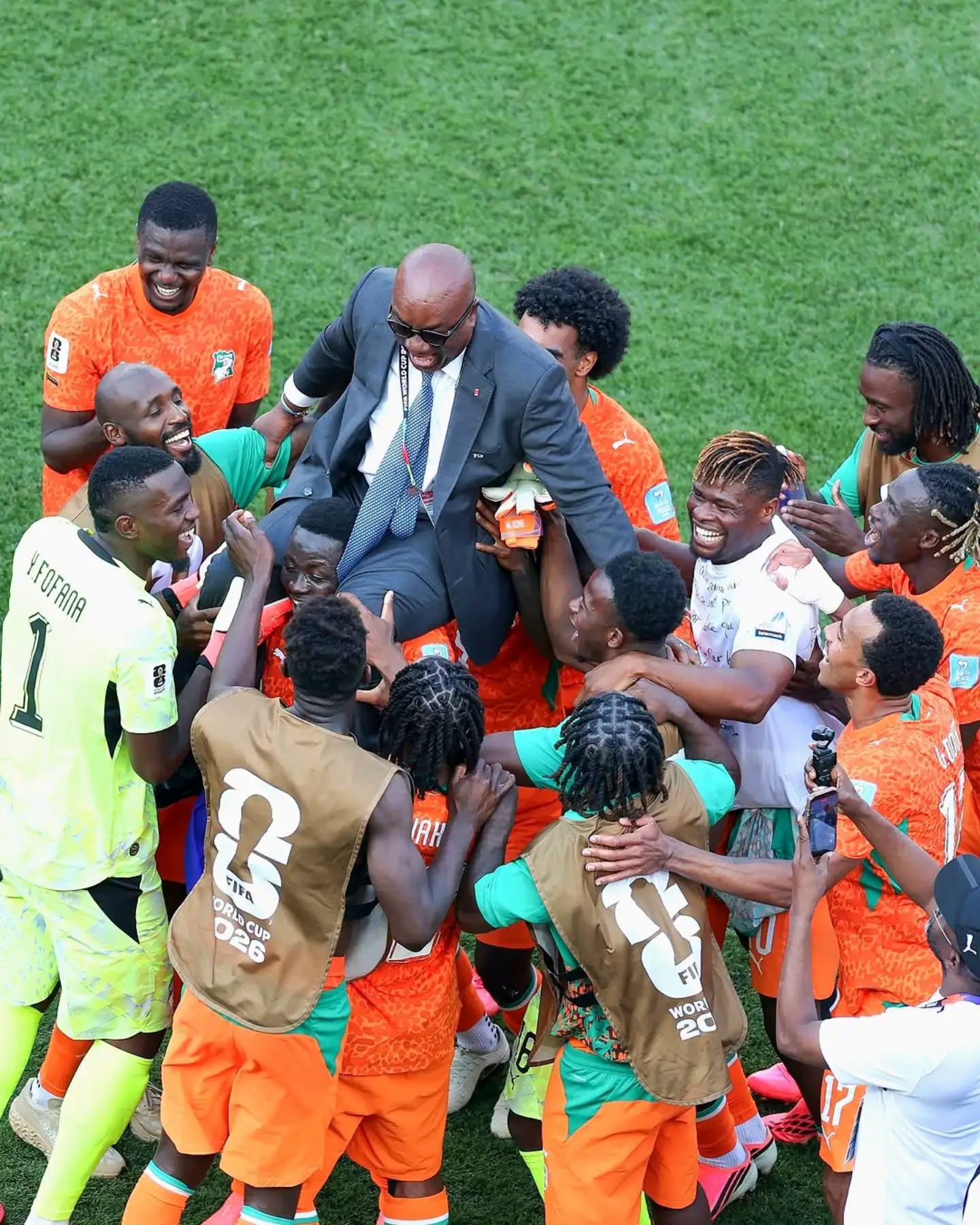
Dressed in training gear to cycle with the players, speeches in the locker room after each match, and even carried in triumph by the players after qualifying for the Round of 16, Emerse Faé remained in Idriss Diallo’s shadow throughout the competition. Enough to arouse suspicions of a coach under pressure when making sporting decisions. This is intolerable for an Africa Cup-winning coach, even if he only took charge of the team after the first round.
Tactical limitations laid bare
Senegal may have had all sorts of problems in its preparation right up to the end of its participation in the World Cup, but Pape Thiaw is not exempt from blame. Especially on the tactical side, where his lack of personality and poor reading of the game cost the Lions dearly.
While Senegal played a decent game against France, especially in the first half, when the French really suffered from the Lions’ aggressiveness and intensity, that was not the case against Norway. Pape Thiaw fielded the same starting eleven, when he really needed to adjust his lineup based on the opponent.
The midfield, notably made up of Idrissa Gueye, Habib Diarra, and Pape Gueye, needed a player like Pathé Ciss to serve as a shield in front of the defense. The three midfielders were projecting forward far too much. Unfortunately, Pape Thiaw got it wrong, and Kalidou Koulibaly would not say otherwise. The result: a defeat (2-3) despite a double from Ismaila Sarr.
With his back against the wall after two losses, he finally had the courage to dent his stars’ egos, notably removing Kalidou Koulibaly from the starting eleven to play Abdoulaye Seck, who went on to score against Iraq (5-0). But his completely failed reading of the game cost Senegal in the Round of 16 against Belgium (2-3 defeat), especially the substitution of Habib Diarra in the 73rd minute, which broke the momentum of the Lions' midfield. Also, letting Sadio Mané, physically spent, play the full 90 minutes was another mistake. The sum of these errors led to an irreparable consequence: elimination, even though Senegal was leading 2-0 up to the 86th minute.
On the other side, Emerse Faé also failed in his tactical choices. After the opening win (1-0) against Ecuador with the Agbadou-Singo pairing—who had already impressed against France in a friendly (2-1)—the Elephants' coach decided to break up that partnership to bring Odilon Kossounou back to central defense, moving Singo back to right-back and leaving a player like Guéla Doué on the bench. This disturbed the defensive structure of the Elephants and weakened their solidity.
In the Round of 16 against Norway, Emerse Faé again misread the game with two costly decisions. The first was substituting Christ Inao Oulai after an hour, even though he was by far the best midfielder on the pitch. Franck Kessié or Ibrahim Sangaré should have been taken off, but the coach visibly feared hurting their egos. The second was also substituting Nicolas Pépé. Provider of the assist for Amad Diallo in the 74th minute, the Villarreal player was taken off in the 86th for Oumar Diakité, even though he and Diallo were the only attacking threats troubling Norway.
Tactical inconsistencies generated by a lack of personality ultimately cost Côte d'Ivoire and Senegal, who nevertheless had everything it took to go further than the Round of 16 in this 2026 World Cup.
Join our sports community!
Follow us on social media to never miss real-time sports news.
À propos de l'auteur

Aimé ATTI
Rédacteur sportif
Journaliste, commentateur sportif, baignant dans le sport et le football africain.